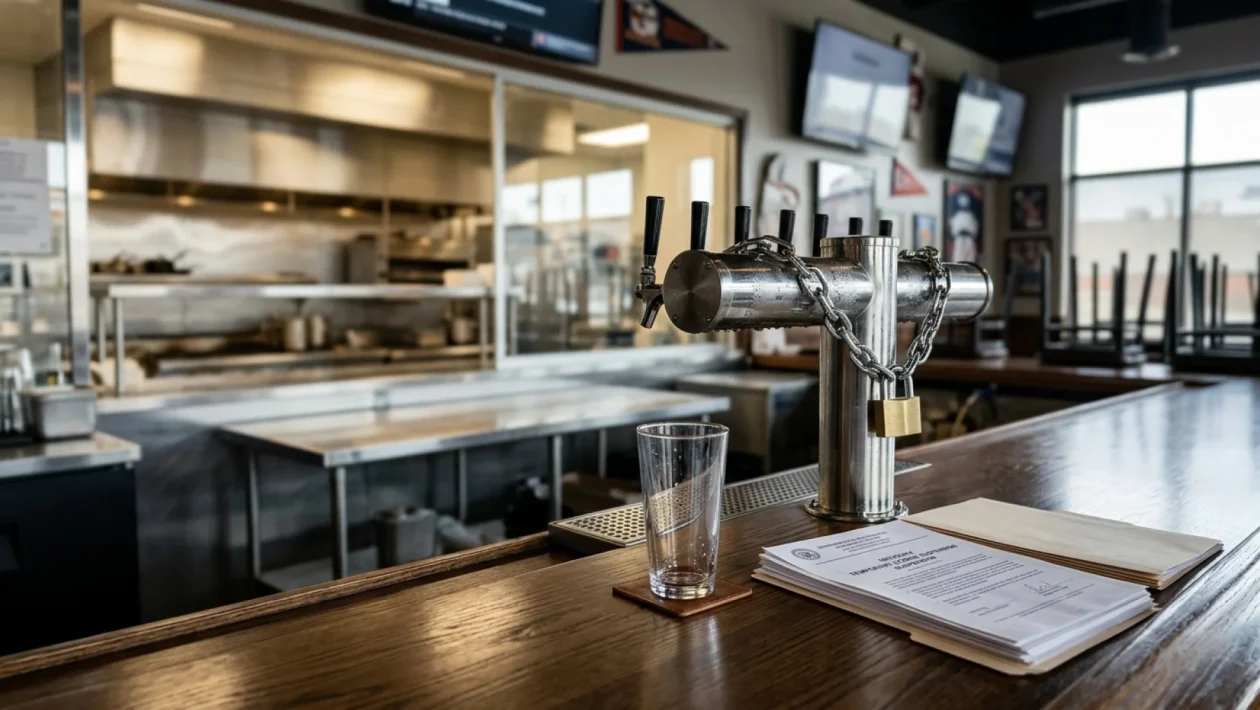
Imagine taking over a defunct pizza joint, splitting the massive footprint into two slick new restaurants, and gearing up to pour your first pint. Now imagine the local liquor board slamming the brakes, threatening criminal charges before your grand opening even hits its stride. That is the exact nightmare scenario currently unfolding for The Creek Sports Bar in Waldorf. The owners genuinely believed they had the green light to operate while waiting for their liquor license transfer to process.
The licensing board disagreed, abruptly cutting the cord and proving a harsh reality of the hospitality industry. When it comes to alcohol sales, assumptions will sink your ship faster than a hole in a keg. If you want to keep the taps flowing and the regulators off your back, you need to understand exactly where this ambitious sports bar went wrong.
Liquor License Transfer: The Misunderstanding That Stopped The Taps
Taking over a former Boston’s Gourmet Pizza—a close American cousin to our beloved Boston Pizza brand up north—isn’t a simple turnkey operation. The Creek Sports Bar’s legal counsel, Sue Greer, thought she was following standard historical protocols. She submitted an April 7 email requesting temporary operating approval while the official liquor license transfer chugged through the bureaucracy.
Because nobody immediately objected to the email, the bar’s team assumed they were good to go. It turns out, unwritten rules from five years ago don’t hold up against modern transparency laws.
The board’s clerk dropped the hammer, clarifying that local Open Meetings Acts demand public votes, not private backroom email threads. This administrative blind spot is surprisingly common. In fact, industry data shows that nearly 30% of restaurant launch delays across North America are tied directly to permitting and licensing red tape.
If you are stepping into the hospitality game, you cannot skip steps. Here is the foolproof way to handle a transition:
- Submit a fully completed, formal application to your local licensing board well in advance.
- Ensure your request meets the strict 10-day notice deadlines to get placed on a public meeting agenda.
- Wait for an official, public board vote before pouring a single drop of alcohol.
How A Simple Shared Kitchen Plan Complicated Everything
The brilliant, yet highly complex, business plan involved splitting the old pizza footprint into two distinct entities. You had The Creek Sports Bar serving up food and drinks, alongside Flavor Hive, a strictly dry, food-only establishment. To save on overhead, they planned to share a single commercial kitchen.
Originally, the legal paperwork placed kitchen control under the Flavor Hive entity. The county attorneys and the health department immediately waved a massive red flag.
To satisfy stringent liquor licensing requirements, the entity selling the alcohol must have absolute, legal control over the food preparation space. The team had to completely restructure their agreements on the fly.
| Business Entity | Operational Scope |
|---|---|
| The Creek Sports Bar | Controls the shared kitchen, holds health permit, serves alcohol and food. |
| Flavor Hive | Operates as a food-only restaurant, physically separated from the bar area. |
Even with the updated paperwork and the required health department permits secured, the two businesses must remain entirely physically separated. Regulators demanded assurance that customers couldn’t simply wander between the establishments with a beer in hand.
Why The Sports Bar Got Shut Down Before It Officially Opened
Because the board never formally voted on the temporary operating request, any alcohol sales were deemed a potential criminal matter. The owners were forced to halt everything the moment they saw the warning email from the liquor board attorney.
While the board acknowledged the owners weren’t intentionally trying to break the law, ignorance of the procedure doesn’t grant you a free pass.
“We don’t necessarily want to penalize the business. We want them to be able to transfer the license, but I feel like, again, the rules are clear. Documentation was sent, but approval was not given to operate.”
The board did throw the business one crucial lifeline. They approved a temporary closure for ongoing renovations and extended the dead Boston’s license until June 11, 2026. This technical extension keeps the liquor license transfer alive, giving the sports bar a fighting chance to properly resubmit their floor plans and finally open their doors this June.
Frequently Asked Questions
Can two restaurants legally share a single commercial kitchen?
Yes, they can. However, if one of the restaurants serves alcohol, that specific entity usually must maintain the primary health permits and operational control of the kitchen space to satisfy local liquor board regulations.
Is it legal to operate a bar while a license transfer is pending?
Only if you receive explicit, formal approval from the licensing board. In most jurisdictions, this requires your request to be placed on a public agenda and voted on during an official meeting. Emailed requests do not constitute legal approval.
🤝 Running a successful bar isn’t just about stocking enough cold Molson or perfecting your signature wing sauce.
💡 It’s about knowing the legal playbook inside and out, because one missed deadline can shut down your entire operation.
📱 Have you ever dealt with a nightmare permitting process in the trades or hospitality sector? Share your thoughts in the comments below.
👇 Good luck to anyone out there navigating local government red tape this season—stay sharp and keep your paperwork in order!