The Unconventional Art Tool in Your Kitchen
Traditional paintbrushes often limit your ability to create rapid, organic textures. Enter the iron scrubber. This standard kitchen cleaning tool is a highly effective instrument for acrylic painters looking to add instant depth to their work.
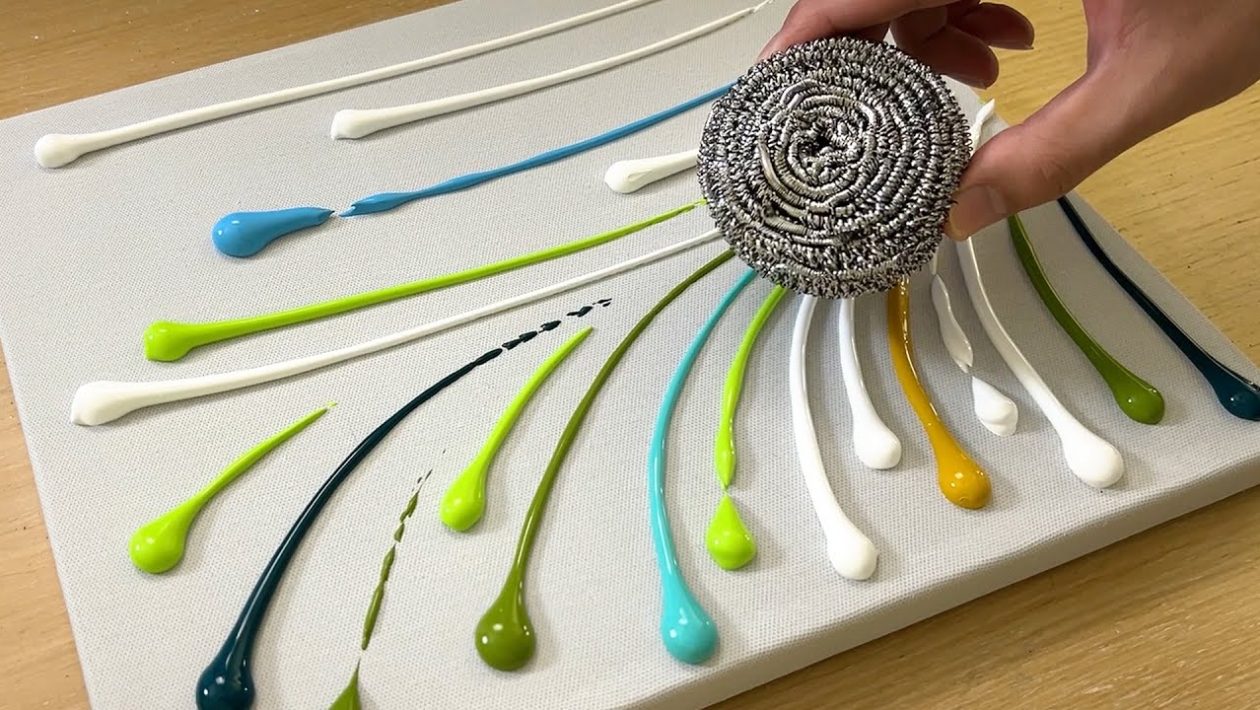
An iron scrubber features hundreds of random, stiff loops of metal. When dipped in acrylic paint and pressed onto a canvas, these loops leave intricate, unpredictable marks. This chaotic pattern mimics the randomness of nature far better than a perfectly manicured synthetic brush.
Setting Up Your Palette
To execute this technique, you need a standard primed canvas, heavy-body acrylic paints, and a brand-new, dry iron scrubber. Avoid using a wet scrubber. Water will thin the acrylic paint and cause the metallic coils to rust prematurely.
Squeeze your paint onto a flat palette, glass cutting board, or paper plate. Keep your colors slightly separated. You want the metallic loops to pick up distinct shades without mixing everything into a muddy gray.
The Application Process
Gently press the face of the scrubber into your paint. Do not submerge the tool entirely. The goal is to lightly coat only the outermost metal loops.
Before touching the canvas, tap the scrubber onto a clean section of your palette or a scrap piece of cardboard. This crucial step removes excess paint. Skipping this will result in heavy, unappealing blobs on your final piece.
Apply the loaded scrubber directly onto the canvas using a light, bouncing motion. Never drag the scrubber across the surface. Dragging the metal will scratch the canvas and smear the delicate patterns into streaks. A gentle stippling technique ensures the coil texture transfers cleanly.
Best Subjects for Scrubber Art
This method excels at rendering dense foliage, bushes, and distant tree canopies. The randomized clusters of dots instantly trick the eye into seeing individual leaves catching the sunlight.
It also works beautifully for generating highly textured, abstract backgrounds. To maximize the visual impact, apply your darkest base colors first. Allow the base layer to dry completely, then follow up with a clean scrubber loaded with lighter highlight tones to build three-dimensional depth.