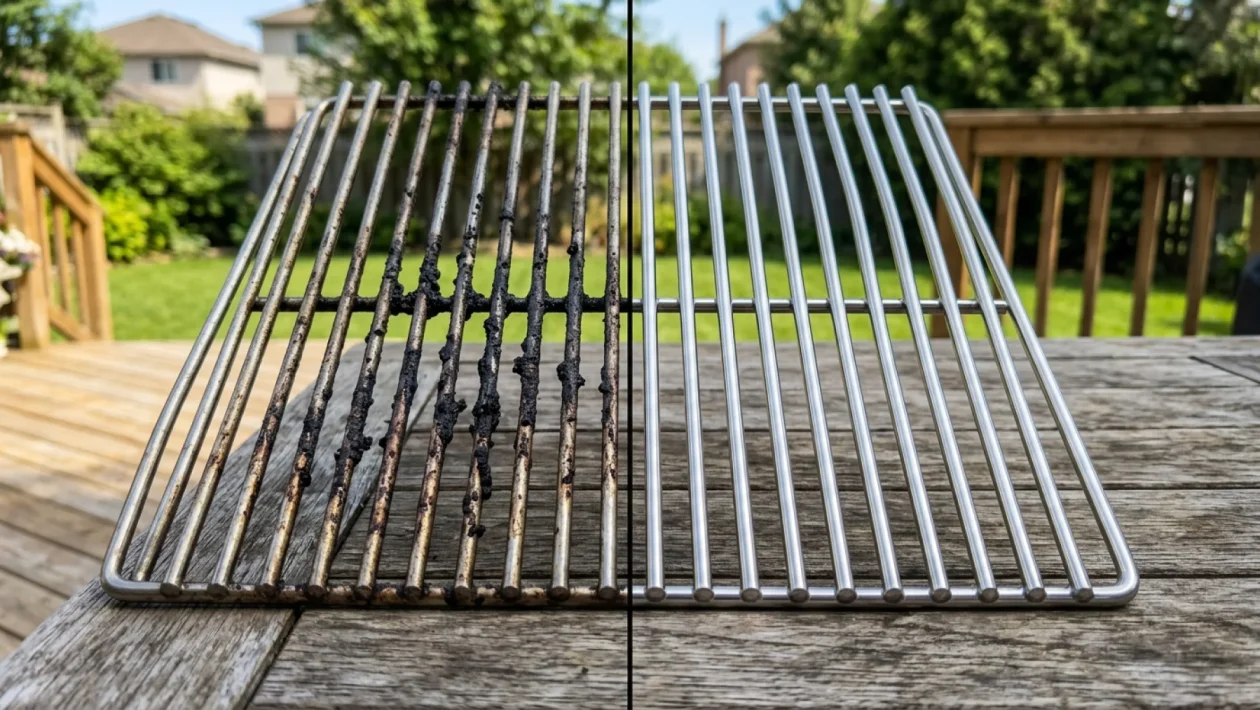
That thick, black crust welded to your grill isn’t “seasoning”—it is rancid grease and carcinogenic carbonized food from last summer. We are stripping that metal down to bare factory conditions right now. Using a precise 15-minute soak-and-scrub technique, you can permanently ditch the toxic oven cleaners and wire bristles that leave dangerous shards behind.
According to the Hearth, Patio & Barbecue Association, an uncleaned BBQ grill grate causes a massive 30% drop in conductive heat transfer. If your expensive ribeyes aren’t getting those steakhouse-quality sear marks, a dirty cooking surface is the prime suspect.
Grab your gear and head out to the patio. It is time to prep your rig for the 2026 grilling season.
The Core Strategy To Deep Clean Your BBQ Grill Grate
Heat and chemical friction are the only two things that break down polymerized grease. Scrubbing a cold, dry grill is a fast way to ruin your weekend and destroy your elbows. You need a structured approach that lets chemistry do the heavy lifting.
Most backyard cooks make the mistake of relying entirely on brute force. Instead, we want to soften the microscopic layers of burnt sugar and animal fat before a single brush bristle touches the metal.
You can pick up everything you need for this process during a quick run to Canadian Tire or Home Depot. You will need heavy-duty nitrile gloves, a coarse nylon-bristle grill brush, a heavy-duty trash bag, and a powerful foaming degreaser.
Why The Dawn Powerwash Method Destroys Baked-On Carbon
Standard dish soap drips right off cold metal grates, rendering it useless for deep cleaning. Dawn Powerwash utilizes an alcohol-based aerosol delivery system that clings to cylindrical metal bars. The foam suspends the active surfactants directly against the carbonized grease, dissolving the molecular bonds without requiring a soaking tub.
Here is the exact step-by-step method to strip your grates down to bare metal:
- Pre-Heat and Scrape: Fire up the grill to 400°F (204°C) for exactly 10 minutes to turn hard carbon into brittle ash. Use a wooden grill scraper to knock off the largest debris.
- Cool and Bag: Shut off the gas, remove the grates with heat-resistant gloves, and let them cool until they are safe to handle. Place the grates inside a heavy-duty contractor trash bag.
- Apply the Foam: Spray the entire surface of the BBQ grill grate generously with Dawn Powerwash. Ensure every square inch of the metal is coated in thick white foam.
- The 15-Minute Sweat: Seal the trash bag tightly and leave it in the sun for exactly 15 minutes. The trapped heat and concentrated degreaser will liquefy the baked-on grime.
- Scrub and Rinse: Remove the grates from the bag and scrub vigorously with a stiff nylon brush. Rinse immediately with a high-pressure garden hose until the water runs completely clear.
Prepping For Weber-Ready Steaks: The Cast Iron vs. Stainless Steel Factor
Once your grates are stripped naked, they are highly vulnerable to flash rust and sticking. If you throw a prime cut of beef onto unseasoned bare metal, you will tear the crust right off when you try to flip it. Your post-clean routine dictates whether your Weber grill delivers a flawless sear or a frustrating mess.
Your prep method depends entirely on the metallurgy of your cooking surface. Cast iron requires lipid polymerization to protect it from moisture, while stainless steel simply needs light lubrication to prevent protein adhesion.
| Grate Material | Post-Clean Treatment Requirement |
|---|---|
| Cast Iron | Bake on two coats of high-smoke-point oil (like canola or grapeseed) at 400°F for 30 minutes. |
| Stainless Steel | Wipe down with a lightly oiled paper towel immediately before throwing on the meat. |
“If your chicken tastes like last month’s salmon, you aren’t grilling—you’re just reheating old mistakes. A stripped and freshly seasoned grate is the foundation of genuine barbecue.” — Veteran Pitmaster & Metal Fabricator
Frequently Asked Questions
Should I just burn off the grease instead of scrubbing?
Cranking your grill to 600°F will turn loose debris into white ash, but it won’t remove polymerized grease. That sticky grease acts like glue for fresh food and actively traps moisture, which accelerates rust on cast iron components.
Are wire bristle brushes actually dangerous?
Yes. Every year, North American emergency rooms treat hundreds of patients who swallow broken steel bristles hidden in their food. Always use coarse nylon brushes, coiled stainless steel scrapers, or wooden paddles to clean your BBQ grill grate safely.
How often does my grill grate need this level of deep cleaning?
You should perform a maintenance scrape after every cook while the grill is still warm. However, this heavy-duty chemical deep clean should be done twice a year: once in the spring before the heavy grilling season begins, and once in the late fall before winter storage.
🤝 Share this guide with the neighborhood grill master who desperately needs an intervention on their dirty patio setup.
💡 Better yet, send this to a friend before they host the next backyard cookout so you don’t end up eating rust and rancid grease.
📱 Drop a comment below if you have ever tried the Dawn Powerwash trick, or let me know what brand of nylon brush you swear by.
👇 Keep those grates hot, keep them clean, and your steaks will practically cook themselves this summer.