You are staring at an exploding duffel bag on a Friday afternoon while the traffic on Highway 400 or the Sea-to-Sky is already backing up. Most guys pack for a weekend at the lake like they are prepping for a lunar landing, yet they still manage to forget the Robertson screwdrivers, the extra AA batteries, and the bug spray. The secret to a flawless cabin weekend isn’t a bigger SUV; it is ruthless, modular organization. Now that the May 2026 spring cottage season is officially open, it is time to stop hauling heavy, useless junk and focus strictly on high-utility gear that solves real problems.
The MEC-Approved Gear You Actually Need (And What to Leave Behind)
Listen, I have spent the last twenty years opening up winterized cabins across the Canadian Shield. You do not need three pairs of jeans or a massive Bluetooth speaker that will just annoy the loons across the bay. You need a highly curated cottage country packing list essentials kit built around reliability.
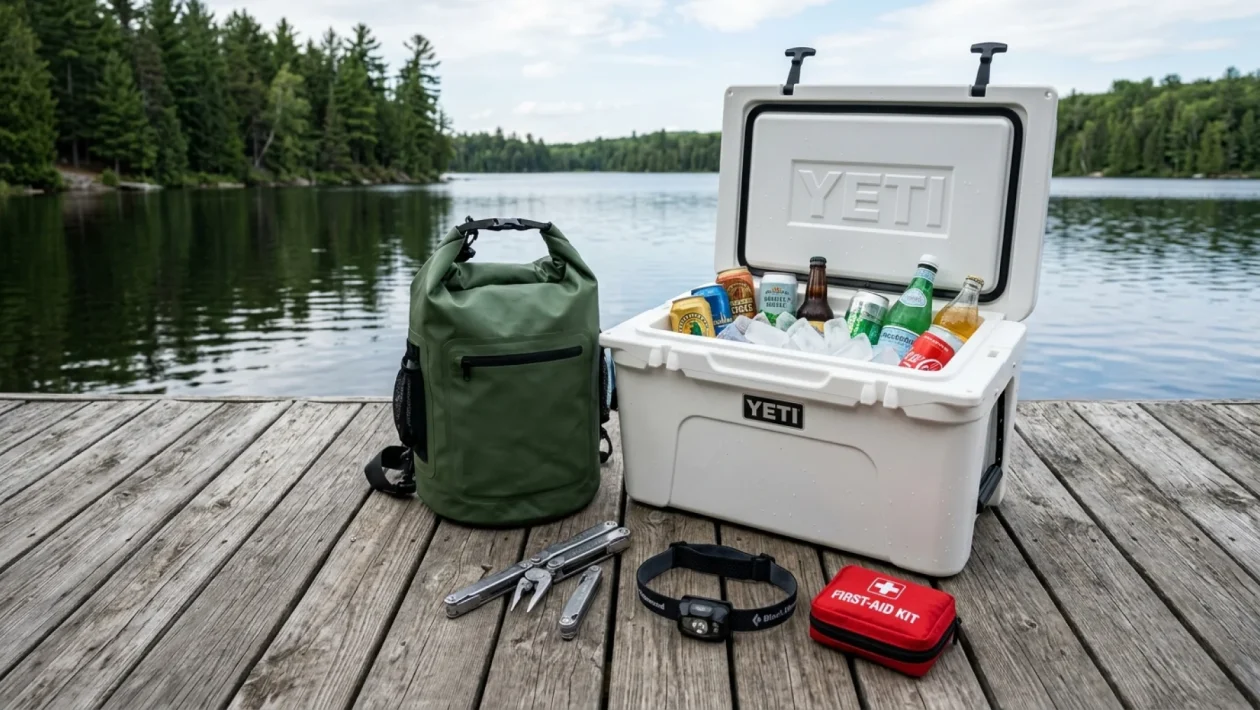
I always rely on rugged, multi-use gear from Canadian brands like MEC (Mountain Equipment Company) to anchor my loadout. Their heavy-duty Basecamp dry bags are perfect for keeping spare clothes moisture-free in a damp boathouse. A high-lumen Black Diamond headlamp from their camping section beats a smartphone flashlight every single time you need to check the generator at midnight.
Here is a sobering reality check before you zip up your toiletries bag. A recent 2025 survey by rural emergency responders found that a staggering 68% of cottage first-aid kits contain expired, degraded medical supplies. Throw out that crusted tube of Polysporin from three summers ago and pack a freshly restocked trauma kit.
| Bring This (High Utility) | Leave That (Wasted Space) |
|---|---|
| Leatherman Wave+ Multi-tool | Full 50-piece socket set |
| MEC Basecamp Dry Bags | Hard-shell rolling luggage |
| Fresh 100-Deet Muskol | Citronella candles (mostly useless) |
| Rechargeable headlamp & spare AAs | Heavy, fragile glass lanterns |
Yeti Cooler Hacks: Keeping Perishables Ice-Cold for 72 Hours
The biggest rookie mistake you can make is tossing warm beer and raw chicken into a hot cooler with a single bag of gas station ice. If you want your steaks safe and your drinks frosty from Friday night to Monday morning, you need to treat your Yeti cooler like a thermal vault. The brand’s rotomolded insulation is legendary in the backcountry, but it only works if you prime the system correctly.
Let’s break down the exact protocol for packing your cooler so the ice actually survives the weekend heat.
- Pre-chill the cooler chamber: Bring your Yeti inside the night before and sacrifice one bag of ice just to cool the plastic interior walls down to near-freezing.
- Freeze your non-carbonated drinks: Put your water bottles and juice jugs in the chest freezer on Thursday; they will act as massive, slow-melting ice blocks throughout the drive.
- Layer with the 2-to-1 ratio: Pack your provisions using a strict ratio of two parts ice to one part food and drink, keeping highly perishable meats at the absolute bottom where it is coldest.
- Seal the thermal barrier: Once the cooler is packed, lay a cut-to-size piece of reflective bubble wrap (like Reflectix from Home Depot) directly over the top layer of ice before closing the lid.
“Air space is the enemy of ice retention. If you want your provisions to last a long weekend off the grid, fill every single void in that cooler with crushed ice or frozen towels. Once that lid shuts, do not open it just to browse.” – Dave Mercer, Professional Angler and Outdoor Guide.
Frequently Asked Questions
What is the absolute most forgotten item on a cabin trip?
Without question, it is spare fuses for the water pump and a reliable Robertson #2 (red) screwdriver. Cabins run on old wiring and Canadian-made square-drive screws, so having a basic electrical repair kit saves you a frustrating two-hour round trip to the nearest hardware store.
How do I pack food for a remote cabin without electricity?
Vacuum-seal all your raw meats and freeze them completely solid at home before placing them in the bottom of your cooler. Rely heavily on dry goods like pasta, cured sausages, and hard cheeses that do not require aggressive, constant refrigeration.
Time to Hit the Dock
🤝 Getting out to the lake should be an escape, not an exercise in logistical frustration. By paring down your bags to true essentials and mastering your cooler management, you buy back hours of relaxation time on the deck.
💡 The next time you find yourself staring at an overflowing trunk, remember that less gear equals less stress. Pack smart, protect your perishables, and leave the heavy city luggage at home.
📱 Share this guide on your Facebook feed or drop it into your family group chat right now. Send this to a friend who chronically overpacks so they can finally get their gear sorted out before the long weekend.
👇 Have a brilliant packing hack that I missed? Drop a comment below and let me know what always makes it into your weekend duffel bag!