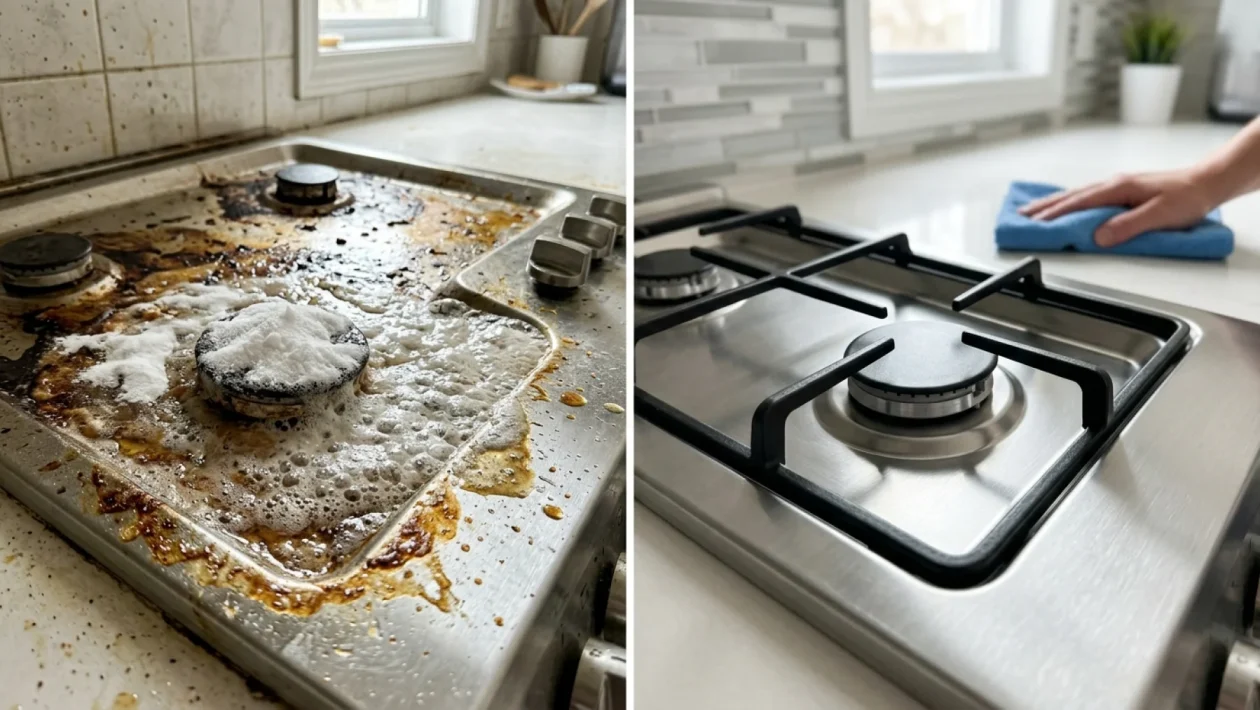
You are staring at a completely stubborn, baked-on grease stain on your stovetop, heavily debating whether to break out the sander or just buy a new appliance entirely. Stop right there. The cleaning aisle at your local hardware store wants you to drop $15 on a neon-colored, heavily perfumed bottle of chemicals that promises the world but delivers an asthma attack. The real solution is probably sitting in your pantry right now, costing less than a cup of black coffee.
It is May 2026, and if your social media feeds look anything like mine, you have seen the endless scroll of influencers pouring white powder and clear liquid onto every surface imaginable. They make it look like absolute magic. But as an experienced handyman who has scrubbed decades of grime off everything from heritage home baseboards to nasty garage sinks, I can tell you that not all of these internet trends are created equal. Using baking soda vinegar combinations is not just a science fair trick; it is a legitimate, heavy-duty cleaning arsenal if you actually know how to deploy it correctly.
Baking Soda Vinegar Solutions: The Chemistry Behind The Fizz
Let us get one thing straight before we start dumping pantry staples everywhere. The reason this combination works is pure, unadulterated chemistry.
Baking soda is a base. Vinegar is an acid. When they meet, they throw a microscopic demolition party.
They create carbon dioxide gas, which causes that wildly satisfying fizz. That bubbling action acts like millions of tiny scrub brushes physically lifting dirt, grease, and grime off surfaces so you can easily wipe it away.
| Perfect Targets | Never Use On |
|---|---|
| Stainless steel sinks & drains | Granite or marble countertops |
| Tile grout lines | Hardwood flooring finishes |
| Greasy oven interiors | Rubber seals and gaskets |
A staggering statistic from a recent consumer household report shows that North Americans waste an average of $600 a year on specialized, single-use chemical cleaners. We are paying a premium for water, synthetic fragrance, and clever marketing when the ultimate degreaser is already in the kitchen.
Viral Grime-Busting: What Actually Works (And What Fails)
If you blindly follow every short video you see online, you are going to end up with a useless mess. You absolutely cannot just mix these two ingredients in a spray bottle ahead of time to keep under your sink.
If you mix them and store them, they neutralize each other entirely within minutes. You are literally just spraying slightly salty water on your counters and wondering why the grease will not budge.
“The true power of this combination lies entirely in the active chemical reaction. If you aren’t scrubbing while it is actively foaming, you have completely missed the window of effectiveness.” – Mark Davidson, Master Plumber and Home Restoration Expert.
To get that viral, grime-busting power, you need to sequence your attack. You apply the base, let it sit, and then introduce the acid right at the moment you are ready to scrub.
Methods That Actually Revive Your Home
I rely on tried-and-true North American staples for this kind of deep cleaning. Grab a big yellow box of Arm & Hammer and a jug of heavy-duty Allen’s Cleaning Vinegar (a Canadian classic that packs a serious acetic acid punch). Here is exactly how you tackle the absolute worst spot in your house: the dreaded oven glass.
- Create the paste: Mix three parts baking soda with one part warm water until it forms a thick, spreadable paste. Do not add the vinegar yet!
- Apply and wait: Smear this paste aggressively over the greasy oven glass and walk away for at least twenty minutes. Let the alkaline nature of the soda naturally break down the hardened lipids.
- Activate the fizz: Spray undiluted vinegar directly onto the dried paste. Watch the grease literally lift off the glass as the reaction violently bubbles.
- The final wipe: Use a damp microfiber cloth to wipe the foaming sludge away, revealing crystal-clear glass underneath. No heavy scraping or razor blades required.
Frequently Asked Questions
Can I use this combo to unclog my kitchen sink?
Yes, it is fantastic for routine maintenance, but manage your expectations. Pour half a cup of baking soda down the drain, follow it with a cup of hot vinegar, and plug the drain for 15 minutes. Flush with boiling water. It clears out smelly sludge, but it will not dissolve a solid hair clog.
Will vinegar ruin my natural stone countertops?
Absolutely. The acid in vinegar will etch the sealant right off natural stone like granite, marble, and quartz. Keep this dynamic duo strictly reserved for stainless steel, ceramics, glass, and durable plastics.
Is cleaning vinegar better than regular white vinegar?
Yes. Standard white dietary vinegar is usually around 5% acidity. Cleaning vinegar bumps that up to 6% or even 10%. That slight percentage increase makes it roughly 20% stronger at cutting through mineral deposits and grease.
🤝 Share your thoughts and let me know if this classic handyman trick saved your weekend cleaning marathon. I guarantee once you see the results, you will walk right past the chemical aisle next time you are at the hardware store.
💡 Good luck tackling those stubborn stains, and remember that sometimes the old-school, inexpensive methods are still around for a very good reason.
📱 Drop a comment below if you have a massive cleaning fail or a major success story to share with the community.
👇 Subscribe to the newsletter for more no-nonsense, practical home repair and maintenance advice delivered straight to your inbox.