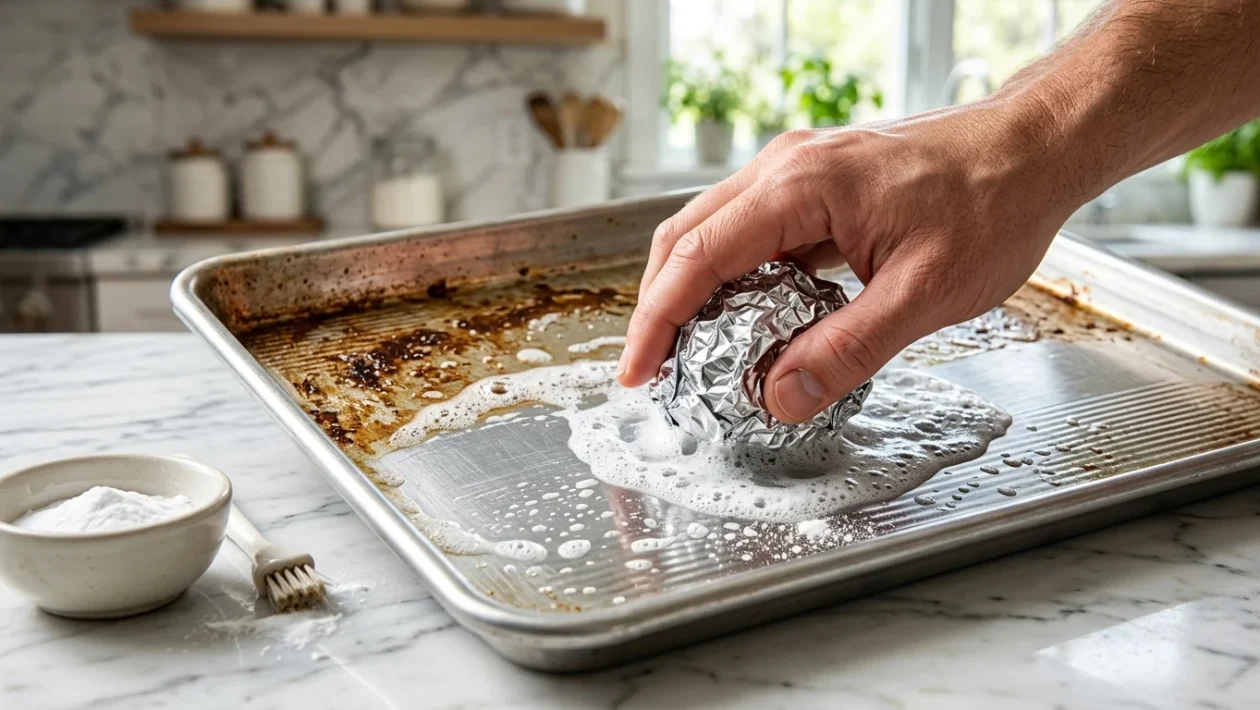
Well-loved baking sheets inevitably accumulate layers of baked-on grease and carbonized food. Over time, countless sheet pan dinners and chocolate chip cookies leave behind a stubborn, brown residue.
Before you buy heavy-duty chemical cleaners, check your pantry drawer. A standard roll of aluminum foil holds the solution to salvaging severely discolored pans.
Why Crumpled Foil Works
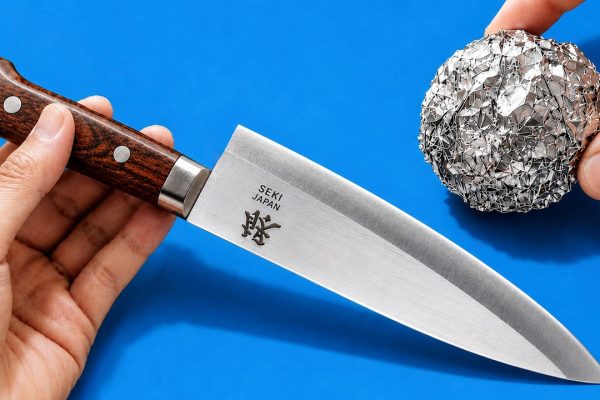
A crumpled ball of aluminum foil acts as a highly effective, gentle abrasive. It functions similarly to a steel wool pad but is softer than the metal of most standard baking sheets.
This structural balance allows the foil’s sharp ridges to scrape away baked-on debris without severely scratching the underlying metal. The physical friction lifts heavy grime, especially when combined with a simple dish soap.
The Step-by-Step Cleaning Process
You can restore a heavily soiled baking sheet in just a few straightforward steps.
- Submerge the baking sheet in hot, soapy water and let it soak for 10 to 20 minutes to loosen the debris.
- Tear off a generous sheet of aluminum foil and crumple it tightly into a ball.
- Scrub the pan’s surface using firm, circular motions, focusing heavily on the darkest stains.
- Rinse the pan thoroughly under warm water and dry it completely.
For particularly stubborn residue, sprinkle a thin layer of baking soda over the wet pan before you begin scrubbing.
Crucial Warnings and Exceptions
This technique is strictly designed for uncoated aluminum and stainless steel baking sheets. It will permanently ruin specialized surfaces.
Never use aluminum foil on nonstick or coated cookware. The abrasive edges will quickly strip the pan’s protective layer, rendering it useless. Clean nonstick pans exclusively with a soft sponge or a nylon scrubber.
Manage your expectations regarding older cookware. While the foil method effectively removes caked-on grease, heavily oxidized vintage pans will rarely regain their original factory shine.