The Flaw in Modern LED Bulbs
LED bulbs are marketed to last for decades, yet many consumers find them burning out after just a year or two. When a bulb goes dark, the natural instinct is to throw it in the trash. However, a common household item can bring it back to life.
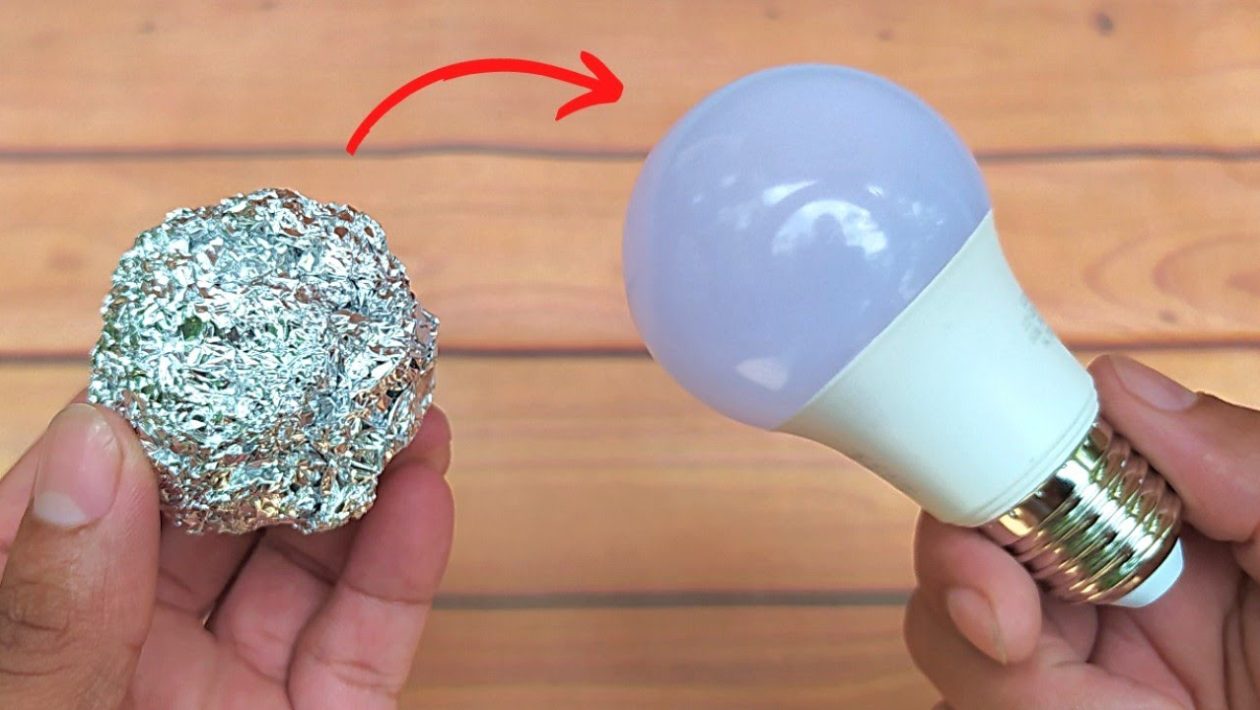
A standard scrap of aluminum foil is often all it takes to bypass the internal failure. To understand why this works, you have to look at how modern LED lighting is manufactured.
The Science of the Broken Circuit
Inside an LED bulb sits a circular circuit board covered in small, yellow light-emitting diodes. In most standard consumer bulbs, these diodes are wired in a series circuit.
This wiring method requires electrical current to pass through every single diode sequentially to complete the circuit. If just one diode overheats and fails, the entire chain is broken.
The bulb immediately goes dark, even though the vast majority of its components are still perfectly functional. The problem is no longer a dead bulb, but a single broken electrical bridge.
The Aluminum Foil Solution
Because the failure is simply a gap in the electrical connection, repairing the bulb requires bridging that gap. Aluminum foil is a highly conductive material that serves as an excellent temporary bridge.
By placing a tiny piece of foil over the destroyed diode, you reconnect the circuit. The electrical current easily flows through the foil, bypassing the dead zone and powering up the surviving diodes.
How to Execute the Repair
First, ensure the bulb is disconnected from any power source and completely cool to the touch. Pry off the plastic dome, known as the diffuser, to expose the circuit board inside.
Inspect the yellow diodes closely under a bright light. You are looking for a single diode with a tiny brown or black dot in the center. This dark spot is the universal indicator of a blown diode.
Take a small flathead screwdriver or a utility knife and carefully scrape the yellow casing off the burnt diode. This will expose the two small metal contact points underneath.
Cut a minuscule piece of aluminum foil—just large enough to cover those two exposed metal contacts. Place the foil over the gap and press a small piece of electrical tape firmly over it to hold the foil securely in place.
Safety and Limitations
Once the foil is secured, snap the plastic diffuser back onto the base. Screw the bulb into a lamp, and it should light up immediately.
Keep in mind that this is a temporary fix, not a permanent factory repair. By bypassing one diode, the remaining diodes now absorb a slightly higher voltage than they were originally designed to handle.
This increased voltage means the surviving diodes will burn brighter and hotter, which will eventually shorten their overall lifespan. Furthermore, always use strict caution when working with exposed electronics and never test a bare circuit board while it is plugged into a live 120V socket.