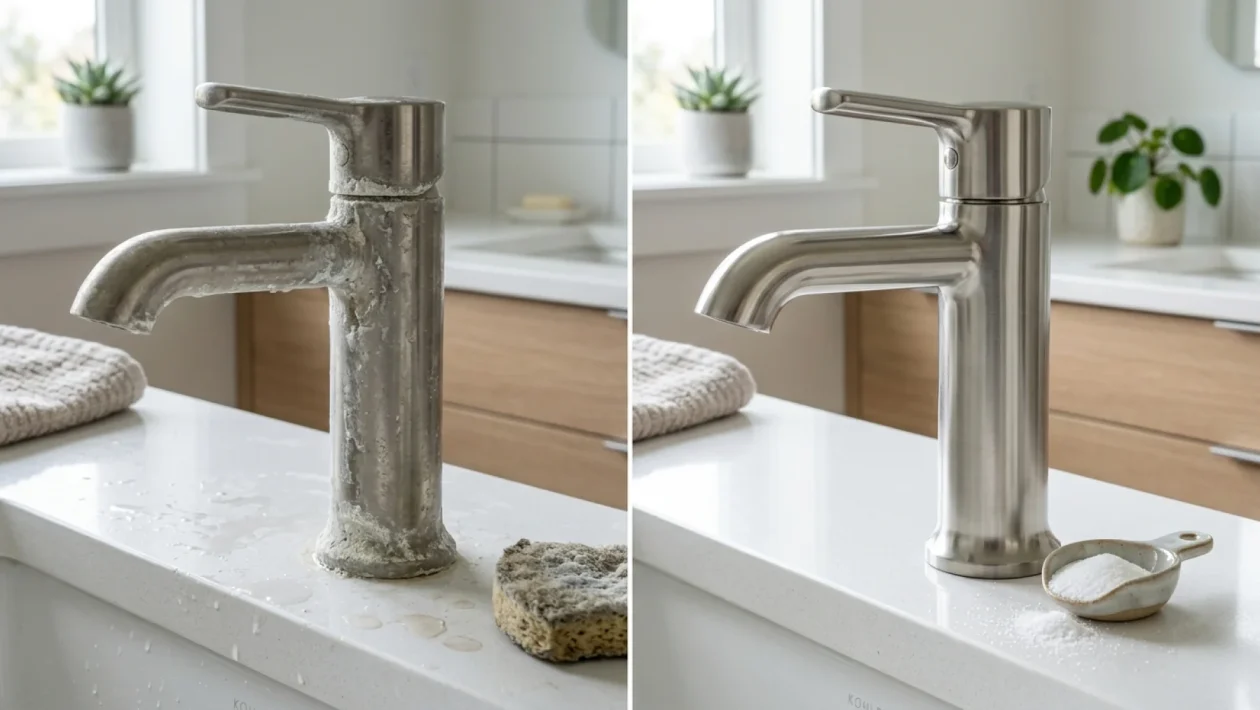
If you are reading this, you are likely staring down a crusty, white ring around your bathroom faucet or a stubborn yellow stain in your toilet bowl. You have scrubbed until your shoulders ache, and you are entirely sick of your house smelling like a chip truck from pouring gallons of vinegar everywhere. Put the salad dressing away. The ultimate solution for dissolving rock-hard mineral deposits is pure citric acid powder.
You can find this unscented miracle worker in the baking aisle of most grocery stores or your local health food shop. It aggressively eats through hard water crust without damaging your lungs. Let us break down exactly how the pros use this stuff to keep bathrooms looking like a million bucks.
Citric Acid Limescale Eliminator: Why It Beats the Old Methods
With the scorching July 2026 heat making indoor chores a sweaty nightmare, nobody wants to be trapped in a poorly ventilated bathroom breathing in bleach or vinegar. Citric acid powder dissolves seamlessly in water, creating a highly effective, completely odorless descaling solution.
Did you know that over 85% of North American homes have hard water? Those chalky deposits are a universal headache caused by excess calcium and magnesium baking onto your surfaces. Citric acid safely neutralizes these alkaline minerals on contact.
| Citric Acid Solution | Traditional Vinegar |
|---|---|
| Odorless and non-irritating to breathe | Pungent, lingering sour smell |
| Highly concentrated (use just a few scoops) | Requires pouring large, bulky liquid volumes |
The Odorless Plumber’s Secret: Safe Application Guidelines
While citric acid is found naturally in lemons and oranges, do not let its natural origins fool you. It is a powerful commercial-grade cleaner when concentrated. If you leave it sitting on delicate surfaces for too long, it will cause damage.
You need to protect your hands with a good pair of rubber gloves from Canadian Tire before you get to work. Always keep the bathroom fan running or a window open while you clean. Most importantly, you must never use this solution on marble, granite, or other sensitive natural stones.
“I have been roughing in plumbing fixtures across the country for two decades, and citric acid is the only descaler I trust to maintain expensive finishes. Just respect the dwell time, and never mix it with chlorine-based cleaners unless you want to create a dangerous gas.” — Mike T., Master Plumber
Obliterating Hard Water Stains on Faucets
You invest good money in premium bathroom fixtures from trusted brands like Moen or Delta. The last thing you want is a dull, crusty finish ruining the look of your expensive vanity. The trick here is speed and precision.
Mix a mild solution of warm water and a teaspoon of citric acid powder. Soak a soft microfiber cloth in the liquid and wrap it directly around the stained base of your faucet. Leave it there for just a few minutes.
Remove the cloth, gently wipe away the dissolved minerals, and immediately rinse the metal with fresh water. You must dry the fixture completely with a clean towel to prevent new water spots from forming.
Transforming Your Toilets: The Overnight Bowl Rescue
If the bottom of your toilet bowl looks like a science experiment, it is time for the heavy artillery. You do not need to drain the bowl, but you do need patience. Here is the foolproof method to restore your porcelain.
- Mix the Solution: Dissolve two to three tablespoons of citric acid powder into a jug of warm water. Never use boiling water, as the thermal shock can easily crack the porcelain of your toilet bowl.
- Target the Stains: Pour the warm mixture directly into the toilet water, aiming specifically at the heavy mineral rings along the sides.
- Let it Dwell: Close the lid and walk away. Let the solution work its magic for several hours, or ideally, overnight.
- Scrub and Flush: In the morning, take your standard toilet brush and give the bowl a firm scrub. The hardened deposits will flake off effortlessly. Hit the flush handle and admire your pristine bowl.
FAQs: Keeping Your Bathroom Safe and Spotless
Can I use citric acid on my glass shower doors?
Yes, but proceed with caution. It is fantastic for removing hard water spots from glass, but always test it on a small, hidden corner first. Some shower doors have special anti-spot coatings or sensitive films that acidic cleaners can strip away.
Is it safe to mix citric acid with bleach for a deeper clean?
Absolutely not. Never mix citric acid, lemon juice, or any acidic product with bleach or chlorine-based cleaners. This chemical reaction releases highly toxic chlorine gas that can cause severe respiratory damage.
Will this damage the grout between my bathroom tiles?
Prolonged exposure to citric acid can degrade cement-based grout over time. If you use it to clean shower tiles, make sure to rinse the area thoroughly with plenty of fresh water immediately after scrubbing.
🤝 Look, keeping your home maintained doesn’t have to mean resorting to toxic chemicals or suffering through eye-watering smells. By switching to this simple powder, you are working smarter, not harder.
💡 Good luck tackling those stubborn stains this weekend. Once you see how easily that crusty buildup melts away, you will never look at a jug of white vinegar the same way again.
📱 Share your thoughts in the comments below if you have tried this method, or let me know what other stubborn household problems you want me to tackle next.
👇 Get back to enjoying your summer, grab a cold drink, and take pride in a bathroom that looks like it was just installed yesterday!