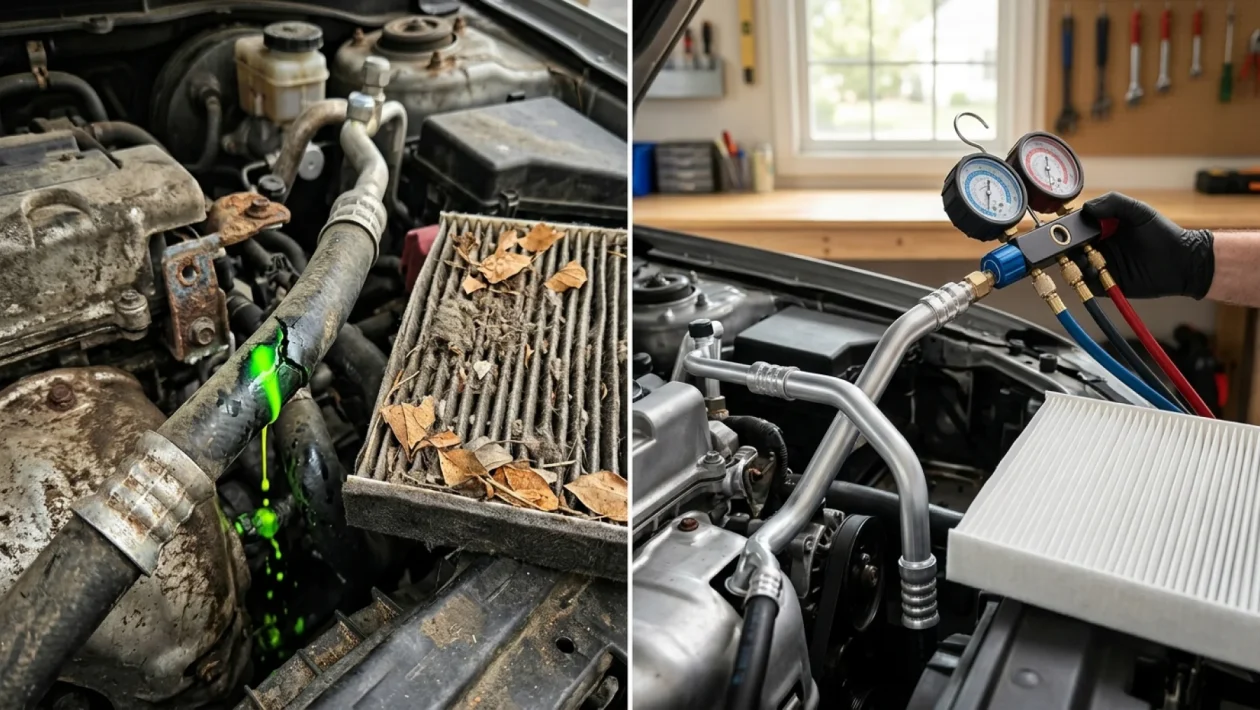
You slide into the driver’s seat, crank the climate dial to maximum cold, and are instantly blasted with a face full of stale, lukewarm air. Your immediate reflex is probably to drive down to the local mechanic and ask them to top up your freon so you can survive the summer heat. Stop right there. Asking for a blind A/C gas top-up is the single most expensive and damaging mistake North American drivers make every single year. Today, we are tearing down this outdated garage myth and showing you the exact diagnostic steps to permanently freeze out cabin heat without blowing your budget.
Car AC Recharge: The Costly Trap You’re Falling Into
Veteran mechanic Juan José Ebenezer recently dropped a bombshell on the automotive community, and it is something every experienced shop guy knows but rarely says out loud. When your dash vents stop pushing out the good stuff, begging for a quick gas top-up is a sucker’s bet.
We have been conditioned to treat our vehicles like they just need a quick drink of refrigerant to get through the year. That mindset belongs entirely in the past. A vehicle’s climate control is a closed-loop system.
If your refrigerant has vanished, it didn’t just evaporate into thin air. You have a physical breach in the system that needs addressing.
Why This Expensive Mistake Drains Your Wallet
Let’s talk dollars and cents. A decade ago, sneaking a quick R134a top-up at your local neighborhood garage might have cost you fifty bucks. Those days are completely dead.
As of July 2026, modern vehicles rely on the newer, environmentally friendly R-1234yf refrigerant. A shocking industry statistic reveals that standard R-1234yf recharge services now average a brutal $250 to $400 across North America.
Paying that kind of cash just to watch the expensive gas slowly bleed out of a cracked O-ring over the next three weeks is pure financial insanity. You are literally paying to pollute the atmosphere.
| Service Strategy | Financial Impact |
|---|---|
| Blind AC Recharge (Temporary Band-Aid) | $250 – $400 (Wasted if leaking) |
| Proper System Diagnostic | $80 – $150 (Identifies root cause) |
| Cabin Air Filter Replacement | $20 – $40 (Often the real issue) |
How Blindly Topping Up Freon Ruins Your System
Your vehicle’s air conditioning is a precision ecosystem of pressures and specialized oils. Ramming extra refrigerant into a failing system doesn’t just waste your cash; it actively masks critical mechanical failures.
Oftentimes, the real culprit is a completely plugged-up cabin filter suffocating your airflow, or a dead magnetic clutch on your A/C compressor. If you force a mechanic to just “add gas” without diagnosing the root cause, the system works overtime.
“The biggest error drivers make is rolling into the shop and demanding a recharge. The gas isn’t a yearly consumable; if you’re losing it, you need a repair, not a band-aid.”
Ignoring a dying compressor clutch or a vacuum leak will eventually cause a catastrophic compressor blowout. When metal shards get pumped through your climate lines, you are looking at a repair bill easily cresting two thousand dollars.
How To Actually Fix It (Without Getting Scammed)
Want to handle this like a seasoned pro? The next time your car feels like a rolling sauna, change your script at the service desk. Follow this exact playbook to save yourself a massive headache.
- Demand a Diagnostic: Tell your mechanic, “My A/C isn’t blowing cold, please perform a full diagnostic.” Never use the word “recharge.”
- Check the Lungs: Inspect your cabin air filter first. Grabbing a $20 piece of pleated paper from Canadian Tire or NAPA Auto Parts can completely restore your airflow in minutes.
- Pressure Test the Lines: Ensure the shop uses UV dye or an electronic sniffer to locate the exact microscopic breach in your aluminum lines.
- Inspect the Compressor: Have the technician verify that the magnetic clutch is actually engaging when the A/C button is pressed on your dashboard.
Frequently Asked Questions
Does car A/C gas expire or go bad over time?
No. Refrigerant does not expire, degrade, or get “used up” like engine oil. If your system is low on gas, it is 100% due to a leak that needs to be located and sealed.
Can I just use a DIY recharge kit from the auto parts store?
You can, but you really shouldn’t. Over-the-counter cans often contain “stop-leak” chemicals that act like liquid cement. They can permanently destroy your compressor and ruin the expensive recovery machines used by professional repair shops.
Final Thoughts
🤝 Good luck keeping your ride frosty this summer, and remember that knowledge is your absolute best defense against overpriced repair bills.
💡 Stop throwing your hard-earned cash at temporary gas top-ups when a simple diagnostic will hunt down the real villain hiding under your hood.
📱 If you found this breakdown helpful, share your thoughts with us in the comments below or forward this article to a buddy who is currently sweating through their daily commute.
👇 Don’t let the heat win—take full control of your vehicle’s maintenance today and drive comfortably all season long.