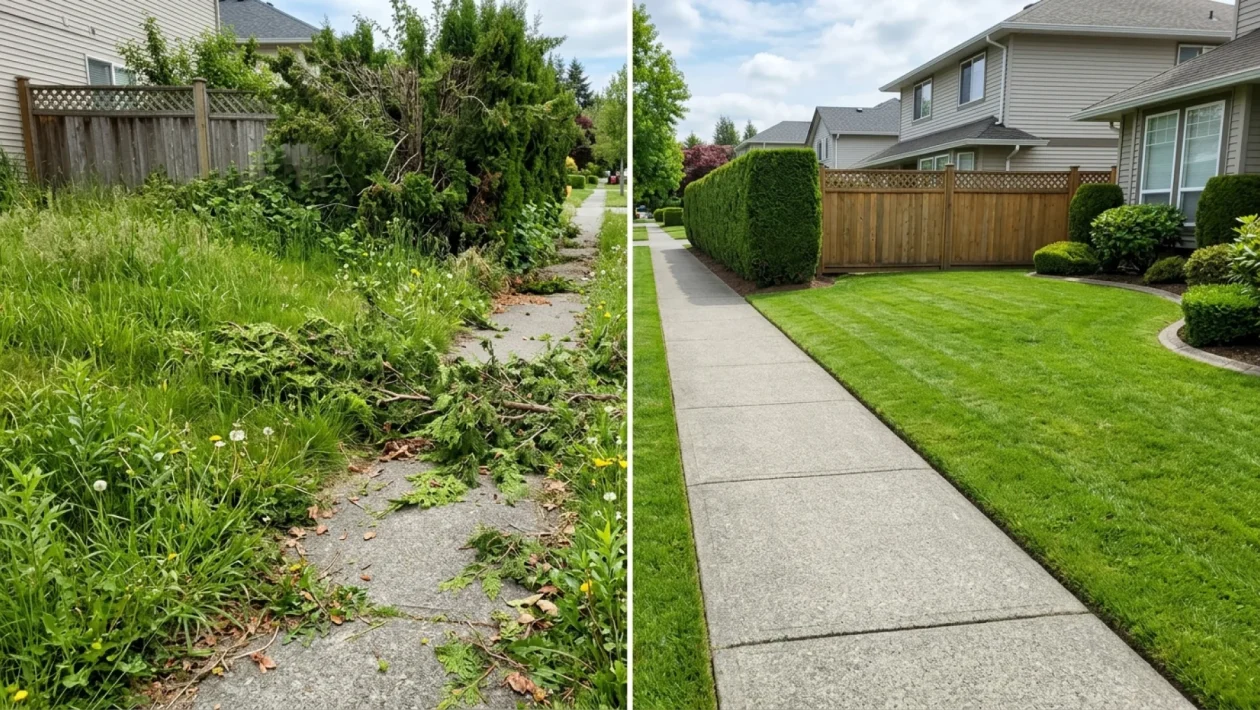
Nothing kills your weekend vibe faster than a city by-law officer knocking on your front door with a clipboard. You thought you were just letting your lawn “breathe,” but the municipality sees a severe weed infraction waiting to be ticketed. Property maintenance rules are actively being overhauled and enforced right now, especially following Oshawa’s recent July 2026 municipal crackdown.
The city has drawn a hard line in the sand regarding overgrown shrubs, standing water, and property standards. The good news? You can completely avoid the headache, protect your property value, and keep the neighbourhood happy with just a little proactive maintenance.
Property maintenance rules you can’t afford to ignore
Municipalities across Canada aren’t messing around anymore when it comes to property standards. The newly approved regulations zero in on specific hazards that most homeowners completely overlook.
For starters, your hedges and tree branches cannot obstruct public sidewalks. It is a massive liability if a pedestrian has to step onto the road to avoid your overgrown cedar. Similarly, shrubs and bushes in your “sight triangle”—the area near intersections and driveways—must be kept at a reasonable height to preserve visibility for drivers.
You also need to stay on top of the basics: cutting grass, removing weeds, and clearing out waste or debris. It might sound like common sense, but you’d be amazed at how fast a forgotten pile of lumber turns into a by-law complaint.
Here is a surprising hard fact for you: A single unemptied birdbath or clogged gutter with stagnant water can breed upwards of 1,000 mosquitoes in just a few days. The city knows this, which is why eliminating standing water is now a heavily enforced health and safety priority.
How to dodge costly city fines this season
By-law tickets aren’t cheap, and repeated infractions can lead to the city sending their own crews to clean up your mess—and billing it directly to your property taxes. To dodge these costly city fines, you need to spot the problems before your neighbors complain.
A quick weekend trip to Canadian Tire for heavy-duty yard bags, a decent string trimmer, and some basic plumbing sealant will cost you less than fifty bucks. That simple investment easily saves you hundreds in potential municipal penalties.
| Common Infraction | The Quick Fix |
|---|---|
| Overhanging sidewalk branches | Prune all foliage back at least one foot from the concrete edge. |
| Stagnant standing water | Flip empty buckets, clean gutters, and refresh birdbaths weekly. |
| Excessive weeds & tall grass | Commit to a bi-weekly mowing schedule and use a targeted weed puller. |
| Visible garbage or debris | Store all waste in secured bins and haul scrap materials to the dump immediately. |
A simple blueprint for keeping your yard pristine
Keeping your yard pristine isn’t about competing with a golf course. It is about establishing a functional, low-maintenance routine that keeps your property compliant and looking sharp.
Follow this quick yard audit process every month to guarantee you are meeting all property maintenance rules:
- Check the perimeters: Walk your property line. Ensure no vegetation is spilling over fences or blocking municipal sidewalks.
- Inspect the sightlines: Get in your car and back out of your driveway. If a shrub blocks your view of oncoming traffic, trim it down immediately.
- Eliminate the puddles: Scan the yard for anything holding rainwater. Drill drainage holes in outdoor trash cans and level out dips in your landscaping.
- Audit the exterior structure: Ensure your roof, gutters, and exterior walls are free of graffiti, rot, and structural decay.
“The secret to a stress-free property isn’t endless weekend labor. It’s simply playing by the municipal rules and catching the small overgrowths before they become major community hazards.” — Mark Davis, Veteran Property Manager
Frequently Asked Questions
What are the rules for renters regarding adequate heat?
If you rent out a basement suite or manage an apartment, the law is incredibly strict. Under the Adequate Heat By-law, landlords must maintain a minimum air temperature of at least 22°C between September 1 and June 15.
Who is responsible for trees overhanging the public boulevard?
You are. Even if the tree is planted close to the city property line, the homeowner is completely responsible for pruning branches and hedges so they do not impede pedestrian traffic or street sweepers.
Can the city inspect the inside of my property?
Under the Property Standards By-law, officials can inspect issues like plumbing, HVAC, and washroom facilities in rented accommodations. Tenants can actually request a unit inspection directly from the city at any time.
🤝 Maintaining your property isn’t just about avoiding a slap on the wrist from the local by-law officer.
💡 It is ultimately about being a solid, respectful neighbor and protecting the curb appeal of your biggest financial investment.
📱 Share your thoughts with the community in the comments below, or forward this checklist to a friend who just bought their first home.
👇 Good luck out there in the yard this season, and happy trimming!