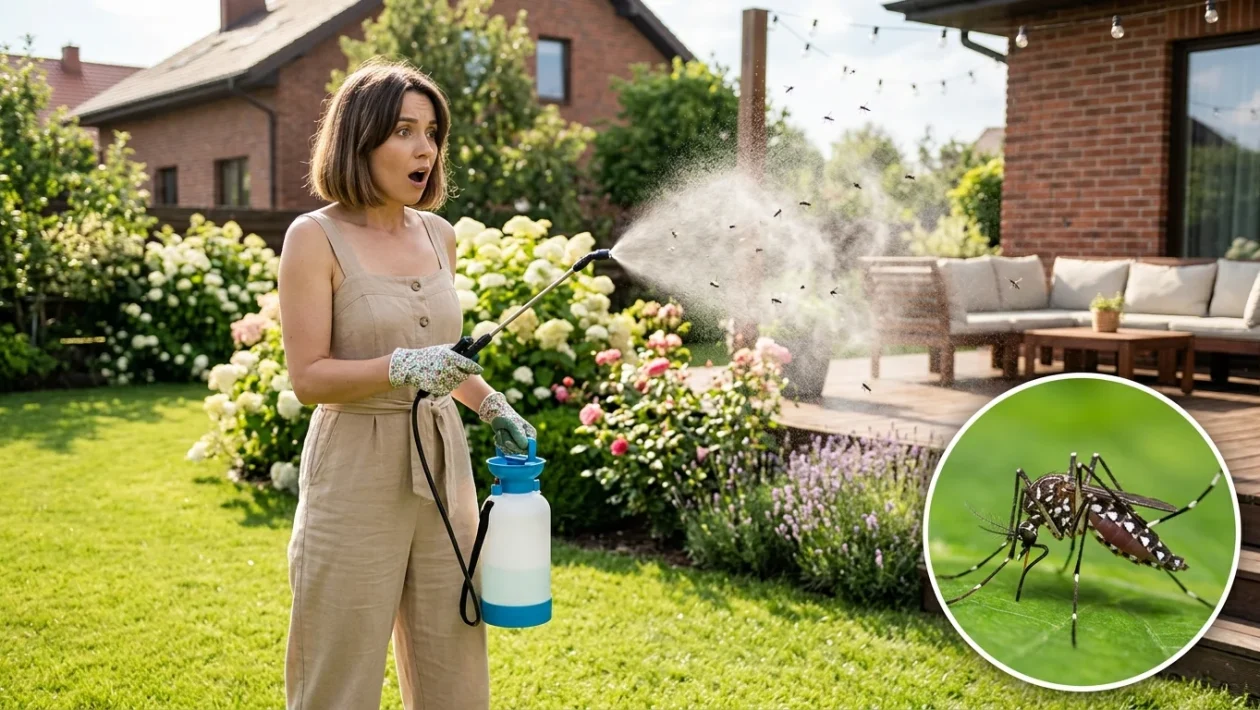
Backyard mosquito sprays might be engineering a harder-to-kill pest. In Wake County, North Carolina, local mosquito populations are rapidly developing genetic resistance to pyrethroids, the most common class of insecticides used by homeowners and pest-control companies.
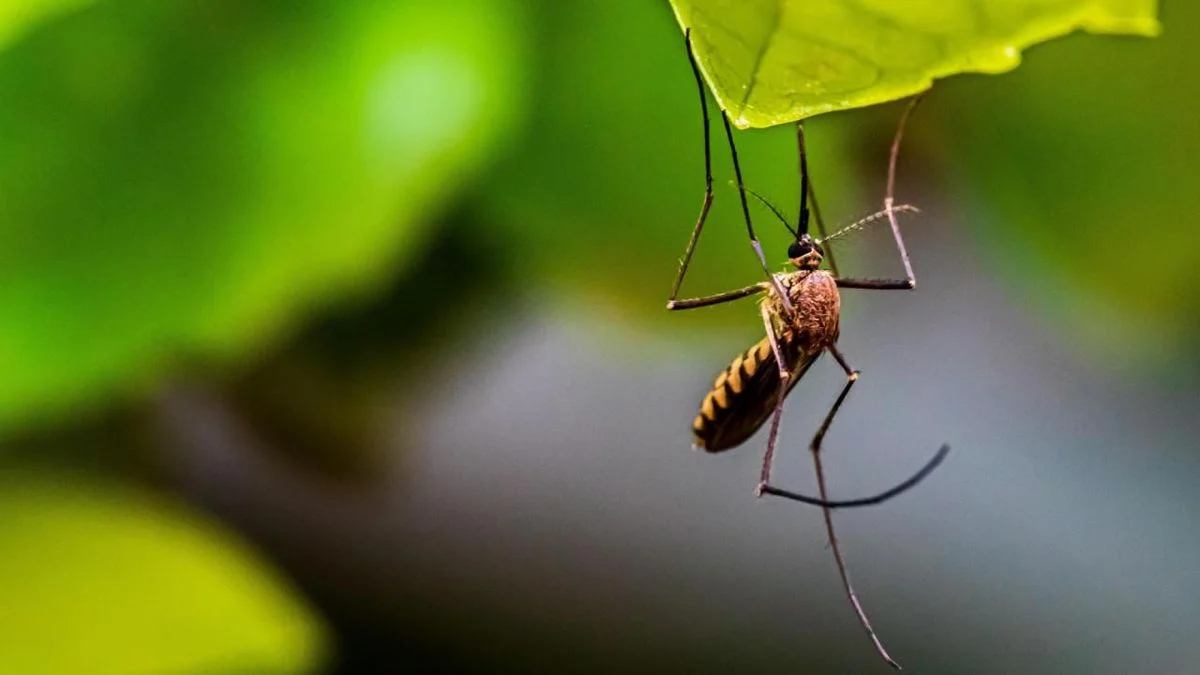
Close-up of a mosquito resting on foliage before an insecticide treatment.
Two recent studies from North Carolina State University mapped a startling genetic timeline. In 2016 and 2017, researchers found zero mosquitoes carrying the resistance-associated mutation.
By 2018, a small cluster of mutated mosquitoes appeared. Fast forward to 2023, and the mutation was present in 84% of sampled residential blocks, with nearly 40% of all tested mosquitoes carrying the trait.
Preliminary data from 2025 shows this number is still creeping upward.
“We did not expect to see it so widespread and at such high prevalence,” said Martha Burford Reiskind, an associate professor of biological sciences at NC State and a corresponding author of the studies.
The Danger of Losing Our Best Weapon
Pyrethroids have not stopped working completely. Instead, scientists view the current mutation as a biological early warning system.
Mosquitoes carrying two copies of the mutation can already survive standard pyrethroid doses. As additional mutations stack up, complete chemical immunity could follow.
This alarms public health officials. Pyrethroids are cheap, effective, and relatively safe for humans and pets. They remain the primary chemical weapon used to rapidly knock down adult mosquito populations during a disease outbreak.
The NC State studies focused specifically on the Asian tiger mosquito. This invasive, aggressive daytime biter arrived in the continental United States in the 1980s.
It is capable of transmitting dog heartworm alongside human viruses like dengue, Zika, and chikungunya. While these diseases are not currently spreading via tiger mosquitoes in Wake County, the vector is already well established.
“Our main arsenal for bringing down mosquito populations rapidly during a disease outbreak is really pyrethroids,” Reiskind said. “What we want is a population that’s susceptible.”
Wealthy Neighborhoods Drive the Mutation
Researchers discovered a direct correlation between high property values and elevated mosquito mutation rates. They used home values as a proxy for a neighborhood’s ability to afford regular private mosquito treatments.
The science of natural selection explains the geographic pattern. When a yard is heavily sprayed with pyrethroids, susceptible mosquitoes die.
The survivors—those carrying the genetic mutation—reproduce, passing their chemical armor to the next generation. Over time, these resistant offspring spread well beyond the property lines where the chemicals were initially applied.
While the studies did not track pesticide applications at individual homes, the geographic data suggests repeated backyard treatments are creating intense selection pressure.
How Pest Control Companies Are Reacting
Keith Brown, owner of Mosquito Shield of Wake County, noted his company has not yet seen an increase in treatment failures. His callback rate from unsatisfied customers remains stable at just 2% to 3%.
When mosquitoes do return quickly, Brown said weather and overlooked breeding sites are usually to blame. However, he acknowledges the looming threat of chemical resistance.
“There may be some resistance coming,” Brown said. “What we would stress is integrated pest management, using the growth inhibitors, using the larvicides in combination with the insecticides.”
Technicians treat properties every 12 to 21 days based on weather and mosquito activity. They alternate between pyrethroids, a proprietary natural oil blend, and other targeted products.
Mosquito Shield also relies on insect growth regulators to stall larval development and targeted stations for egg-laying females.
“Less use of pesticides, the better, and we can still maintain that control,” Brown said.
Researchers warn that simply swapping brands is not enough. Pest control companies must use chemicals with entirely different modes of action to prevent resistance from building.
Climate Expansion and Pollinator Protection
Warming temperatures are compounding the chemical crisis. Unlike many tropical species, the Asian tiger mosquito lays eggs that survive freezing winters, allowing it to push farther north into major metropolitan areas.
Locally, early droughts followed by heavy rains in Wake County have triggered massive, rapid hatches. “The warmer it is, the faster they reproduce,” Brown noted.
As spraying intensifies, collateral damage to pollinators remains a critical concern for homeowners.
Brown said his technicians are trained to monitor wind drift and apply treatments early or late in the day when bees and butterflies are less active. They actively avoid spraying flowering plants, fruits, and vegetables.
Instead, crews target only the shaded, damp vegetation where adult mosquitoes rest.
A Window of Opportunity
Scientists stress that completely abandoning backyard mosquito control is unnecessary. The key is disrupting the mosquito’s life cycle through multiple strategies rather than bombarding them with a single chemical.
Reiskind believes reducing pyrethroid reliance now could potentially reverse the genetic trend. Her team is currently studying whether carrying the mutation becomes a biological disadvantage for the insect when the pesticide is removed from its environment.
“We’re actually very optimistic that we’ve caught it early,” Reiskind said.