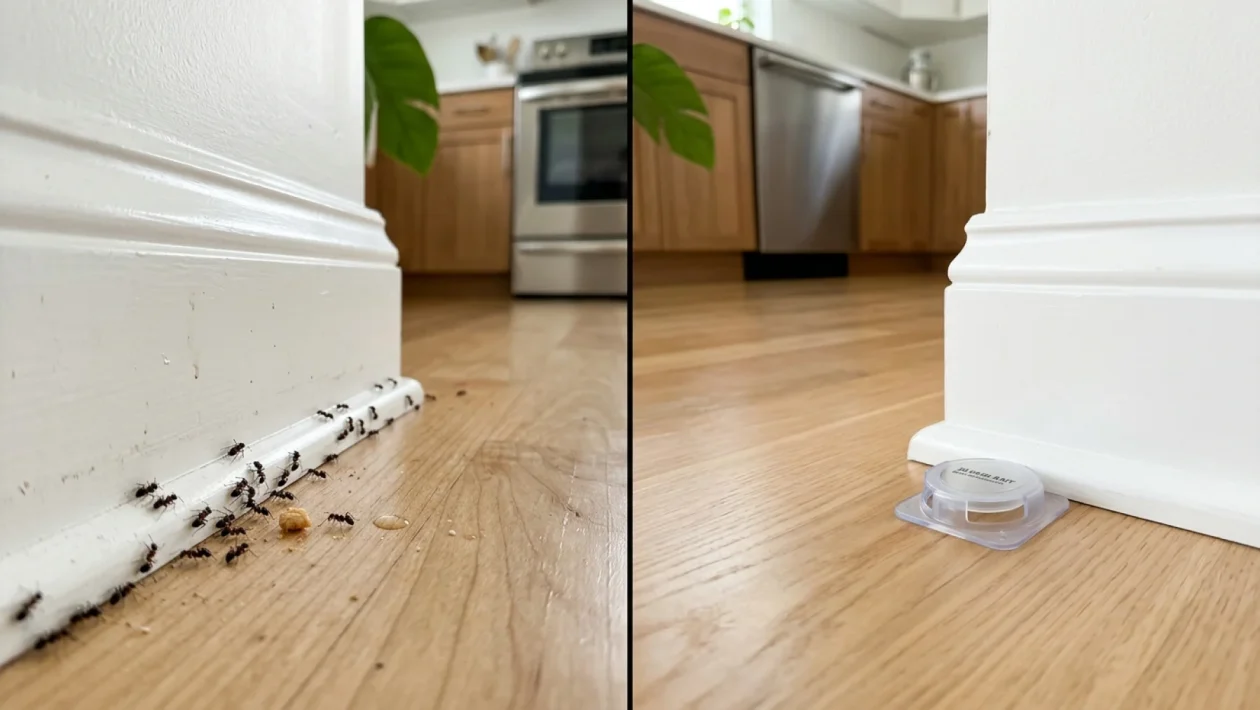
You flip on the kitchen light for a midnight glass of water, and there it is: a solid, shifting black line of uninvited guests marching straight across your baseboards.
Dealing with a sudden bug invasion right now in July 2026 isn’t just an annoyance—it feels like a relentless siege on your hard-earned property.
Forget emptying endless cans of toxic chemical sprays at the stragglers. To reclaim your home, you need to understand exactly why these pests are breaking in and deploy Ant Control Methods that aggressively target the colony’s epicenter.
4 Hidden Reasons Your Kitchen Is Invaded
Before you can stop the march, you have to figure out what is rolling out the red carpet for these tiny home invaders.
Ants don’t just wander inside for fun; they are highly efficient survival machines on a very specific mission.
In fact, a staggering pest control statistic reveals that an average North American home can inadvertently house up to 50,000 ants inside a single, undetected wall cavity.
Here are the four massive triggers pulling them indoors:
1. The Moisture Magnet: A dripping sink trap or a slightly weeping refrigerator water line is an oasis. Ants need a steady water supply just as much as they need food.
2. Invisible Food Trails: That microscopic crumb of granola that slipped under the stove last Tuesday? To a scout ant, it is an all-you-can-eat buffet. They leave behind invisible chemical pheromone trails to guide the rest of the army right to it.
3. Weather Extremes: The intense July heat bakes the soil outside, driving colonies deeper underground or straight into your climate-controlled basement seeking refuge.
4. Unsealed Entry Points: If a piece of paper can slide under your back door, an ant can easily walk right in. Cracked window caulking and unsealed utility pipes are open highways.
How To Destroy The Source
If you stomp on a scout ant, the queen simply lays ten more eggs to replace it.
True elimination means you have to play the long game and turn their own workers into Trojan horses.
Instead of panicking, grab some reliable liquid bait stations from your local Canadian Tire or Home Hardware.
Here is your foolproof, step-by-step battle plan to wipe out the colony:
- Scrub the highways: Wipe down all affected counters and floors with a heavy mixture of water and white vinegar. This instantly erases the pheromone trails the scout ants rely on.
- Deploy the bait: Place slow-acting liquid or gel traps directly near their entry points, but entirely out of reach of your kids and pets.
- Hold the line: This is the hardest part. You will see a massive swarm of ants rush the bait over the next 48 hours. Do not kill them! Let them feast.
- Wait for the collapse: The workers carry the poisoned bait back to the nest, feeding it directly to the queen. Without the queen, the entire colony collapses from the inside out within a week.
“If you only kill the worker ants you see on the counter, you are essentially just giving the colony a haircut. You must use slow-acting bait so they can carry the lethal payload back to the queen.” — Dr. Aaron Miller, Urban Entomologist.
To give you a clearer picture of your tactical options, here is a quick breakdown of how standard pest control methods stack up:
| Control Method | The Verdict |
|---|---|
| Aerosol Bug Sprays | Kills on contact, but alerts the colony to avoid the area. Highly ineffective for long-term control. |
| Slow-Acting Baits | Takes 3-7 days to work, but effectively eradicates the entire hidden nest and the queen. |
Frequently Asked Questions About Ant Invasions
Do DIY vinegar sprays actually kill the nest?
No, vinegar will not kill a nest. It is an excellent tool for wiping out the chemical trails on your counters, but it only deters ants temporarily. It won’t solve the root problem hiding behind your drywall.
What is the difference between a flying ant and a termite?
This is a crucial distinction for your home’s structural integrity. Flying ants have pinched, narrow waists and wings of unequal length. Termites have thick, straight bodies and four wings of the exact same length. If you spot termites, skip the DIY route and call a pro immediately.
Why do they ignore my bait traps?
Ants change their dietary preferences based on the colony’s current needs. Sometimes they crave sugars (sweet baits), and other times they desperately need proteins or fats. If they ignore your sweet liquid bait, switch to a protein-based granular trap.
🤝 Reclaiming your home from a summer pest invasion doesn’t require a chemistry degree, just a little patience and the right strategy.
💡 By targeting the queen and sealing off those hidden moisture leaks, you are essentially fortifying your house against future insect sieges.
📱 Share your thoughts or your own pest-busting success stories in the comments below!
👇 Good luck out there, keep your kitchen dry, and enjoy a bug-free summer!