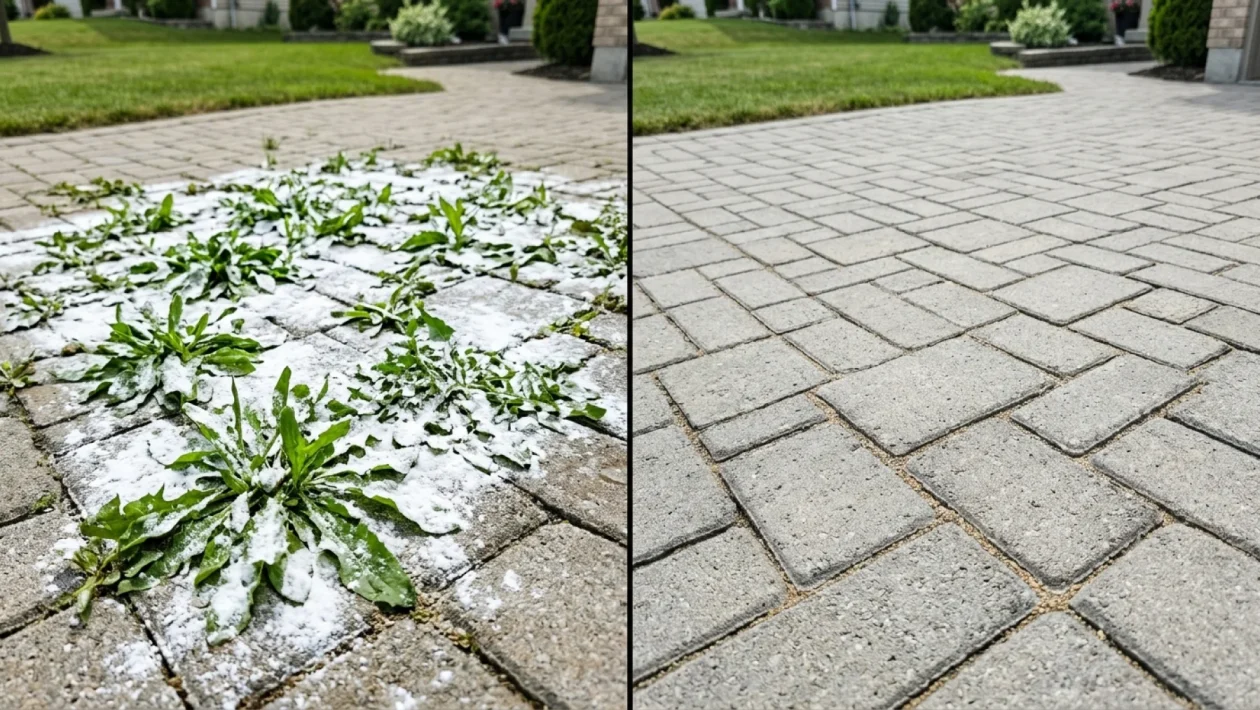
You are losing the war on your driveway.
Every single weekend, you find yourself hunched over the interlocking brick, snapping off green stems that seem to respawn overnight. If you are exhausted by the endless plucking but refuse to drench your property in synthetic chemical herbicides, the ultimate solution is likely sitting in your kitchen pantry right now.
Baking soda is an absolute powerhouse for natural weed eradication when deployed correctly. It operates as a ruthless desiccant that violently dehydrates plant tissue on contact, shutting down the invader without putting your family or pets at risk.
Baking Soda Weed Annihilation
To understand why this works, you have to look at the brutal, functional science of sodium bicarbonate.
When this simple white powder touches plant foliage, it aggressively absorbs the plant’s internal moisture. The biological engine of the weed simply shuts down.
In fact, here is a hard truth about this compound: Sodium bicarbonate pulls water out of plant cell walls so rapidly that a shallow-rooted surface weed can lose over 60% of its internal moisture within the first 24 hours of application.
It causes the leaves to curl, dry up, and eventually die off completely.
“Sodium bicarbonate does not discriminate. It is a highly effective desiccant, but if you accidentally blast your prized garden petunias while aiming for a rogue dandelion, they will both turn to dust.”
The Complete Chemical-Free System
Applying this stuff requires a bit more finesse than just blindly tossing a bright orange box of Arm & Hammer across your lawn.
You need a targeted, methodical approach to ensure maximum destruction of the weed without wasting your time.
- Wait for a bone-dry summer day with absolutely zero rain in the forecast for at least 48 hours.
- Lightly mist the leaves of the target weed with a spray bottle of tap water to create a sticky, receptive surface.
- Dust a generous, even layer of baking soda directly onto the wet leaves and heavily around the immediate base of the stem.
- Walk away and let the sun bake the powder into the plant, repeating the process three days later if stubborn green spots remain.
Remember, this is primarily a surface-level attack. Deep-rooted perennial monsters might survive the first round and try to regenerate, requiring a ruthless follow-up strike.
Spotless Driveways
This specific eradication method is strictly not for your lush garden beds.
This technique shines brilliantly in the structural battlegrounds of your property: sidewalk cracks, driveway expansion joints, and those impossibly tight gaps between your patio stones.
Because these concrete and stone areas are physically isolated from your delicate lawn turf, you can safely apply the powder without the fear of collateral root damage.
| The Driveway Target | Expected Result |
|---|---|
| Shallow driveway moss | Dies and turns brown in 24 to 48 hours. |
| Young crack-sprouting dandelions | Severe wilting, requires base-dusting to hinder roots. |
| Deep-rooted mature thistles | Surface dies, but the taproot may survive for round two. |
If you have massive, established weeds ripping through your asphalt, you might need to grab a heavy-duty weed scraper from Canadian Tire first. Rip out the bulk foliage, and then use the powder to essentially salt the earth inside the remaining crack.
Healthy Soil
Here is the critical warning that most amateur gardeners ignore: mindless over-application will completely wreck your dirt.
Frequent, heavy dumping of baking soda significantly alters your localized soil chemistry. It drastically increases both the salinity and alkalinity of the earth.
If you ruin the pH balance of your garden beds, nothing will grow there for a very long time. It becomes a barren wasteland.
This is exactly why you must keep this powdery method restricted to non-cultivated, hardscape areas. For your actual garden beds, stick to heavy organic mulching to block sunlight, or pull weeds by hand after a deep summer storm when the soil is loose and forgiving.
Frequently Asked Questions
Does baking soda kill the roots permanently?
Usually, no. It excels at destroying the above-ground foliage through extreme dehydration. For older weeds with deep, established taproots, the root system may survive underground and push up new growth. This requires repeated surface applications to fully exhaust the plant’s stored energy reserves.
Can I mix it with vinegar to make a stronger weed killer?
Absolutely not. Mixing an alkaline base like baking soda with an acid like vinegar just creates a fizzy chemical reaction that entirely neutralizes both active ingredients. You are left with useless salty water. If you want to use high-acidity horticultural vinegar, apply it entirely on its own.
Will boiling water work just as well in driveway cracks?
Yes. Pouring a kettle of rolling boiling water directly onto a weed literally cooks the plant cells instantly. It is a fantastic, zero-residue alternative for patio cracks, though you have to be incredibly careful not to splash your own boots while pouring.
🤝 Share your thoughts and let me know if this classic pantry staple finally helped you reclaim your driveway from those relentless green invaders.
💡 Remember, taking the natural route requires a bit more patience and strategic timing than just spraying harsh synthetics, but the long-term safety payoff for your property is immense.
📱 Try it out this weekend while the intense July 2026 sun is blazing, take some before-and-after photos, and show off your spotless patio.
👇 Good luck out there, keep your precious garden beds safe, and happy hunting!