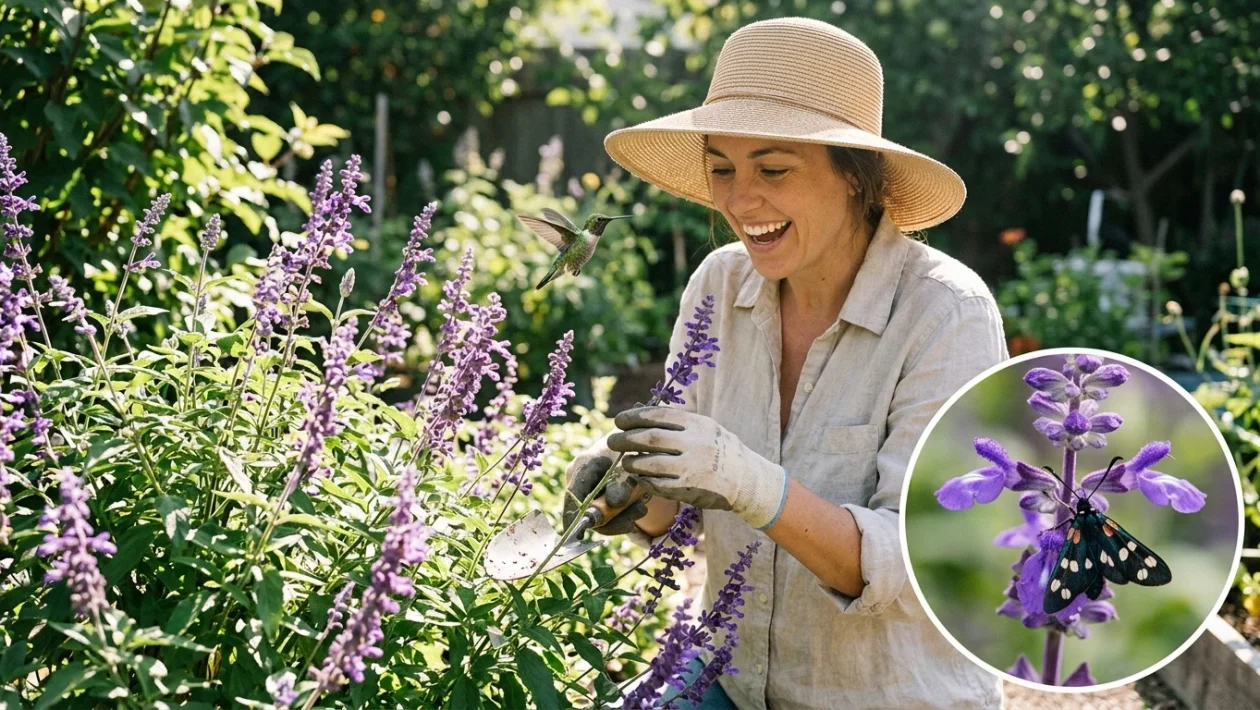
A simple video of a striking moth resting on a salvia bloom recently captivated the r/gardening community on Reddit. The footage, shared by user u/ookle_, quickly transformed into a masterclass on why experienced gardeners consider the plant a non-negotiable addition to their flower beds.
Identifying the “Cool Critters”
The original post highlighted how salvia attracts “so many cool critters,” prompting fellow gardeners to immediately crowdsource the identity of the insect featured in the clip.
“That’s an eight-spotted forester moth,” one commenter wrote. “Their caterpillars eat grapevine and Virginia creeper.”
The conversation also cleared up some botanical confusion. When a user asked if the plant was the psychoactive species Salvia divinorum, u/ookle_ was quick to clarify. They explained it was a purely ornamental variety known as Salvia nemorosa Sallyrosa, specifically the ‘April Night’ cultivar.
A Magnet for Hummingbirds
While the moth stole the initial spotlight, the thread quickly pivoted to salvia’s reputation as an elite hummingbird attractant.
“My salvias bring more hummingbirds than any other plants I have,” one gardener shared. “I will never not have them because of it. You can’t look at a plant for longer than a minute without a hummingbird appearing.”

EnergySage solar promotion imagery.
Beyond its magnetic pull on local wildlife, salvia is celebrated for its low-maintenance nature. The plant provides vibrant color and an exceptionally long bloom period in exchange for very little effort.
“I love how aggressively it’ll keep blooming all summer if you continue to deadhead it,” u/ookle_ noted.
Ecosystem and Personal Benefits
Cultivating a flower bed that draws moths, hummingbirds, and bees does more than just create a beautiful backyard viewing experience. It actively supports and stabilizes the local ecosystem..
For homeowners trying to offset grocery bills by growing their own food, pollinators are essential. These beneficial insects help fruit, vegetable, and herb crops produce significantly larger, healthier harvests.
Pairing a high-yield pollinator plant like salvia with edible garden beds ensures a steady stream of wildlife exactly where it is needed most. Tending to these plants also yields personal benefits, as regular pruning and deadheading introduce outdoor movement into the day, creating a routine proven to reduce stress.