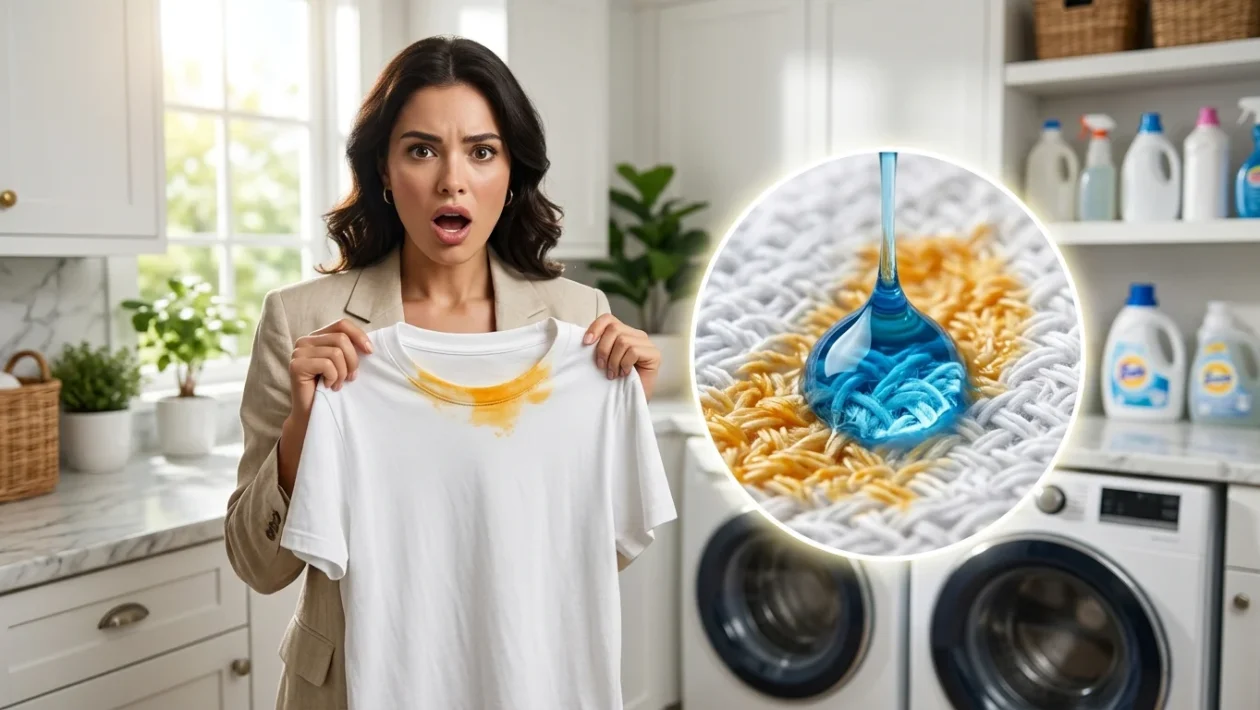
Wearing daily SPF is a non-negotiable skincare habit, but it often leaves an unsightly casualty behind: stained white clothing. Whether it is a quick swipe to clear away sweat or the friction of a collar, products like tinted mineral moisturizers easily transfer onto fabric and ruin basic tees.
Kristi Lord and Lindsay Droz, co-founders of L’AVANT Collective, warn that treating these spots requires a specific strategy. Sunscreen is formulated to endure water and grip the skin, making it an absolute nightmare for laundry.
“Sunscreen stains are particularly stubborn to get out of clothes because they’re a combination stain,” Lord explains. “They contain oily emollients, waxes, silicones, UV filters, and other ingredients designed to stick to skin and resist water.”
Why Stains Turn Yellow or Orange
The type of SPF you use dictates the mess left behind. Chemical sunscreens deposit oily residues that trap dirt and react with hard water minerals. Mineral formulas, which rely on zinc oxide or titanium dioxide, embed a stubborn white paste into clothing threads.
When a chemical sunscreen reacts with iron and other minerals in your wash water, it creates a distinct yellow or orange stain.
“As stains oxidize or are exposed to heat, discoloration gets worse,” Droz says. She stresses that removing the oily residue first—using liquid detergent, stain remover, or standard dish soap—is critical. Treating the color before removing the oil makes the stain nearly impossible to lift.
The Worst Mistake You Can Make
The single biggest error happens right at the dryer door. Tossing a shirt into the dryer before the stain is entirely erased guarantees failure.
“Heat can permanently set both the oily residue and any discoloration into the fabric,” Lord warns.
Another frequent mistake is aggressive rubbing, which forces the waxes and oils deeper into the garment. Instead, Lord recommends gently blotting the excess product off the surface.
Apply a liquid pretreatment or dish soap, let the garment sit for 15 to 20 minutes, and run it through the wash. Check the spot while the fabric is still wet. If any trace remains, repeat the treatment rather than drying the item.
Water Temperature and the Bleach Warning
When tackling oil-based residues, water temperature matters. Droz notes that warm water dissolves sunscreen oils far better than cold cycles, provided the garment’s care label allows the heat.
If you plan to use bleach, proceed with extreme caution. Chlorine bleach causes a chemical reaction with iron-tainted sunscreen stains, turning light yellow spots into highly noticeable rust-colored disasters.
“If bleaching is appropriate for the fabric, it is best used only after the sunscreen residue has been removed,” Droz explains. “For many white fabrics, an oxygen-based bleach is a gentler and often safer option for lifting any remaining discoloration.”
It may take several rounds of pre-treatment and washing to completely break down the residue. Sticking to the process before applying heat is the only way to save a ruined garment.