You open the dryer door late at night, expecting warm, fresh bedding. Instead, you pull out a heavy, damp, twisted ball of fabric.
It is one of laundry’s most common annoyances. But a few simple adjustments to your routine can stop your sheets from turning into a tangled knot.
According to Elizabeth Shields, a laundry expert at SuperCleaning in Louisville, Kentucky, there are several tactical steps you can take to ensure a perfect, even dry.

Yellow bed sheets draped over the edge of an open dryer drum.
Shake and Separate
Never transfer your sheets directly from the washer to the dryer in a wet lump. Shields recommends shaking each piece out forcefully before loading.
“The more spread out they are, the better they’ll tumble,” Shields explains.
You also need to reduce your load size. Washing and drying sheets with heavy towels or clothing restricts movement. Overloading the drum means the fabric cannot tumble freely, forcing it to wrap around itself and leaving the core soaking wet.
Deploy Dryer Balls
If shaking them out does not solve the problem, add physical agitators to the load.
Shields suggests tossing two or three reusable wool dryer balls into the drum. You can also use clean tennis balls if you are in a pinch.
These items physically break up the fabric as it tumbles. They absorb excess moisture, prevent twisting, and significantly speed up the overall drying time. If you lack dryer balls, throwing a clean, dry bath towel in with the wet sheets achieves a similar effect.
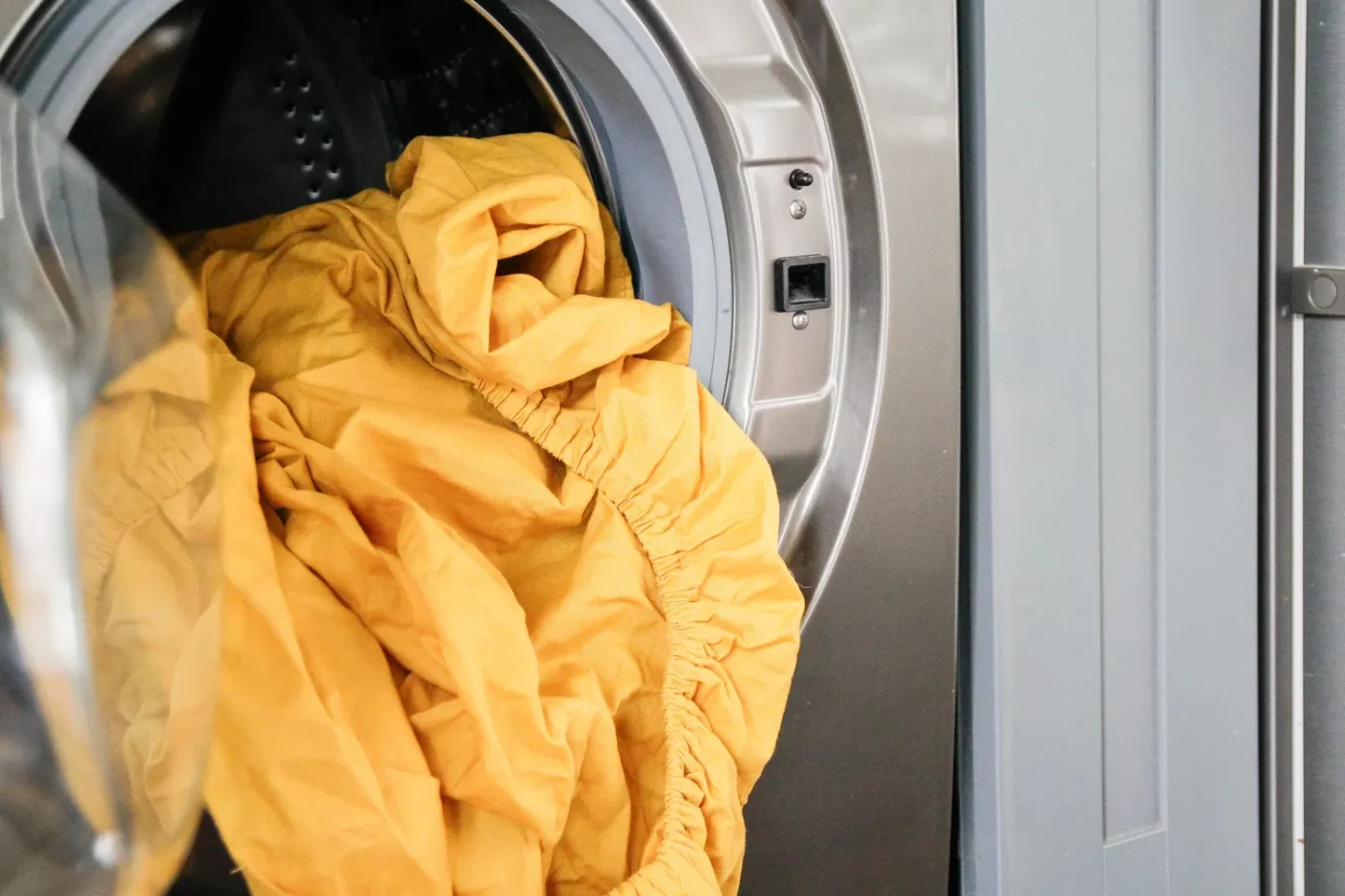
A wide view of freshly washed yellow sheets resting inside a household dryer.
Drop the Temperature
High heat might seem like the fastest way to dry heavy bedding, but it often causes the fabric to bind tightly together.
Switching to a lower heat setting prevents the fabric from overheating and scrunching up.
“Yes, it might take a little longer, but the payoff is smooth, untangled sheets,” says Shields. “Low and slow is the way to go.”
Use a Wrinkle-Releaser
Balled-up sheets emerge from the machine covered in deep creases. You can stop the twisting and the wrinkles simultaneously with a simple spray.
Lightly spritz your damp bedding with a commercial wrinkle-releaser right before you close the dryer door.
This helps relax the fibers, preventing the fabric from clinging and bunching up during the rotation cycle.
Evaluate Your Equipment and Fabric
Sometimes the problem is mechanical. A standard-sized dryer drum may simply be too small to handle thick, king-sized bedding.
If it fits your budget, upgrading to a larger appliance creates the necessary space for massive fabrics to tumble properly.
If a new dryer is out of the question, reconsider your bedding materials. Look for products specifically labeled as “quick-dry.” Because they require a fraction of the time in the machine, there is a much smaller window for the fabric to twist into a knot.