The Viral Claim
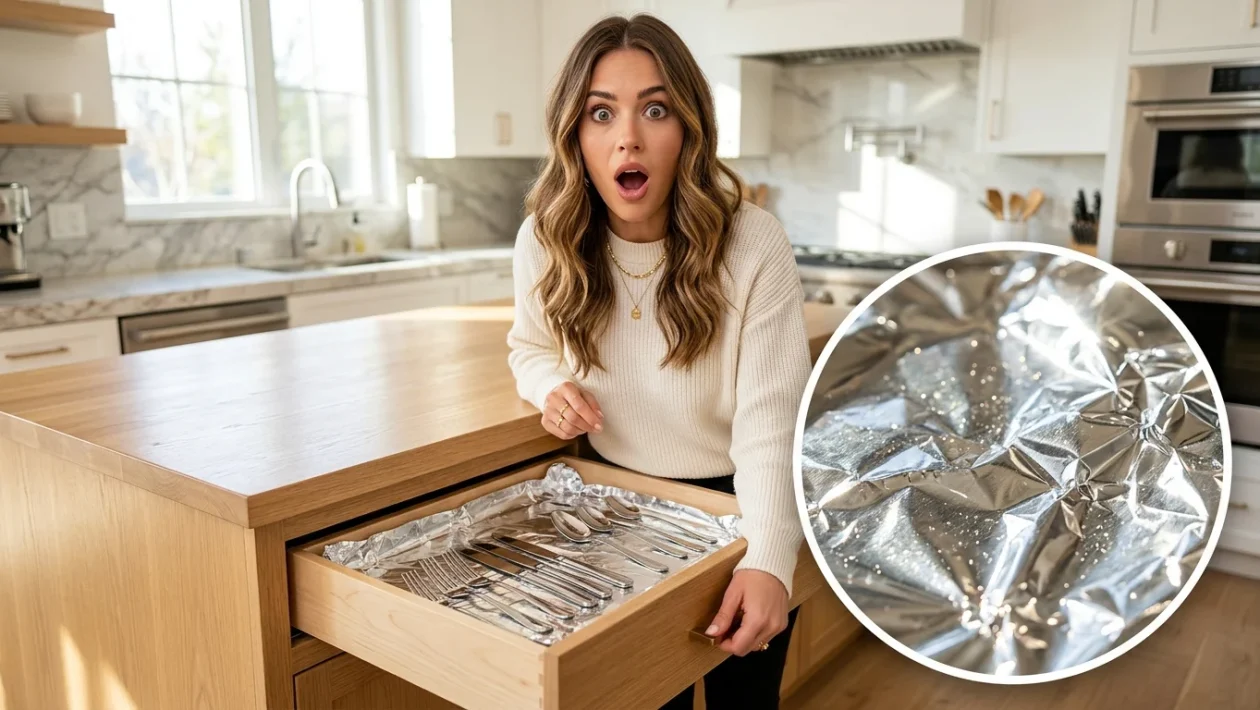
Kitchen hacks often promise to revolutionize our daily routines with minimal effort. One trick currently making the rounds involves lining your cutlery drawer with a standard sheet of aluminum foil.
Proponents of the hack claim this simple barrier keeps silverware shiny, prevents tarnishing, and boosts overall hygiene. But looking closely at the science reveals a different reality.
Does It Actually Prevent Tarnish?
Many people lay down foil hoping to protect their valuable sterling silver. Tarnishing happens when silver reacts with sulfur compounds in the air, creating a dark, stubborn layer of silver sulfide.
Aluminum is highly chemically reactive. When you combine aluminum foil with baking soda and hot water, it creates an electrochemical reaction that actively pulls tarnish off silver.
However, material science experts confirm that simply resting dry silver on a sheet of foil does nothing. Without water and baking soda to act as a catalyst, dry foil cannot actively remove or prevent tarnish.
The Real Benefit: Easy Cleaning
While it fails as a chemical cleaner, foil does offer practical mechanical benefits. It creates a cheap, removable shield that catches crumbs, dust, and stray food particles.
When the bottom of the drawer gets dirty, you simply toss out the foil liner rather than scrubbing the wood.
Illuminating Dark Spaces
Aluminum’s highly reflective surface naturally bounces ambient light. This brightens up deep or poorly lit drawers.
While it won’t replace a proper kitchen light, the glare makes it marginally easier to locate small utensils hiding in the back corners.
Scratch Protection
Wooden drawers frequently suffer from the constant scraping of heavy metal forks and knives. Over time, this leads to deep gouges and splinters.
A thin layer of foil provides a barrier that absorbs this daily friction, protecting the underlying wood from permanent damage.
The Hygiene Reality Check
Despite rumors circulating online, aluminum foil possesses zero antibacterial or antimicrobial properties. It will not magically sanitize your cutlery or kill drawer bacteria.
Food safety experts maintain that the only way to ensure hygiene is to wash utensils properly with hot water and detergent. Furthermore, cutlery must be completely bone-dry before it goes back into any drawer to prevent mold.
What The Research Says
Scientific studies support aluminum’s use in active, wet-cleaning methods for tarnished silver. The electrochemical reaction is well documented.
However, there is no peer-reviewed evidence suggesting a dry foil liner extends the lifespan of cutlery or keeps it structurally sound.
Better Alternatives to Foil
If you want to maintain your silverware properly, experts suggest skipping the foil altogether. Instead, clean out the bare drawer twice a month and use washable, non-slip drawer liners for better cushioning.
For valuable sterling silver, invest in specially designed anti-tarnish storage bags or cloths. These materials are chemically treated to absorb airborne sulfur compounds before they can reach your silver.