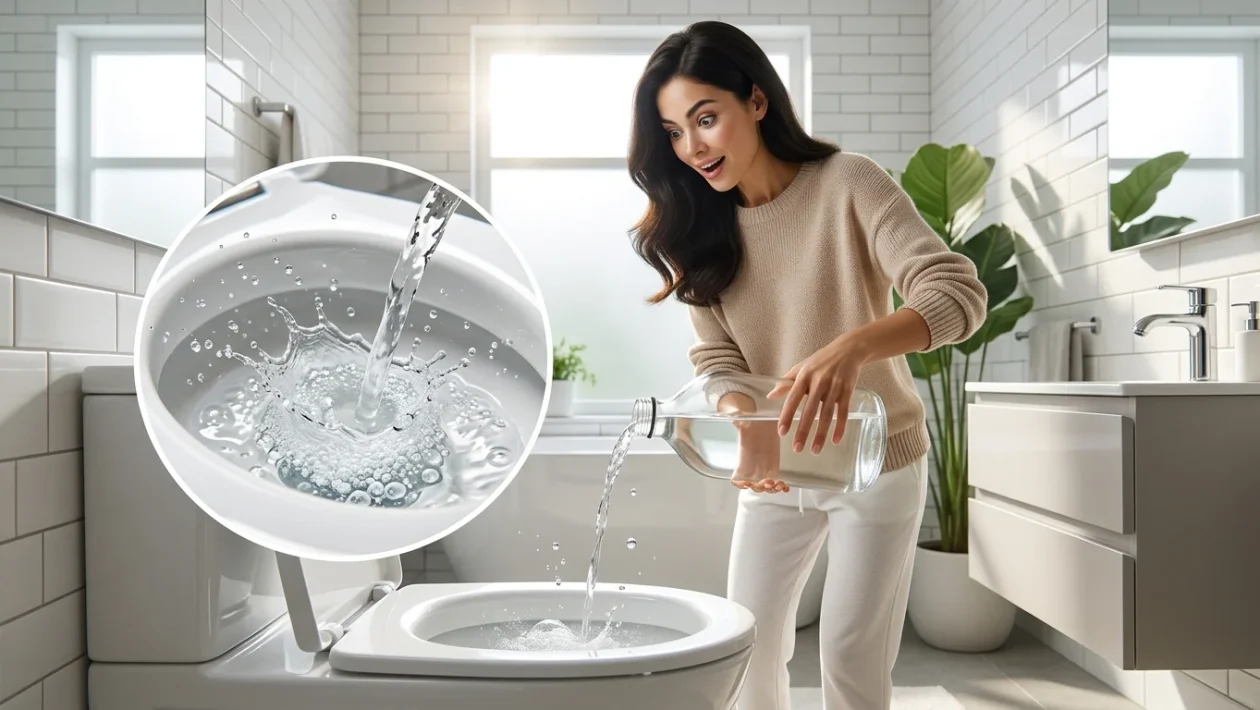
The toilet is arguably the most demanding fixture in any bathroom. Even when visually clean, it harbors hard-to-reach grime, lingering odors, and mineral rings.
One of the most effective, low-cost solutions requires a simple pantry staple: white vinegar. Pouring it into the bowl once a week serves as a powerful maintenance routine.
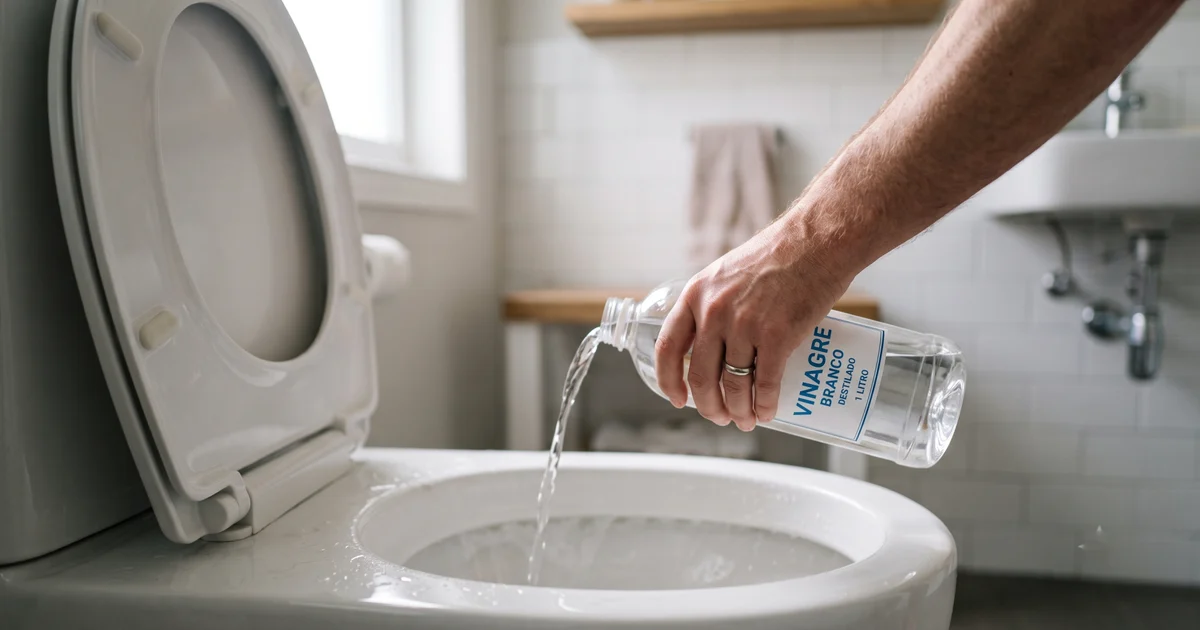
White vinegar bottle placed next to a bathroom toilet
The Science: Why Vinegar Works
The secret lies in acetic acid. This chemical compound naturally breaks down the limescale and hard water buildup that cause yellow or chalky stains inside the bowl.
It also tackles odors at the source. Instead of masking foul smells like commercial air fresheners, vinegar neutralizes the trapped organic residue thriving in damp, poorly ventilated areas.
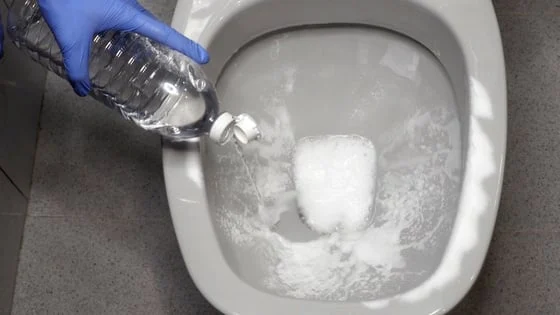
A clear bottle of white vinegar positioned by a modern white toilet bowl
Keep in mind that this method does not replace a deep clean with a toilet brush. It acts as preventative maintenance, stopping grime from calcifying and becoming nearly impossible to remove later.
The Weekly Application
The process is straightforward but requires consistency. Stick to standard white vinegar and avoid DIY mixtures with heavy-duty chemical cleaners.
Pour the vinegar into the bowl and let it sit. For light maintenance, 15 minutes is enough before scrubbing with a brush and flushing.
Close-up of a clean, sparkling white toilet bowl
For older, stubborn rings, extend the soaking time. If the stains persist, repeat the process the following week rather than dumping excessive amounts at once.
Tackling the Exterior
Vinegar is equally effective on the outside of the fixture. It easily lifts dust, hair, and splashes from the base, seat, and adjacent floor.
Apply it using a spray bottle or a microfiber cloth, let it sit briefly, and wipe it away with a damp rag.
However, exercise caution around metal parts. Because vinegar is highly acidic, leaving it on chrome finishes, metal hinges, or sensitive grout for too long can cause permanent corrosion.
The Bleach Danger
This is the most critical rule of bathroom cleaning: never mix vinegar with bleach, chlorine, or strong chemical disinfectants.
Combining these household products creates toxic chlorine gas. Exposure can cause severe irritation to the eyes, throat, and respiratory system.
If you are unsure about the ingredients in a commercial multi-surface cleaner, play it safe. Use vinegar alone, flush the bowl completely, and only apply another product afterward if absolutely necessary.
When Vinegar Isn’t Enough
Vinegar excels at weekly maintenance, but it cannot fix structural or plumbing failures.
If your toilet has thick, calcified crusts, you will need a specialized deep-cleaning product and vigorous scrubbing.
Likewise, if foul odors persist no matter how much you clean, the problem likely lies deeper. Persistent smells often point to a dirty P-trap, a failing wax ring seal, or inadequate ventilation, requiring a plumber’s intervention rather than a pantry staple.