That quick, subtle movement your plumber makes right before packing up their tools is not a random habit. By giving the main water shut-off valve a quarter-turn—closing and then reopening it—they are actively preventing a future plumbing disaster.
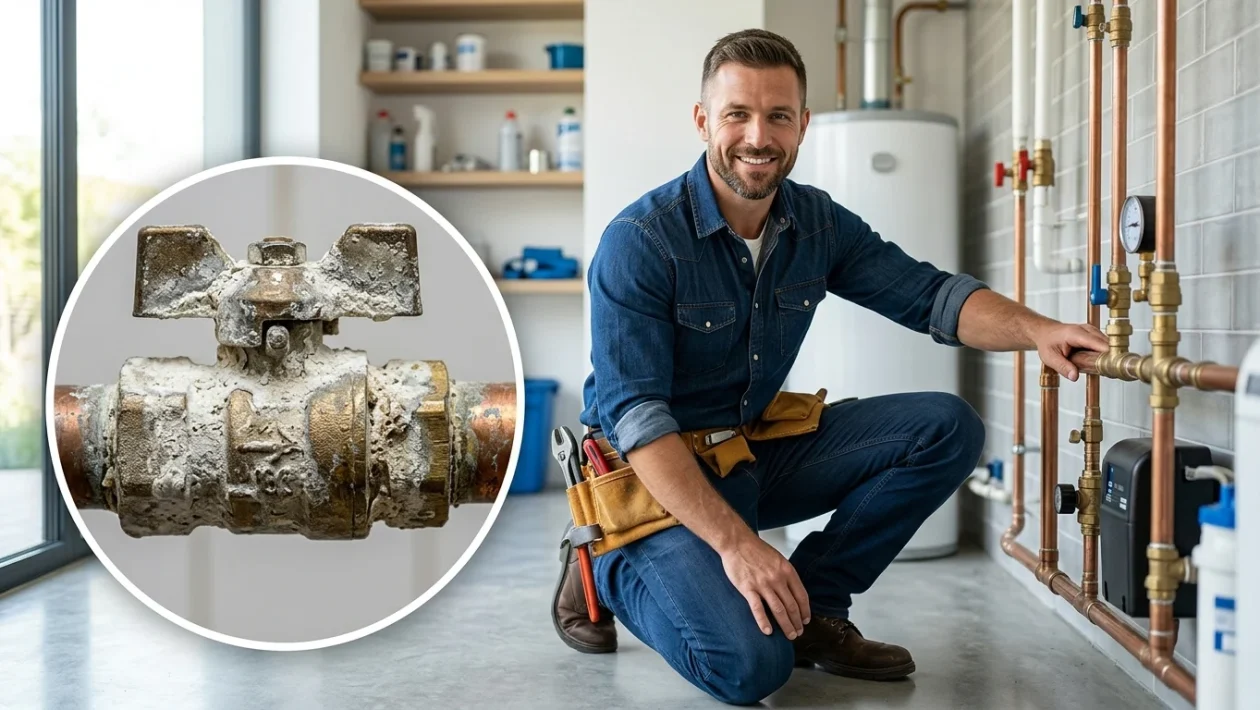
A metal water shut-off valve attached to residential plumbing.
This motion has nothing to do with checking water pressure or flow rates. Instead, it stops limescale from quietly welding the internal mechanism shut, ensuring the valve actually works the day you desperately need it.
The Hidden Mechanics of Limescale
The science behind a seized valve is simple daily chemistry. As water flows through your home’s pipes, it deposits minerals onto every available surface, including the inside of your shut-off valves.
A valve that sits untouched for years becomes a permanent fixture. Professionals note that valves ignored for more than two years carry a high risk of seizing. If a fixture goes unmanipulated for five years, it can become completely immobilized.
This mineral buildup destroys hardware efficiency. Manufacturers report that limescale reduces the life expectancy of valves by 40 percent. A fixture designed to last 20 years will often fail in just 12 if no one ever turns the handle.
Hardware Vulnerabilities
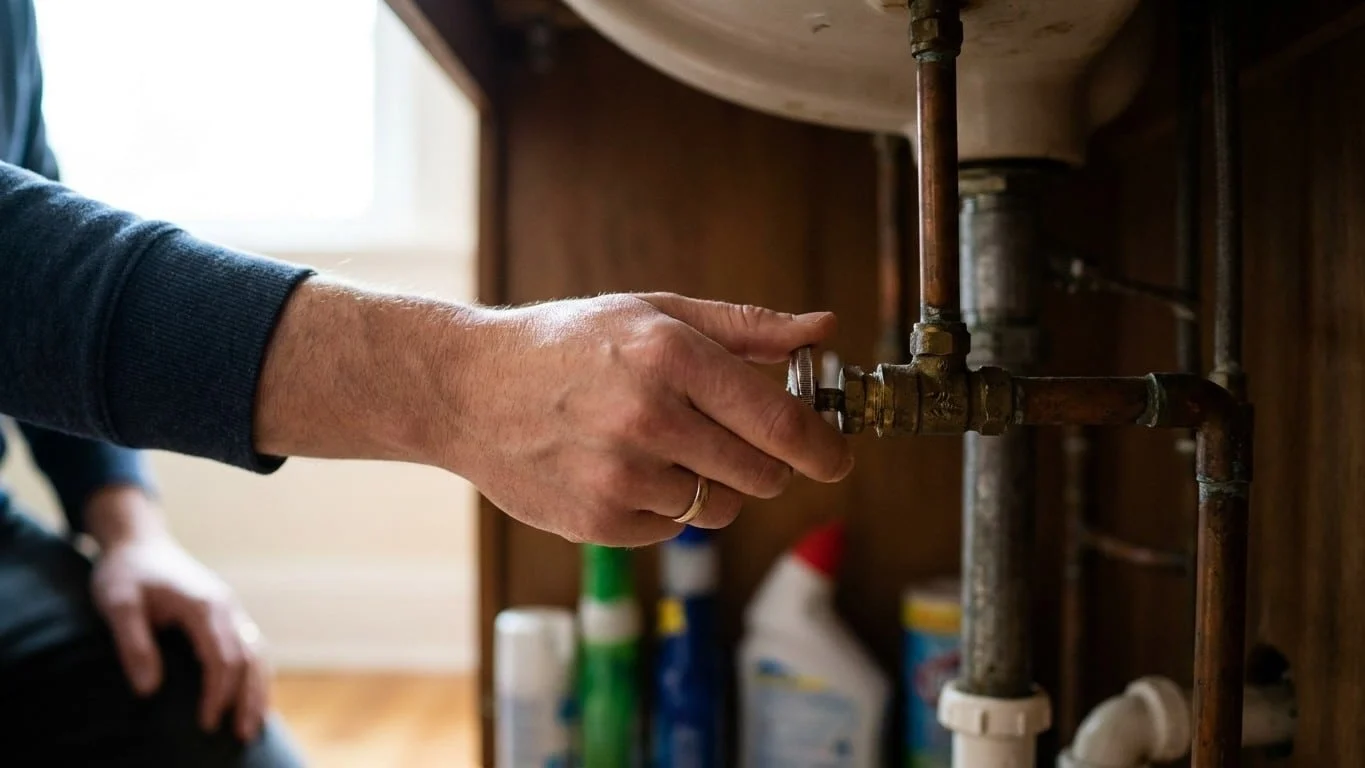
The type of plumbing hardware in your home dictates how quickly it will lock up. Standard angle valves, which feature a round handle or a twist knob under sinks, calcify incredibly fast.
Lever-style ball valves are far more resilient. Because they require only a simple quarter-turn and feature a sealed internal mechanism, they rarely seize.
Homes built between the 1960s and 1990s face an additional threat. Older brass and cast iron valves oxidize where they make contact with other metals. In these older systems, corrosion cements the moving parts together just as aggressively as calcium.
The Danger of Brute Force
Plumbing emergencies never happen on a convenient schedule. A pipe burst on a Sunday night or right before a vacation is exactly when you realize your main shut-off valve is welded open by calcium.
When faced with a stuck handle, most homeowners instinctively grab a wrench and apply brute force. Plumbers warn this is the worst possible reaction.
Forcing a calcified valve will often crack the housing. This instantly triggers a massive, unstoppable leak that cannot be controlled locally. You will then have to shut off the water supply at the street meter, potentially cutting off service to an entire building just to repair the broken valve.
Safe Unlocking and Routine Maintenance
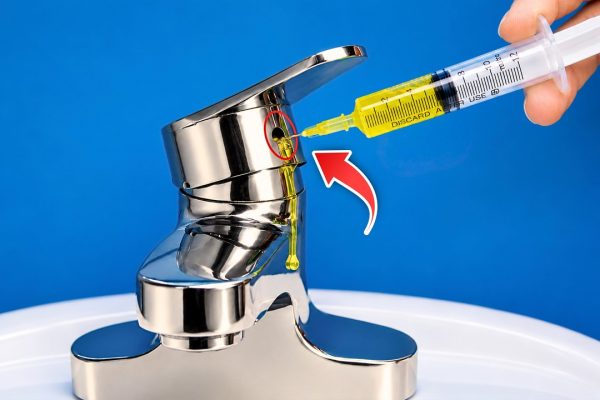
If your valve is already stuck, chemical intervention is the only safe approach. White vinegar or a specialized plumbing silicone grease can effectively dissolve the mineral bonds without causing mechanical damage.
Avoid standard lubricants at all costs. Plumbers strongly advise against using mineral oils or standard WD-40 on stuck water valves. These traditional oils degrade and destroy the internal rubber seals, which will eventually cause the valve to leak on its own.
Prevention remains the ultimate fix. Rotating every shut-off valve in your home once every six to twelve months takes just thirty seconds. Plumbing firms estimate this single habit prevents 95 percent of seized valve issues.
If a valve refuses to turn even after safe lubrication, replacing it immediately is the smartest financial move. The minor cost of a new shut-off valve is completely negligible compared to the devastating expense of uncontrolled water damage.