The Missing Pollinator Problem
Many gardeners watch their zucchini plants erupt in vibrant yellow flowers, only to find absolutely no vegetables growing.
This common frustration usually stems from a lack of natural pollinators like bees visiting the yard. Fortunately, you can step in and do the job yourself.
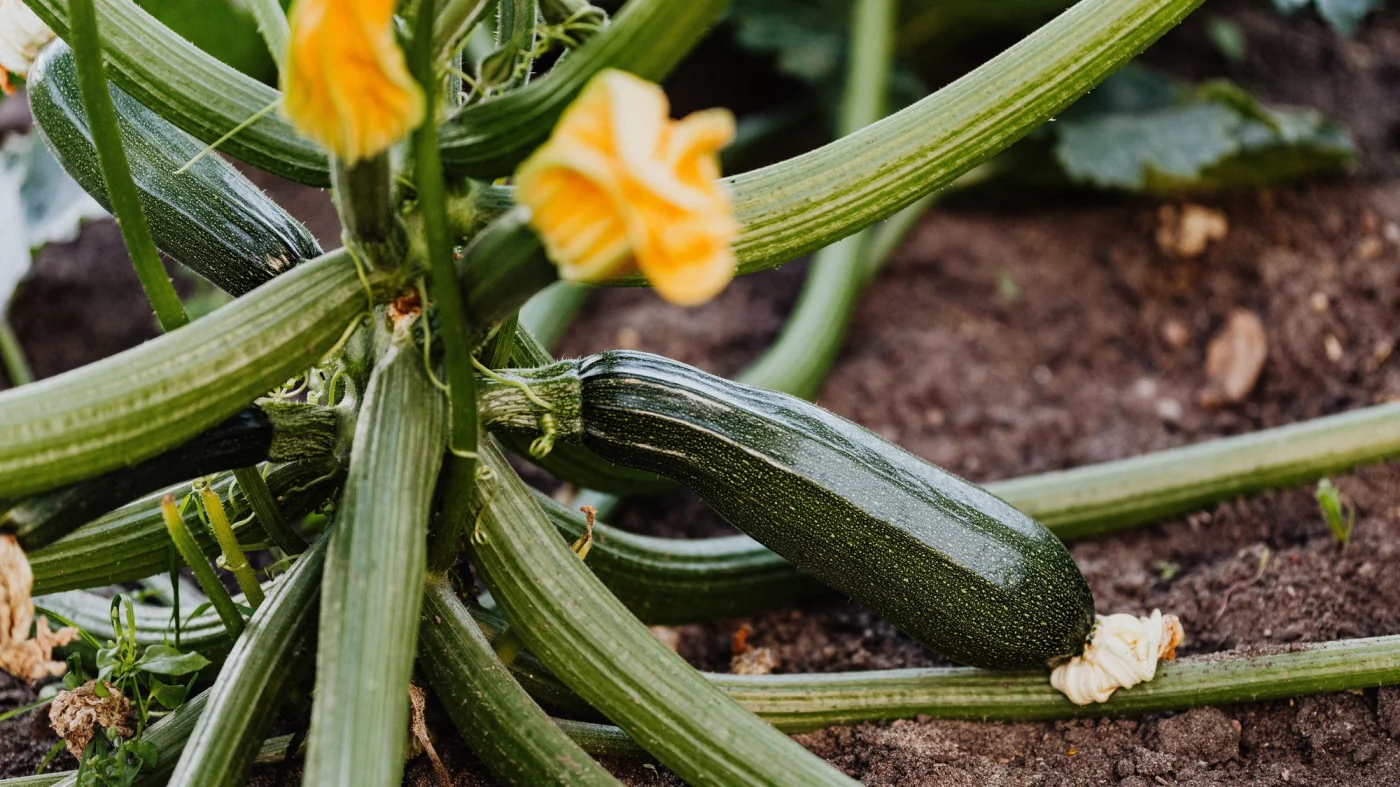
Bright yellow zucchini flowers blooming in a lush garden bed.
By using a basic cotton swab, you can manually transfer pollen and secure a heavy harvest. The entire process takes less than five minutes.
Identifying Male and Female Flowers
To successfully hand-pollinate, you must first learn how to distinguish between male and female blossoms.

A male zucchini flower growing on a long, slender stem without any fruit at the base.
Female flowers are easy to spot because they have a tiny, immature zucchini growing directly beneath the petals.
A female zucchini flower with a thick, swollen base resembling a tiny squash.
Male flowers look entirely different. They grow on long, thin stalks and have no swelling at the base. The male flower’s sole purpose is to produce pollen.
The Cotton Swab Method
Once you locate both types of open flowers on your plants, grab a clean cotton swab.
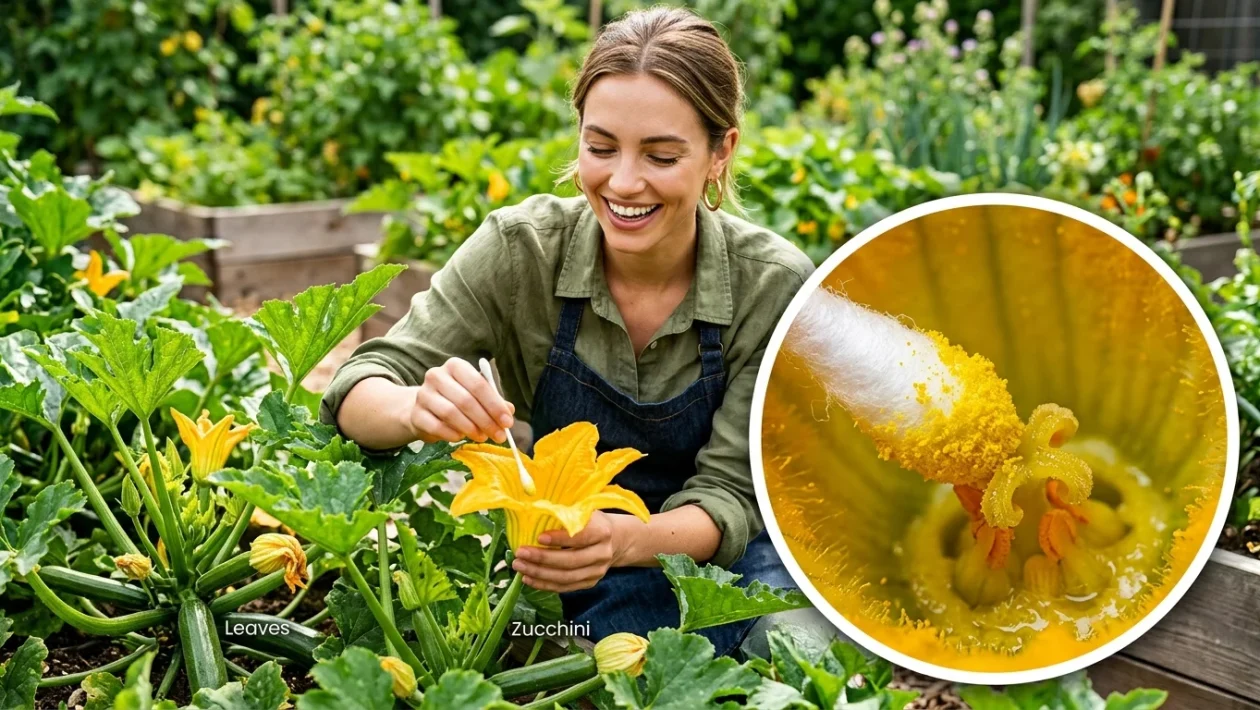
Gently rub the swab against the stamen inside the male flower to collect the yellow pollen. Carefully transfer this pollen by brushing the swab against the sticky center inside the female blossom.
The center of a zucchini flower coated in bright yellow pollen ready for transfer.
If you don’t have a cotton swab handy, you can pluck a fully open male flower. Peel back its petals and brush the pollen-coated center directly onto the female flower’s pistil.
Maximizing Your Harvest
Nature designed male flowers to be highly efficient. A single male bloom carries enough pollen to fertilize several female flowers in a single session.
If a specific plant lacks a male blossom on a given day, you can safely borrow a male flower from another zucchini plant in your garden.
This manual technique guarantees rapid results. Within just a few days, you will notice the small zucchini at the base of the female flower rapidly expanding.
It is a highly effective, low-effort strategy for greenhouse growers or anyone battling low insect populations during the crucial growing season.