Stainless steel is the undisputed workhorse of the modern kitchen. It handles boiling water, heavy cookware, and constant use without breaking a sweat.
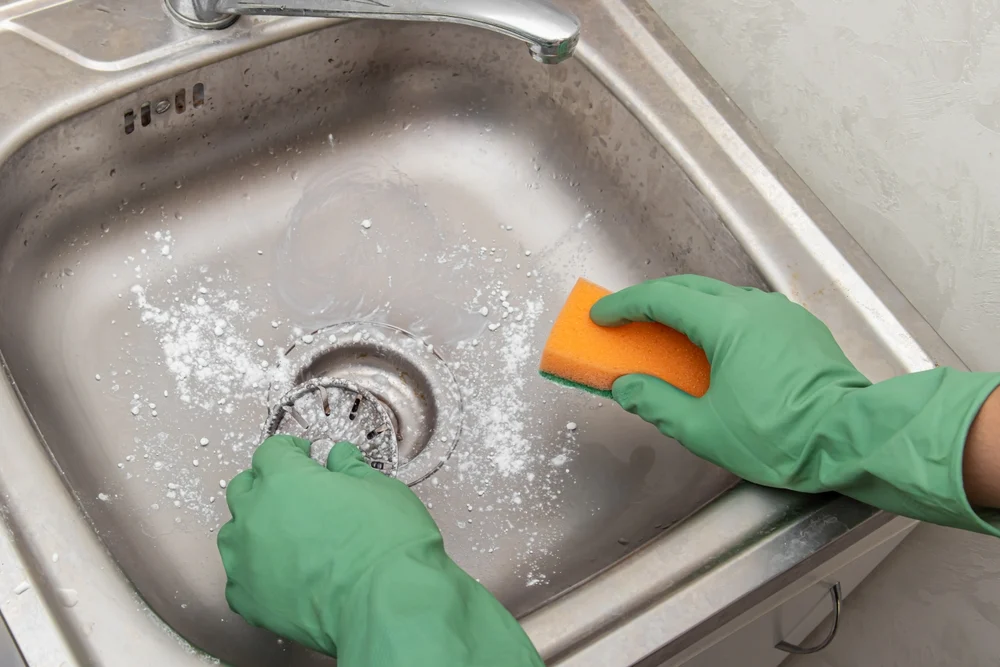
A stainless steel sink coated in baking soda during a routine deep clean.
Yet, daily exposure to hard water, grease, and acidic food rapidly leaves mineral deposits and unsightly stains. Restoring a dull sink does not require harsh, expensive chemicals. A simple 20-minute routine using standard household items will bring back its factory finish.
The Science Behind the Metal
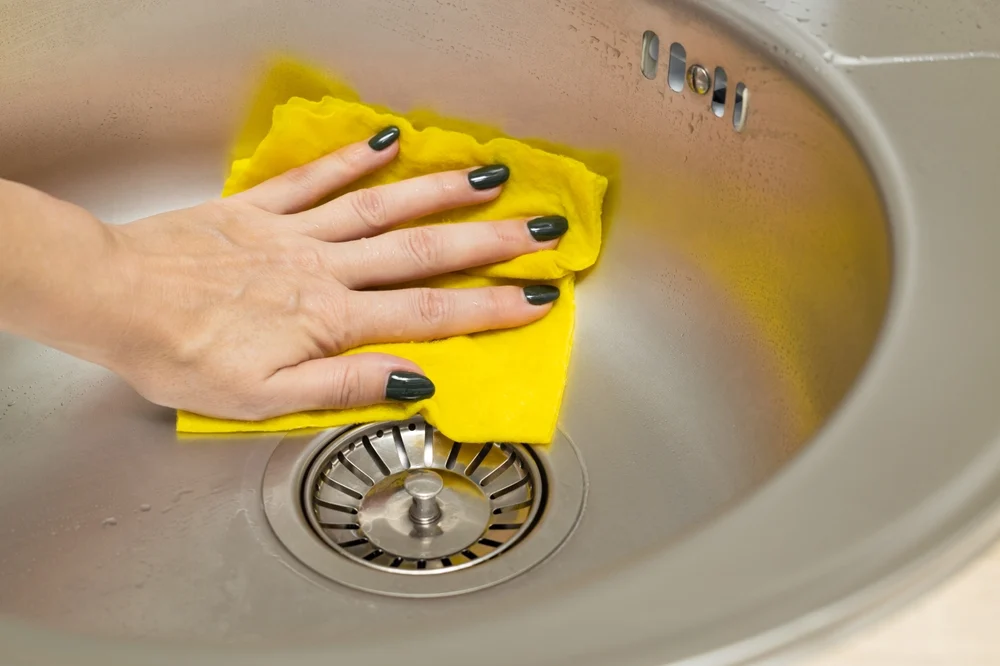
Wiping down the walls of a stainless steel sink with a soft cloth.
Stainless steel is a durable alloy composed of iron, chromium, and often nickel. The chromium is the secret to its longevity. It interacts with oxygen to form an invisible, passive protective layer that shields the metal from rust and corrosion.
When this layer is compromised by aggressive cleaners, the sink degrades. You should never use chlorine, bleach, or steel wool. These items destroy the protective barrier and cause pitting corrosion, permanently damaging the surface.
Everyday habits can also cause harm. Leaving wet sponges or cast iron skillets in the basin for extended periods invites superficial oxidation and stubborn stains.
The 20-Minute Restoration Method
The most effective cleaning agents are likely already sitting in your pantry. Baking soda acts as a highly effective micro-abrasive. It is tough enough to lift stuck-on food but soft enough to prevent scratching the alloy.
Start by emptying the sink entirely and rinsing it with warm water. While the metal is still wet, sprinkle a thin, even layer of baking soda across the entire surface. Add a few drops of liquid dish soap directly to a soft sponge or microfiber cloth.
Scrub the sink gently, ensuring you move in the exact same direction as the stainless steel grain. This technique prevents microscopic cross-scratching and keeps the finish uniform.
For stubborn white hard water stains, spray a small amount of white vinegar. Let it sit for exactly two to three minutes before rinsing thoroughly. Leaving acid on the metal for longer can cause etching.
The Secret to a Permanent Shine
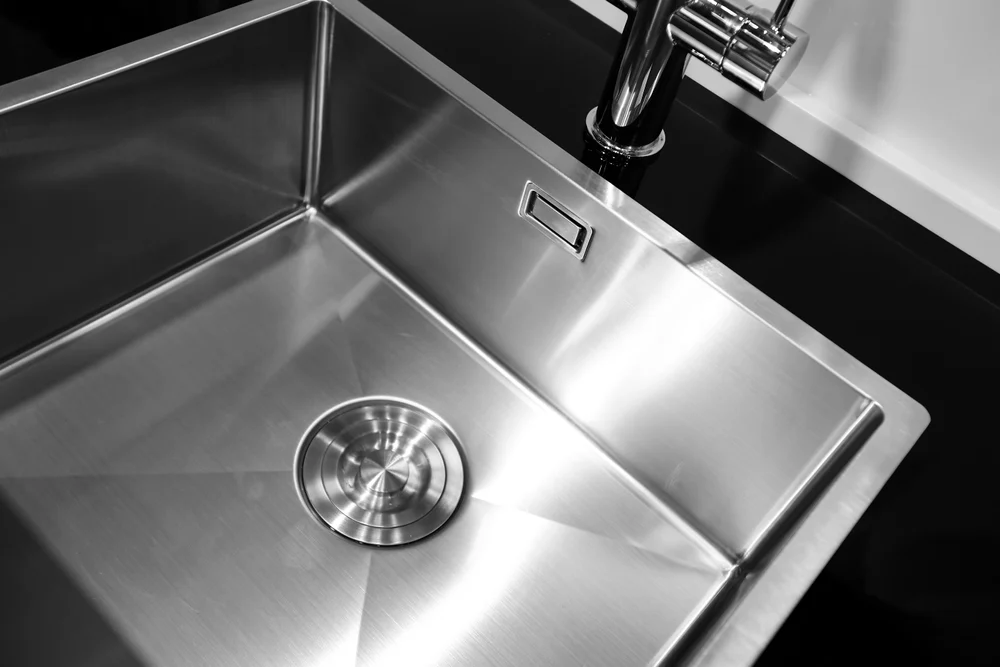
A brilliantly shining, freshly dried stainless steel basin free of hard water spots.
The most critical step in cleaning a stainless steel sink is what happens after the scrubbing stops. Once you rinse away the cleaning agents, you must immediately dry the basin with a clean microfiber cloth. Allowing tap water to air-dry is the primary cause of dullness and mineral buildup.
For an added layer of protection and a showroom shine, apply a few drops of food-safe mineral oil to a dry cloth. Buff it into the metal, again following the natural grain. This treatment reduces the visibility of fingerprints and safely repels water.
Daily maintenance requires nothing more than a quick rinse and a dry wipe-down after doing the dishes. A weekly deep clean with the baking soda method ensures the sink will easily outlast the rest of the kitchen.