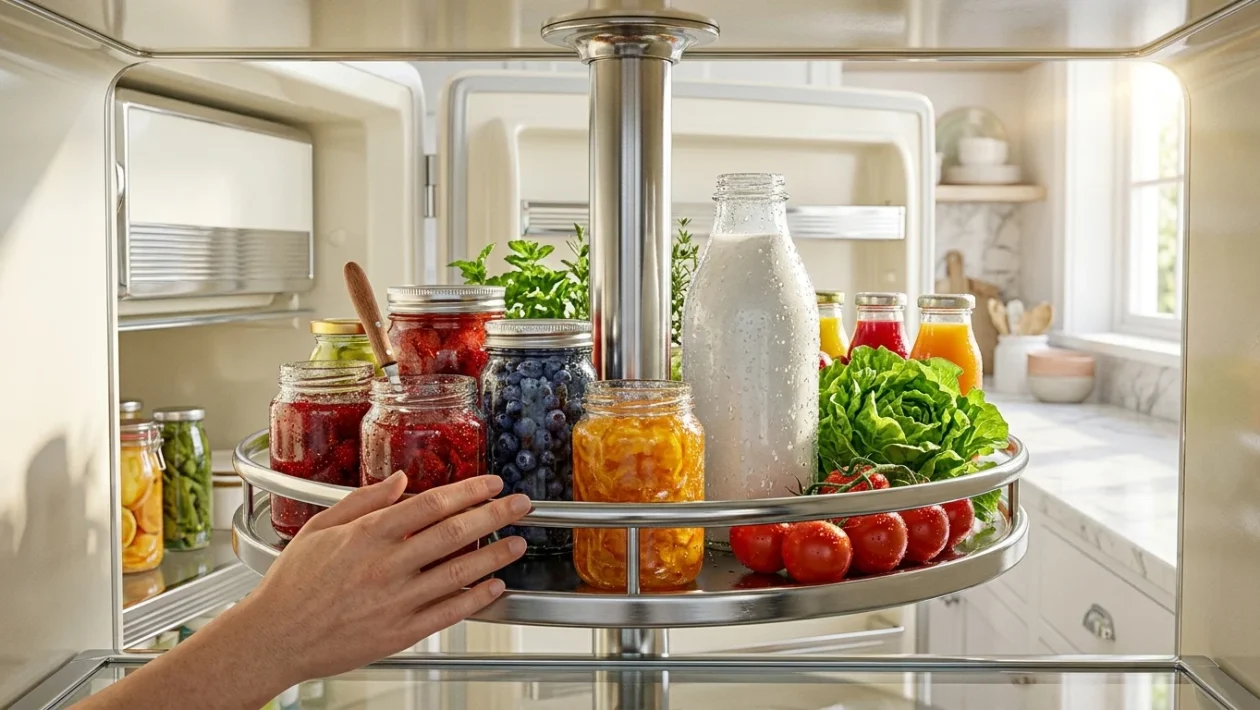
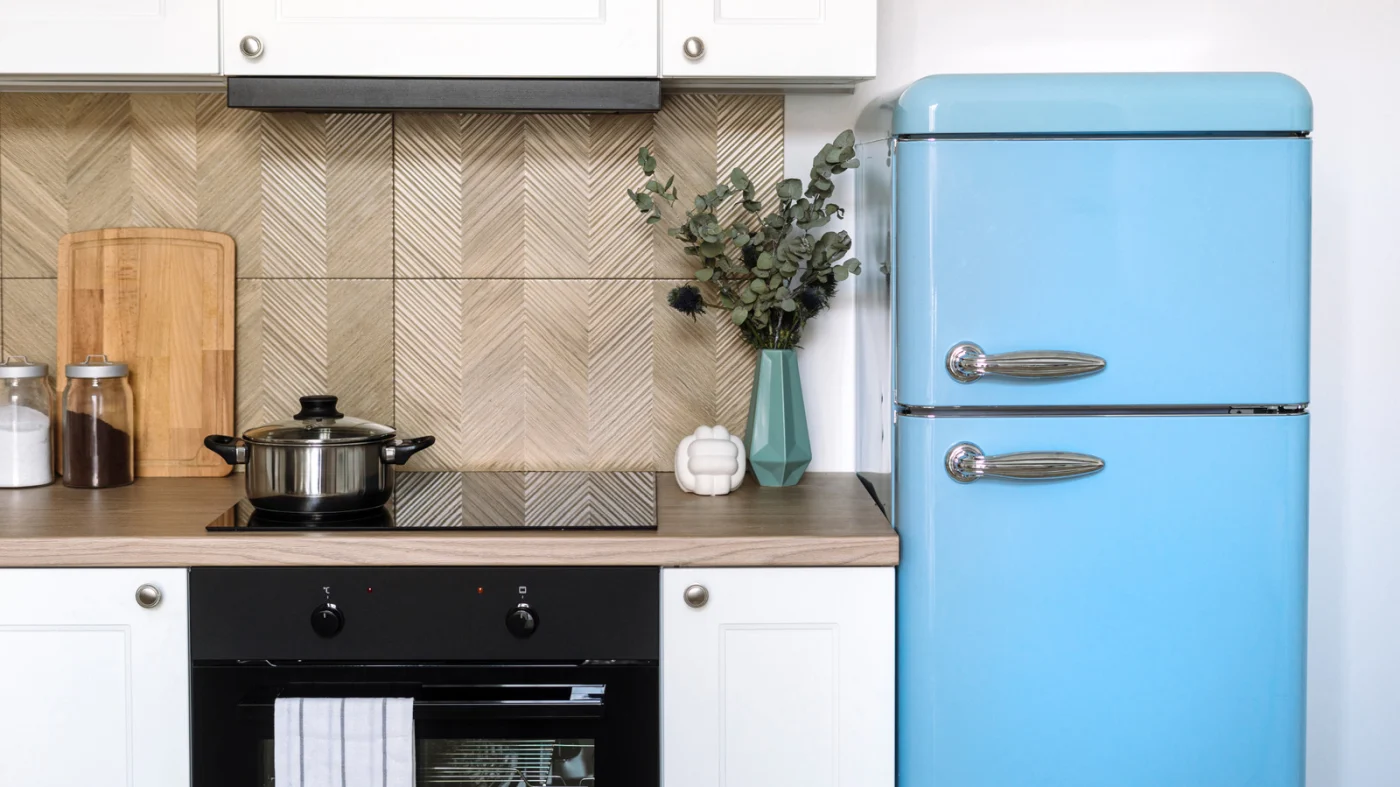
A vintage refrigerator displaying its spacious interior and specialized door compartments.
Vintage appliances carry undeniable aesthetic appeal. Their rounded edges and heavy-duty latches offer a classic look that modern stainless steel boxes often lack.
However, beneath that mid-century charm were massive electricity drains and hazardous materials like fiberglass insulation. Yet, one brilliant engineering choice from the 1950s still outshines today’s appliance designs: fully rotating shelves.
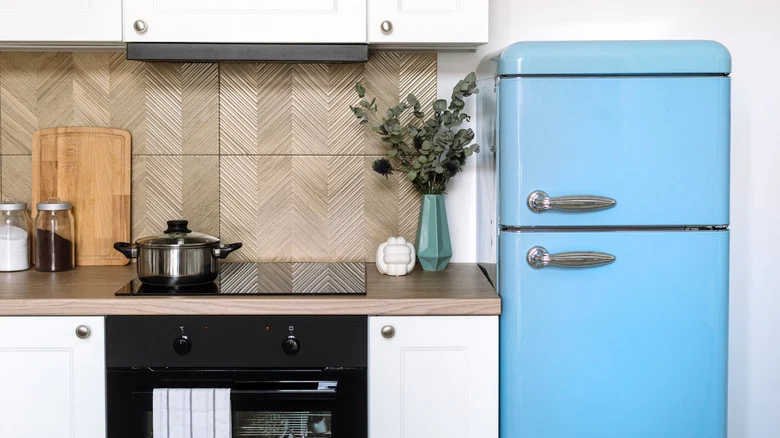
Close-up of a mid-century refrigerator showcasing the central column and circular shelving design.
An Instagram video from @antiqueappliance_restorations recently highlighted a 1958 General Electric refrigerator that completely solved the problem of lost leftovers. It featured four carousel-style shelves that spun by hand.
This simple mechanism allowed users to access items buried in the back without bending down or shifting countless jars. The GE model also offered instant vertical adjustability.
A button on each shelf allowed owners to slide the platform up or down a central column. You simply pressed the button, moved the shelf to accommodate a tall milk carton, and locked it into place.
The convenience extended all the way to the bottom of the unit. The crisper drawer rotated and pulled fully out, preventing fresh vegetables from rotting in dark, forgotten corners. To top it off, a built-in foot pad allowed for hands-free door opening.
Built to Handle Heavy Loads
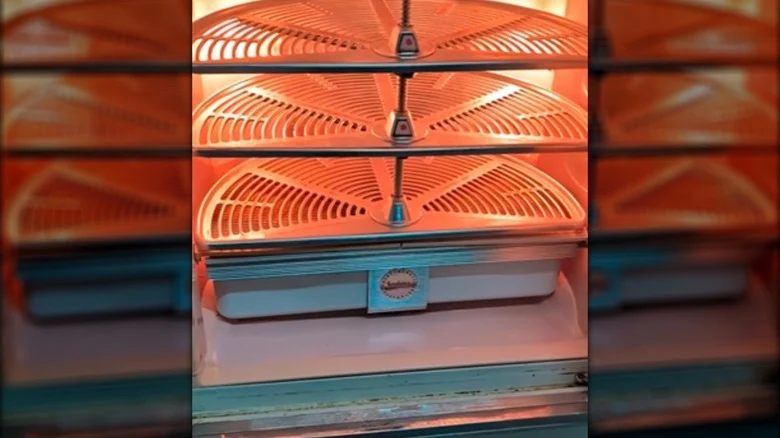
A heavy load of steel plates resting securely on a sturdy rotating refrigerator shelf.
Old-school appliances were famously over-engineered, and these shelves were no exception. In a demonstration video, a shelf effortlessly supported 45 pounds of heavy steel plates.
Despite the immense weight, the platform did not break, bend, or tilt to the side. However, the design was not entirely flawless.
The metal shelves featured curved, elongated slits. This meant a spilled drink or leaky container on the top tier would quickly drip down onto the groceries below.
Classic Layouts and a Modern Workaround
Beyond the rotating mechanisms, the fridge maximized space with a dedicated butter compartment, a built-in wine rack, and a freezer section with its own ice tray shelf. It also featured an egg holder in the door.
While convenient at the time, food safety experts now advise against storing eggs in the door due to constant temperature fluctuations.
General Electric maintained this core rotating design until 1959. That year, the manufacturer pivoted away from carousels, opting instead for shelves that swung outward.
For those lacking a vintage GE model today, placing a simple Lazy Susan turntable on a modern shelf offers a fast, cheap way to recreate the magic and keep condiments from vanishing in the back.