Visible tree roots turn routine lawn care into an obstacle course. They wreck mower blades, create tripping hazards, and disrupt the clean look of a manicured yard.
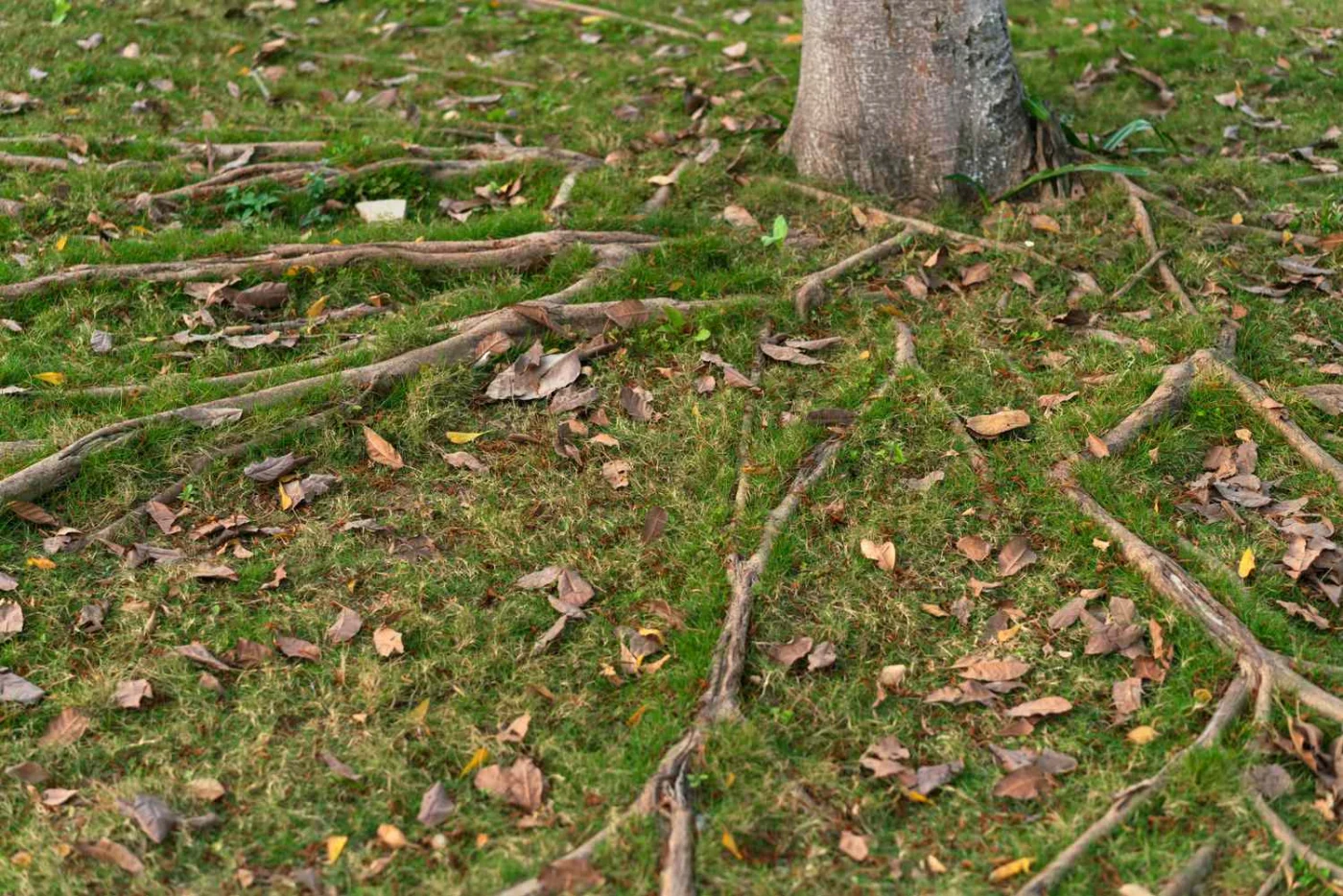
Thick tree roots extending above the grass surface in a residential yard.
If your tree’s root system is creeping above ground, you might assume the tree is failing or uprooting. According to experts, that panic is misplaced.
Mark Russell, an ISA Certified Arborist and owner of 770 Arborist Emergency Tree & Crane in Atlanta, Georgia, says this surfacing is a natural and completely healthy process.
The Myth of Deep Roots
Russell notes a common misunderstanding about how trees anchor themselves. Most people picture a root system mirroring the massive canopy above.
“Start with the myth,” Russell explains. “Everybody’s seen that drawing of a tree with roots going as deep as the tree is tall. It’s a hundred percent not true.”
A tree’s taproot rarely extends past four or five feet. The vast majority of roots sit much closer to the surface, typically just two to three feet deep.
Trees feed in the organic layer at the very top of the soil. The roots simply stay near the surface to access necessary nutrients.
Why Roots Break the Surface
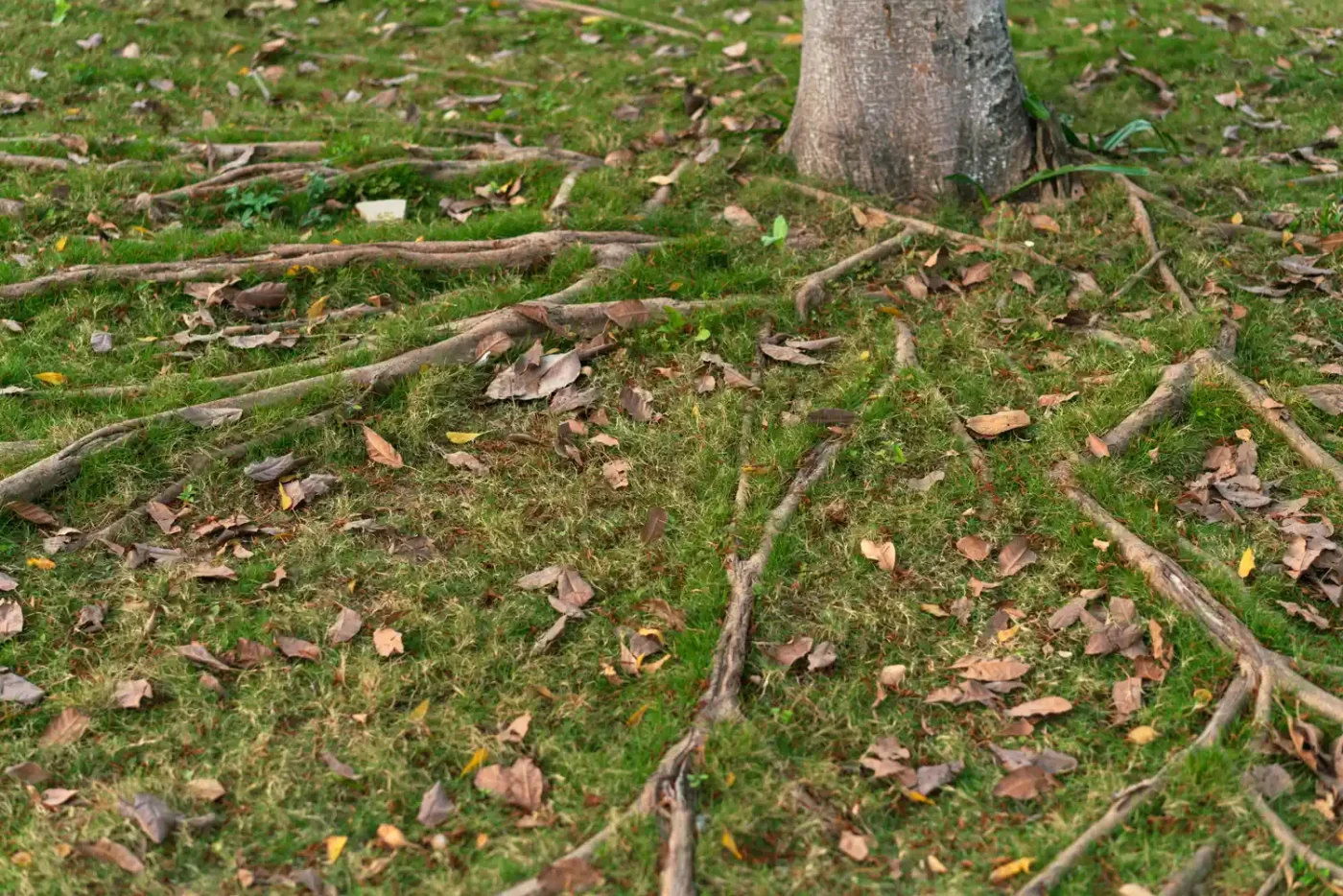
Exposed roots spreading across the topsoil near the base of a large tree.
When roots pop up across a lawn, it does not mean the root system is dislodging. The roots you see are just a fraction of the entire underground network.
Russell points to two primary causes for exposed roots. The first is soil erosion.
“Water runs across the yard; the dirt washes away,” Russell says. “The tree doesn’t wash away. Those roots were always sitting right there. The ground left; they didn’t.”
The second factor is basic biological growth. Just like branches, roots thicken over time. As a root expands in diameter year after year, it eventually pushes upward through the soil.
How to Fix the Problem
Homeowners frequently try to slice away the offending roots to level their lawns. Arborists warn that cutting them is a critical mistake.
Severing these large roots compromises the tree’s structural integrity, increasing the risk of it falling. Repeatedly striking them with a lawnmower causes similar damage.
The most effective solution requires no heavy tools.
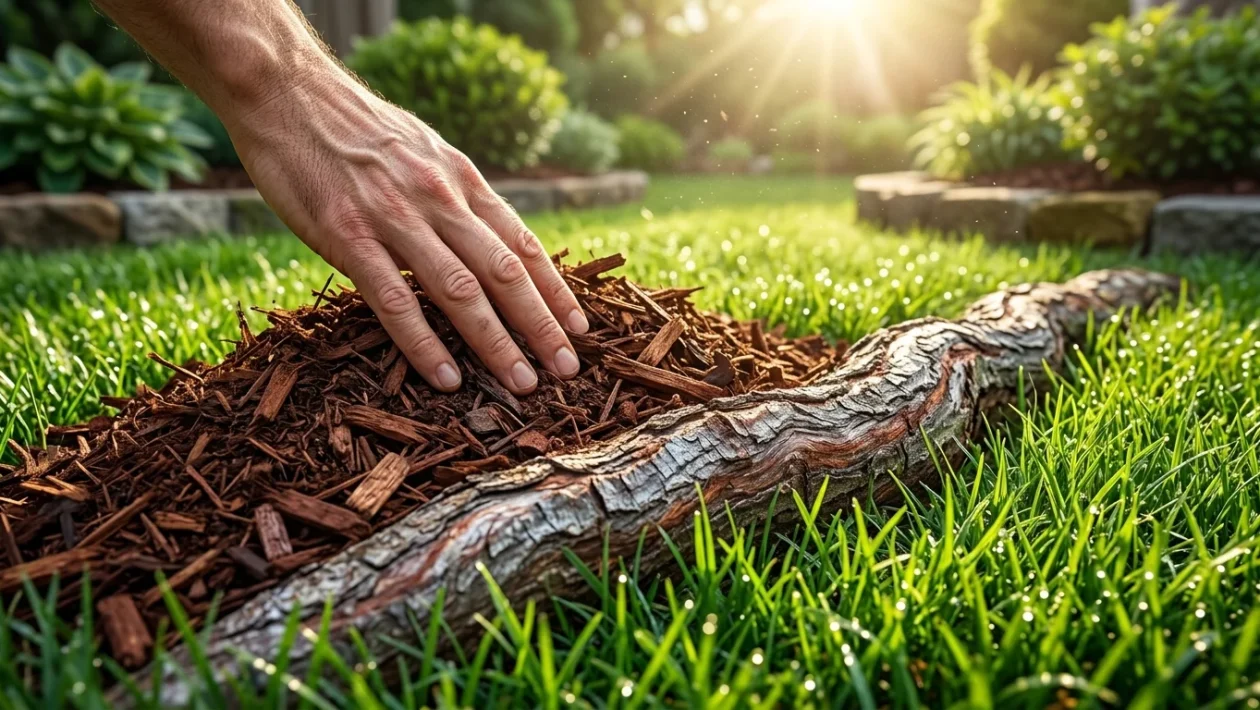
“Those big roots are what’s holding the tree up. I cannot say this enough: mulch it,” advises Russell.
By covering the exposed roots with a layer of mulch and converting the space into a dedicated bed, you protect the tree. It instantly improves the yard’s appearance and permanently eliminates the mower hazard.