Weak water pressure doesn’t always mean plumbing failure. Most often, the culprit is a dirty showerhead clogged with hard water minerals.
You don’t need specialized tools or expensive chemical cleaners to fix a sputtering, uneven spray. Standard white distilled vinegar dissolves the buildup and restores water flow effortlessly.
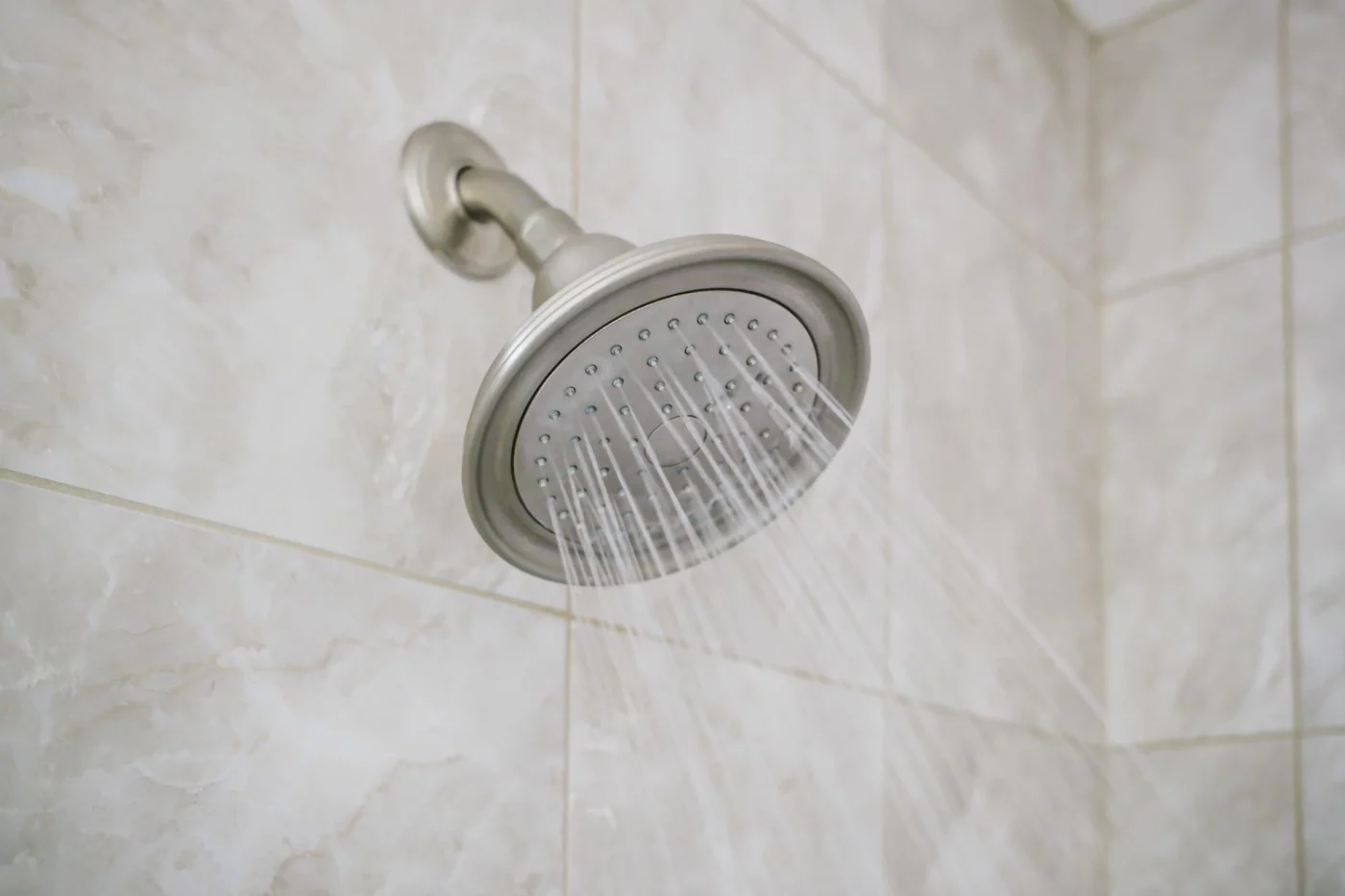
A clean showerhead spraying a strong, even stream of water.
The Plastic Bag Method for Fixed Showerheads
If your showerhead is permanently attached to the wall, you have to bring the cleaner directly to the hardware.
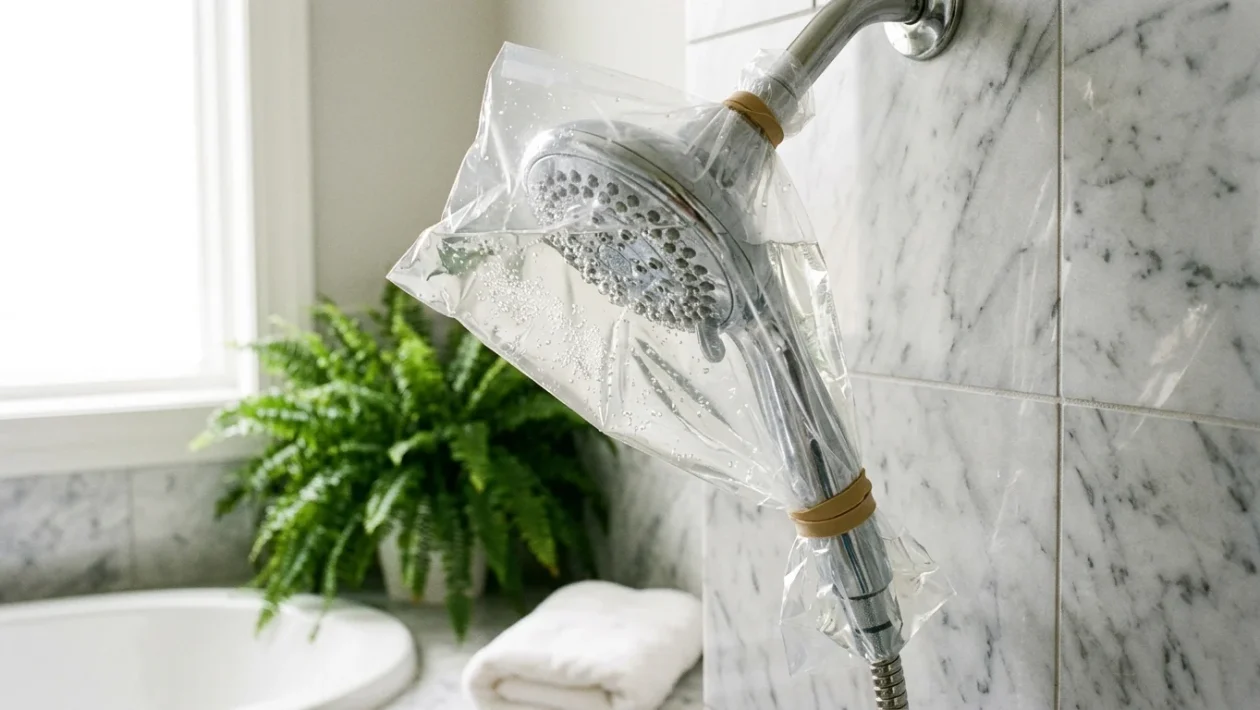
Fill a durable plastic bag with enough white vinegar to fully submerge the showerhead fixture. Slip the bag over the nozzle and secure it tightly around the pipe with a rubber band.
Let the hardware soak in the acidic bath for at least one hour. Once time is up, remove the bag, wipe the exterior with a clean cloth, and run the hot water on high to flush out the loosened grime.
The Submersion Method for Removable Showerheads
Handheld or easily detached showerheads are even simpler to deep clean.
Unscrew the fixture from the wall or detach it from its hose. Submerge the entire head in a bowl of white vinegar and leave it to soak for several hours.
Pull the showerhead out and scrub the nozzles with an old toothbrush or soft cloth to break away stubborn mineral scale. Rinse the fixture thoroughly under the tap, reattach it, and run the shower to clear out the internal lines.
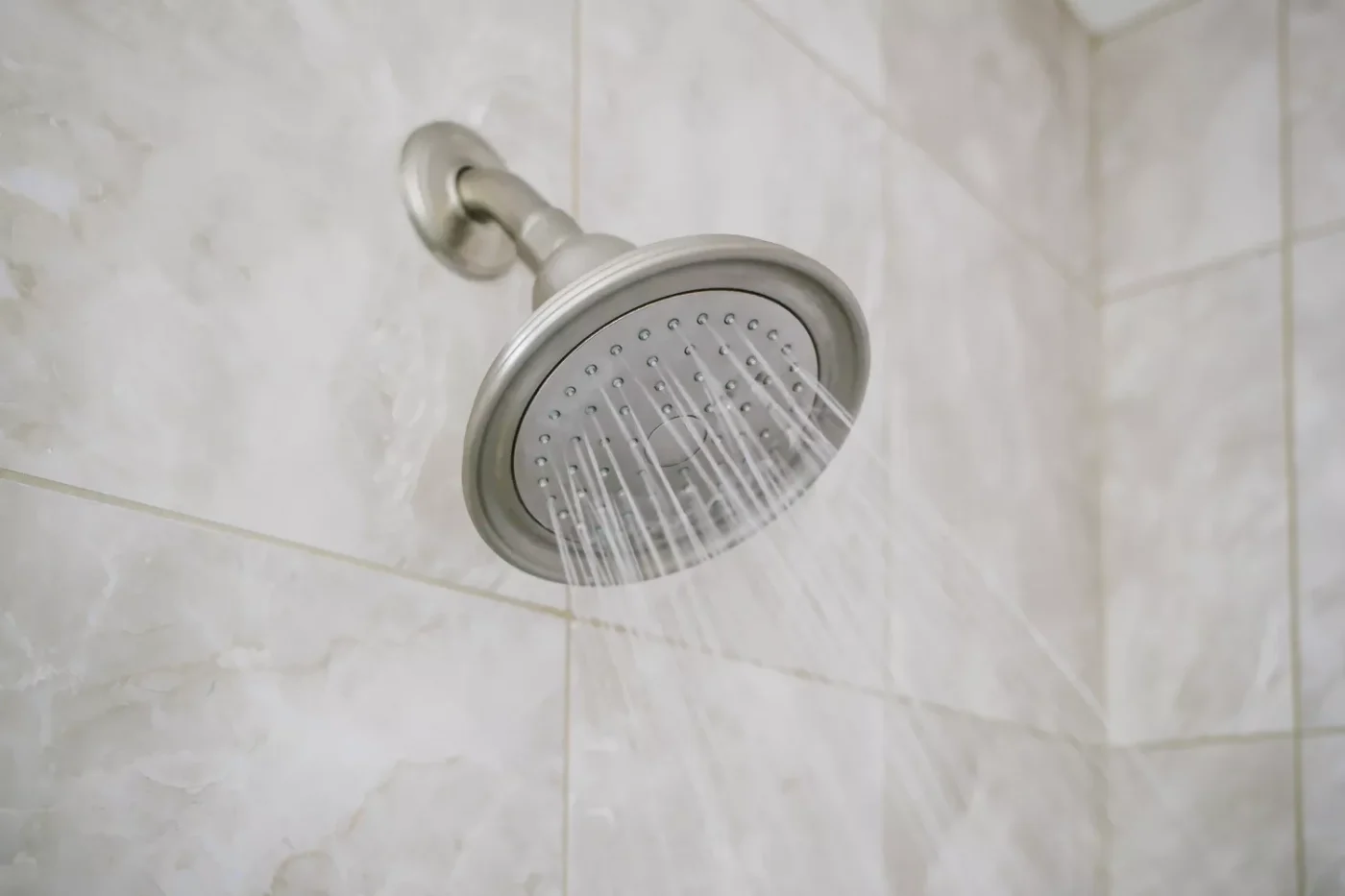
Water drops falling from the nozzles of a freshly cleaned showerhead.
How Often to Clean Your Showerhead
Cleaning frequency depends entirely on your local water supply.
Homes with hard water require monthly cleanings to prevent rust, discoloration, and severe mineral blockages. If your home has soft water, a general maintenance soak every two to three months keeps the spray even and hygienic.
Vital Warnings and Alternatives
Vinegar is highly acidic. While highly effective on mold, mildew, and grime, it can quickly strip delicate hardware finishes if left unchecked.
Limit soak times to 30 to 60 minutes for showerheads coated in chrome, gold, brass, or nickel. Never leave these specific metal finishes soaking overnight.
If vinegar fails to remove all the residue, apply baking soda. This acts as a powerful, mild abrasive to scrub away the remaining scale without damaging the fixture.
In a pinch, apple cider vinegar can be used as a substitute. However, its lower acidity level means it is significantly less effective than white distilled vinegar.