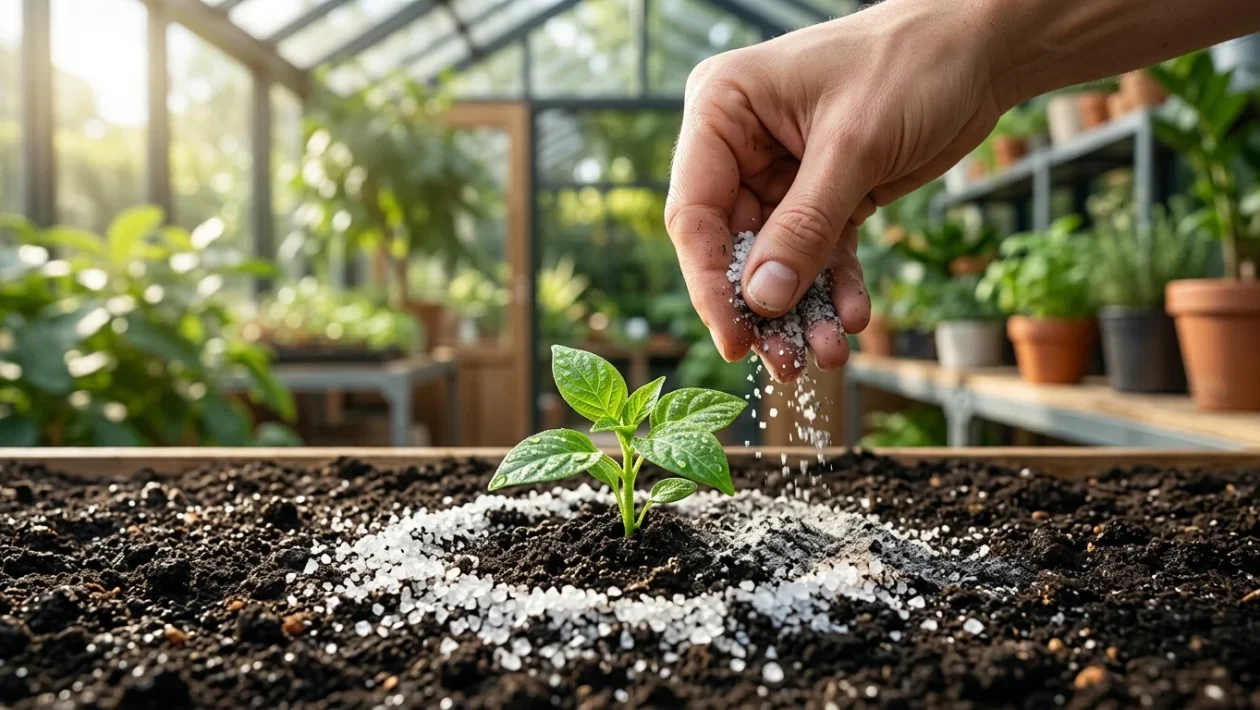
A vegetable garden soil bed showing a protective ring of wood ash and coarse salt.
Gardening enthusiasts are increasingly turning to a simple, chemical-free trick to protect their crops. By combining wood ash with coarse salt, they create a formidable homemade barrier against common pests.
This traditional mixture specifically targets slugs and snails. However, specialists warn that gardeners must use this remedy with extreme caution to prevent long-term soil damage.
How the Physical Barrier Works
The combination acts as a strict physical deterrent for mollusks navigating vegetable patches and flower beds.
Wood ash creates a dry, abrasive surface that makes it incredibly difficult for slugs and snails to move forward. Adding coarse salt amplifies this dehydrating effect, stopping pests in their tracks.
Preparation and Application Rules
Creating this barrier requires only two basic ingredients: completely cold wood ash and coarse salt.
Experts advise using the absolute minimum amount necessary. Gardeners should apply the mixture only to highly targeted areas directly surrounding vulnerable plants.
Never broadcast this mixture across large surfaces or entire garden beds.
The Hidden Dangers of Soil Salinity
While wood ash naturally introduces beneficial minerals to the dirt, salt does the exact opposite.
Excessive coarse salt spikes soil salinity. This hostile environment aggressively damages plant root systems and kills vital microorganisms living beneath the surface.
For this reason, you must never use this salt-laced mixture as a general fertilizer.
Horticulturists strongly recommend exploring alternative slug control methods before introducing salt into an active soil ecosystem. If you do choose the ash-and-salt method, strict moderation and localized spot treatments are mandatory to keep your garden healthy.