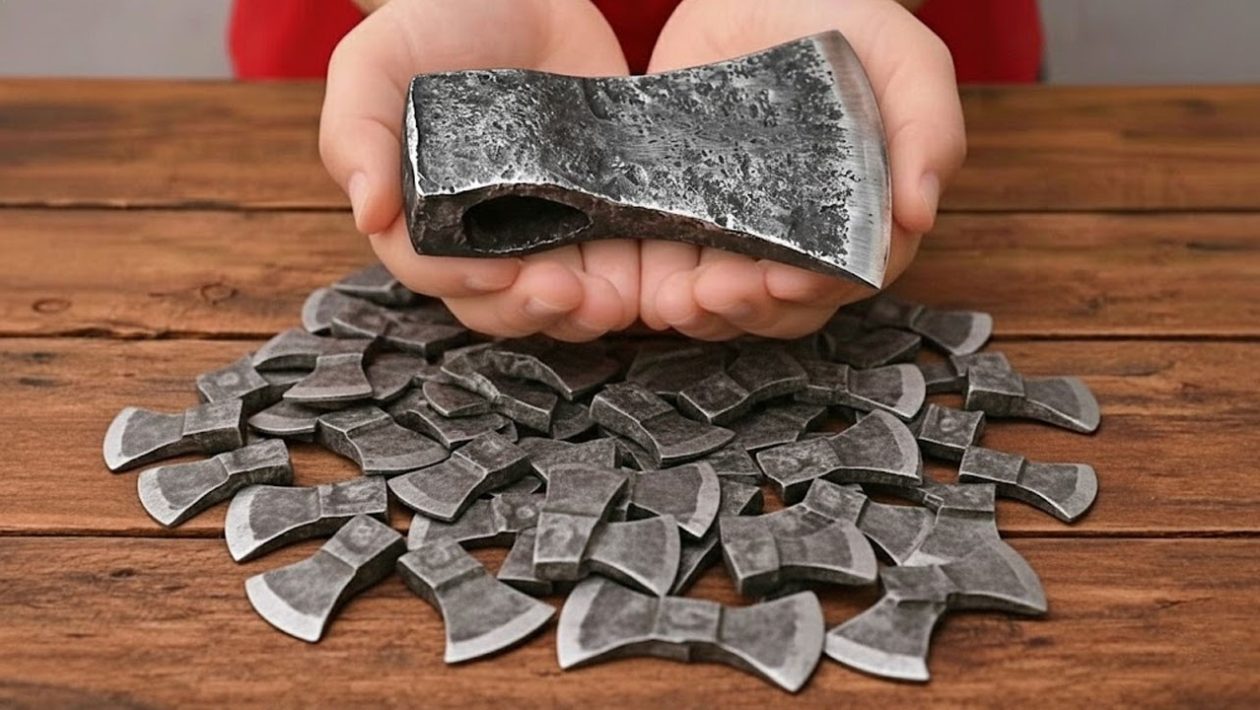
The Hidden Value of Rusted Scrap
Garages and workshops across the country serve as graveyards for old, neglected tools. Axes with broken handles, rusted heads, or severely chipped blades are routinely tossed into scrap bins.
Experienced metalworkers view these discarded items differently. A worn axe head is essentially a solid block of high-quality forged steel waiting to be repurposed.
Instead of letting that heavy steel oxidize or paying retail prices for specialized shop equipment, basic metalworking can unlock entirely new functions for the tool.
The High-Carbon Steel Advantage
Most traditional axe heads are forged from high-carbon steel. This specific alloy is designed to withstand massive impact forces, hold an edge, and resist deformation.
Purchasing raw high-carbon steel to fabricate a custom mechanical tool can be expensive and time-consuming. Reusing an existing axe head provides a massive head start on the fabrication process.
With an angle grinder, a cutting machine, and a welder, that raw material can be shaped into a highly versatile multi-tool designed for heavy-duty jobs.
Practical Workshop Transformations
Transforming an axe requires stripping away any remaining wood from the eye and grinding off the surface rust to expose bare metal. A clean surface is mandatory for strong welds.
Once prepped, the modifications depend entirely on a shop’s specific needs. Welders often cut the blade down to create a heavy-duty chipping hammer or a specialized wedge for separating round pipes.
Another highly practical modification involves welding a thick steel plate to the flat poll (the back) of the axe head. This creates a portable, indestructible mini-anvil perfect for shaping sheet metal or small brackets.
Smart Welding Techniques
Modifying an axe head requires strict attention to welding techniques to ensure the new tool does not fail under extreme pressure. High-carbon steel is notoriously prone to cracking if welded while cold.
Preheating the axe head with an oxy-acetylene torch before striking an arc helps control the cooling rate of the metal. This crucial step prevents the heat-affected zone from becoming brittle.
Executing precise fast corner welds and using the correct filler rods guarantees the structural integrity of the newly attached components. After the welding is complete, allowing the tool to cool slowly in sand prevents micro-fractures.
Building Custom Shop Assets
Upcycling an old tool offers a highly practical alternative to buying expensive, single-use equipment. It forces builders and mechanics to rethink the utility of the materials already sitting on their workbenches.
A reinforced, welded axe head easily handles tasks that would destroy standard hand tools. Whether used as a custom shaping block, a heavy demolition weight, or a pipe-fitting guide, the modified steel delivers decades of additional service.