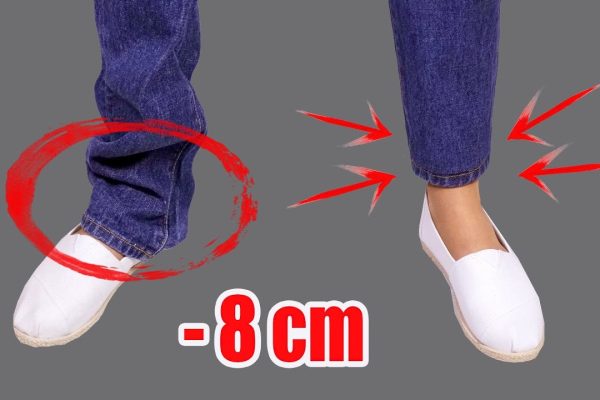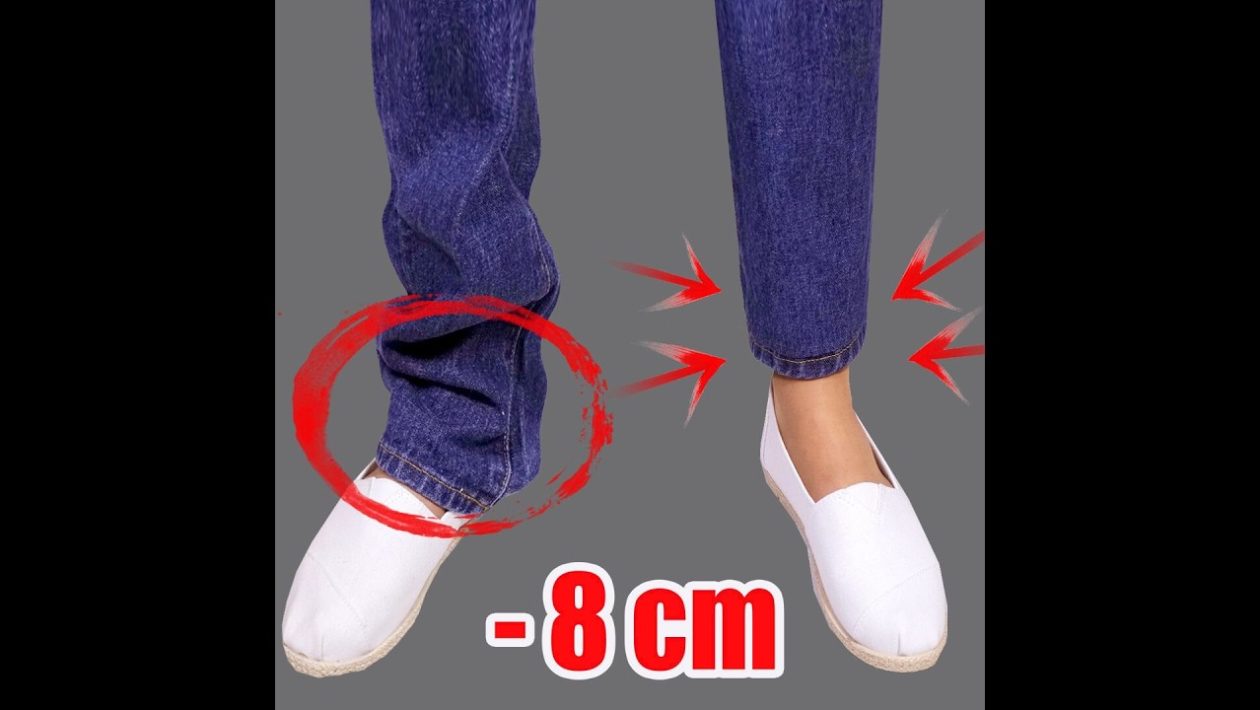
The Factory Hem Dilemma
Most people avoid hemming their own jeans because losing that faded, distressed factory edge ruins the garment’s look. Standard hemming leaves you with a flat, bulky finish that instantly looks like a DIY alteration. Fortunately, there is a straightforward sewing technique to shorten denim while keeping the original hem entirely intact.
This process takes just a few minutes per leg. It requires a sewing machine, a tape measure, tailor’s pins, sharp scissors, an iron, and one specific machine attachment: a zipper foot.
Setting the Exact Length
Start by trying on the jeans along with the shoes you plan to wear most often. Footwear significantly changes where the denim breaks over your ankle. Fold the bottom of the pant leg outward and roll it up to your desired finished length.
Once you find the perfect break, secure the new hem by placing tailor’s pins perpendicular to the fold. Take the jeans off and lay them flat on a cutting table or ironing board.
Carefully remove the pins without unfolding the fabric. Hit the folded edge with a hot steam iron to create a sharp, distinct crease. This ironed crease is your permanent baseline for the rest of the project.
Measuring and Marking the Denim
Grab your tape measure and check the width of the original factory hem at the bottom of the jeans. On standard denim, this hem is typically about 5/8 of an inch (1.5 cm) wide.
Unfold the pant leg completely so the fabric sits flat again. Locate the sharp crease you just ironed into the denim. From that crease, measure exactly 5/8 of an inch upwards toward the knee.
Use tailor’s chalk to draw a solid, straight line at this new height. Ensure the line wraps completely around the perimeter of the leg, remaining perfectly even on both the front and back halves of the jeans.
Aligning and Pinning the Seams
Fold the bottom of the leg upward into the inside of the jeans. You want the top edge of the bulky factory seam to align precisely with the chalk line you just drew. Secure this folded position tightly with pins.
Pay close attention to the side seams and the inseam. The vertical lines of the original factory hem must align seamlessly with the vertical lines of the pant leg above it. If they are twisted, the leg will pull awkwardly when you walk.
Sewing With a Zipper Foot
Remove the standard presser foot from your sewing machine and attach a single-horn zipper foot. Standard feet are too wide to navigate the thick ridge of a denim hem. A zipper foot allows the needle to drop directly next to the bulk.
Sew a straight stitch entirely around the leg. Keep your needle about 1/16 of an inch (2 mm) away from the top of the factory seam. Remove your pins exactly as the fabric reaches the needle to avoid breaking anything.
Trimming the Excess Fabric
Turn the pant leg inside out. You will see a large, folded loop of excess fabric on the interior of the leg. Take a moment to check the quality of your straight stitch and verify the side seams are still perfectly aligned.
Use your measuring tape to measure a 3/4-inch (2.0 cm) seam allowance pointing down from your newly stitched line. Draw a cutting line with your chalk on both sides of the interior loop.
Take heavy-duty tailor’s scissors and trim off the excess denim strictly along this drawn line. Switch your sewing machine to a zigzag mode and overcast the raw, cut edge to prevent the jeans from fraying in the washing machine.
Tacking and Final Pressing
If left unanchored, that new interior seam allowance will eventually fold downward and peek out the bottom of your jeans. Thread a hand needle and apply five to six tight spot-stitches directly on the side seams and inseams to tack the allowance flat against the inside of the leg.
Turn the jeans right side out. Straighten the new folded edge and move back to the ironing board for a final wet-heat treatment.
Press the newly shortened hem heavily with steam, focusing on flattening out the seam and the hidden interior allowances. The heat sets the stitches and permanently flattens the bulk, leaving you with a perfectly shortened pair of jeans that still rocks its original factory edge.