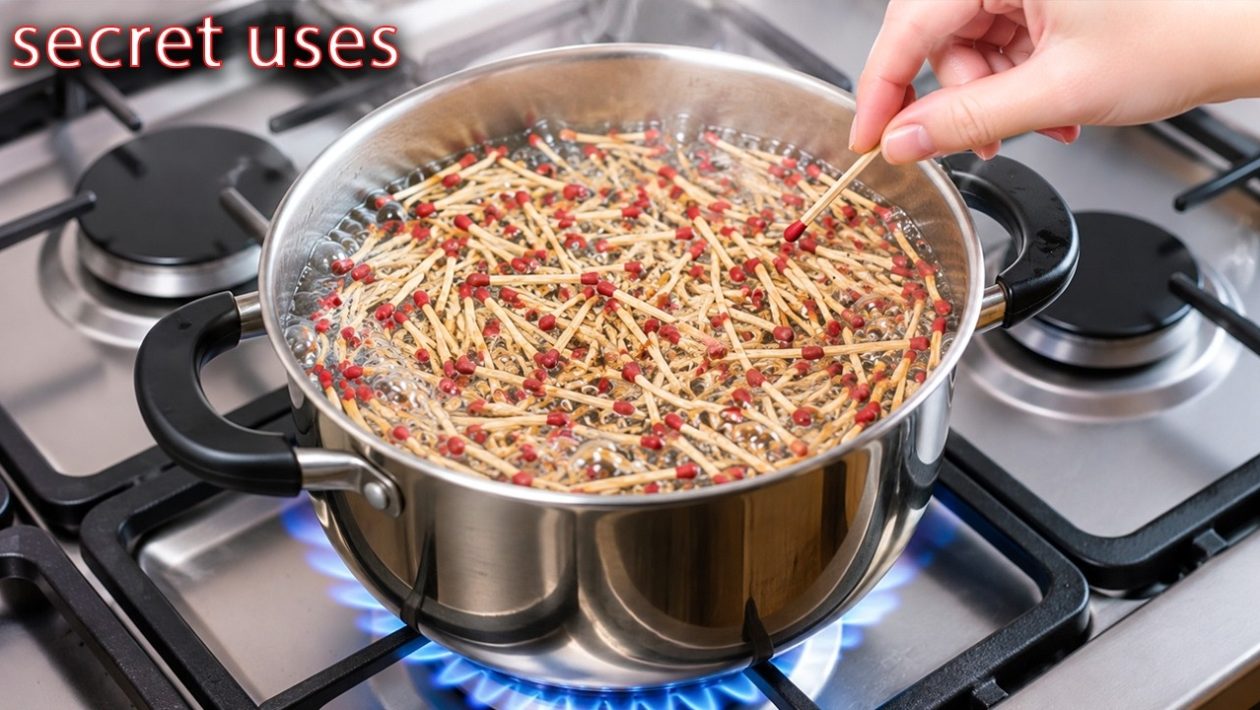
The Chemistry of a Common Household Item
A standard wooden match is more than just a tool for starting fires. The head of a match is a concentrated source of specific chemical compounds, primarily potassium chlorate, sulfur, and various binders.
When you subject matches to boiling water, the heat breaks down the water-soluble glue holding the strike head together. This process separates the active chemicals from the wood, creating a highly concentrated liquid solution.
Instead of buying specialized products at the hardware store, resourceful homeowners use this simple extraction method to solve common household and gardening problems.
A Budget-Friendly Plant Booster
Houseplants require a steady supply of macronutrients to thrive, and commercial liquid fertilizers can quickly become expensive. Matchheads contain sulfur and components that benefit plant root development and overall vitality.
By boiling a handful of matches and letting the resulting chemical tea cool, you create a makeshift, homemade fertilizer. Diluting this liquid and applying it to potted plants delivers a direct nutrient boost to the soil.
This straightforward hack repurposes exceptionally cheap materials into a valuable gardening resource, keeping dollars in your pocket.
Natural Fungus and Pest Control
Fungus gnats and root rot are constant threats to indoor plants. The sulfur extracted from boiled matches serves as an effective, mild fungicide and pest deterrent.
Watering the soil with the cooled match solution alters the micro-environment just enough to make it inhospitable to gnat larvae. It disrupts the fungal growth that these pests feed on, breaking their breeding cycle without requiring harsh synthetic indoor sprays.
Clean Wood for Intricate Crafters
Beyond the chemical extraction, boiling matches yields hundreds of perfectly uniform, miniature wooden dowels. Model makers and DIY crafters frequently need small, identical pieces of wood for building architectural models or intricate miniature furniture.
Manually cutting or sanding the highly flammable heads off matchsticks is tedious and leaves dangerous chemical residue. Boiling completely strips the wood bare, leaving clean, inert sticks ready for gluing and painting.
Execution and Safety Measures
If you extract these compounds at home, proper ventilation is essential. Boiling sulfur and potassium chlorate produces a distinct, slightly pungent odor, so always open a window or run an exhaust fan.
Use an old pot dedicated to DIY projects rather than your everyday kitchen cookware. Once the heads have dissolved, strain the liquid through a fine mesh strainer or a coffee filter to remove the wooden sticks and any undissolved grit.
Always allow the solution to cool completely to room temperature before applying it to plant soil to avoid shocking the root systems. Store any leftover liquid in a clearly labeled glass jar, well out of reach of children and pets.