The Post-Glue Plumbing Era
Running out of PVC cement mid-project usually brings plumbing repairs to a grinding halt. But chemical adhesives are not the only way to create a watertight seal.
Plumbers and experienced DIYers rely on several mechanical and thermal methods to join water pipes securely. These techniques bypass the mess, toxic fumes, and curing times associated with traditional pipe glue.
Push-to-Connect Fittings
The most reliable glue-free method for pressurized water lines involves push-to-connect fittings. Brands like SharkBite dominate this category in the plumbing industry.
These fittings utilize an internal rubber O-ring to create a watertight seal. A ring of stainless steel teeth grips the outside of the pipe to prevent it from blowing apart under pressure.
They are universally compatible with PVC, CPVC, PEX, and copper. Users simply deburr the cut end of the pipe and push it directly into the brass or plastic fitting until it clicks into place.
Mechanical Rubber Couplings
For drainage, venting, and non-pressurized lines, flexible rubber couplings offer a permanent, glue-free solution. In the trade, these are commonly referred to as Fernco fittings.
The installation requires slipping a thick, durable rubber sleeve over the two abutting pipe ends. The sleeve is secured using stainless steel worm-gear clamps.
Tightening the clamps with a nut driver or screwdriver compresses the rubber against the plastic. This forms a heavy-duty mechanical seal that withstands ground movement and vibration.
Threaded Adapters and PTFE Tape
Threaded connections entirely eliminate the need for chemical solvents. If smooth pipe ends can be fitted with threaded adapters, they can be joined mechanically.
To ensure a leak-proof connection, technicians wrap Teflon (PTFE) tape clockwise around the male threads before assembly. The tape acts as a deformable lubricant and gap-filler.
Screwing the male and female pieces together and tightening them with a pipe wrench locks the joint securely. This method is highly effective for transitioning between different pipe materials.
The Thermal Expansion Technique
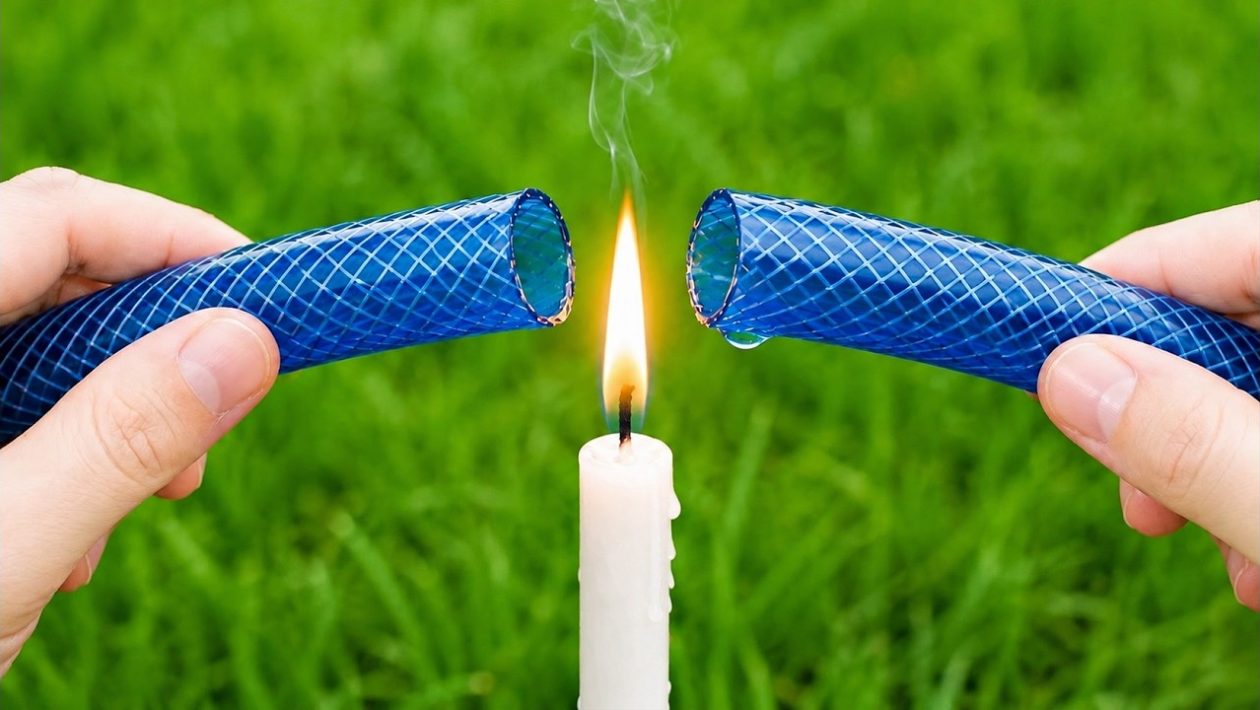
A specialized workshop trick for low-pressure PVC repairs uses controlled heat to join pipes. This method is highly effective for custom emergency fixes when no fittings are available.
By rotating a heat gun around the end of one PVC pipe, the plastic gradually softens and expands. Once pliable, the rigid, unheated end of a second pipe is forced inside.
As the heated plastic cools, it shrinks rapidly. The outer pipe tightly molds itself to the exact contours of the inner pipe, creating an intense friction fit.
While this thermal hack is not rated for high-pressure indoor municipal water lines, it provides a highly secure, instant connection for outdoor irrigation, runoff drains, and temporary structural frameworks.