Let’s get one thing straight right out of the gate: Yellowstone bison attacks are not random, freak accidents.
This July 2026, we are seeing an unprecedented surge in tourists getting tossed into the sagebrush like ragdolls.
You probably spent thousands on this epic summer road trip. But if you treat a 2,000-pound wild animal like a petting zoo pony, your vacation is going to end in a trauma ward.
I am going to break down exactly why these massive giants are snapping this summer. More importantly, I will give you the foolproof, field-tested tactics to keep your family safe.
Why July 2026 Is Breaking Records
If you have driven through the park recently, you know the summer crowds are thicker than ever.
Combine that record-breaking heat with the early onset of the bison rutting (mating) season, and you have a powder keg waiting to blow.
Here is a sobering, hard fact you need to internalize: Bison injure more people in Yellowstone than bears, wolves, and coyotes combined.
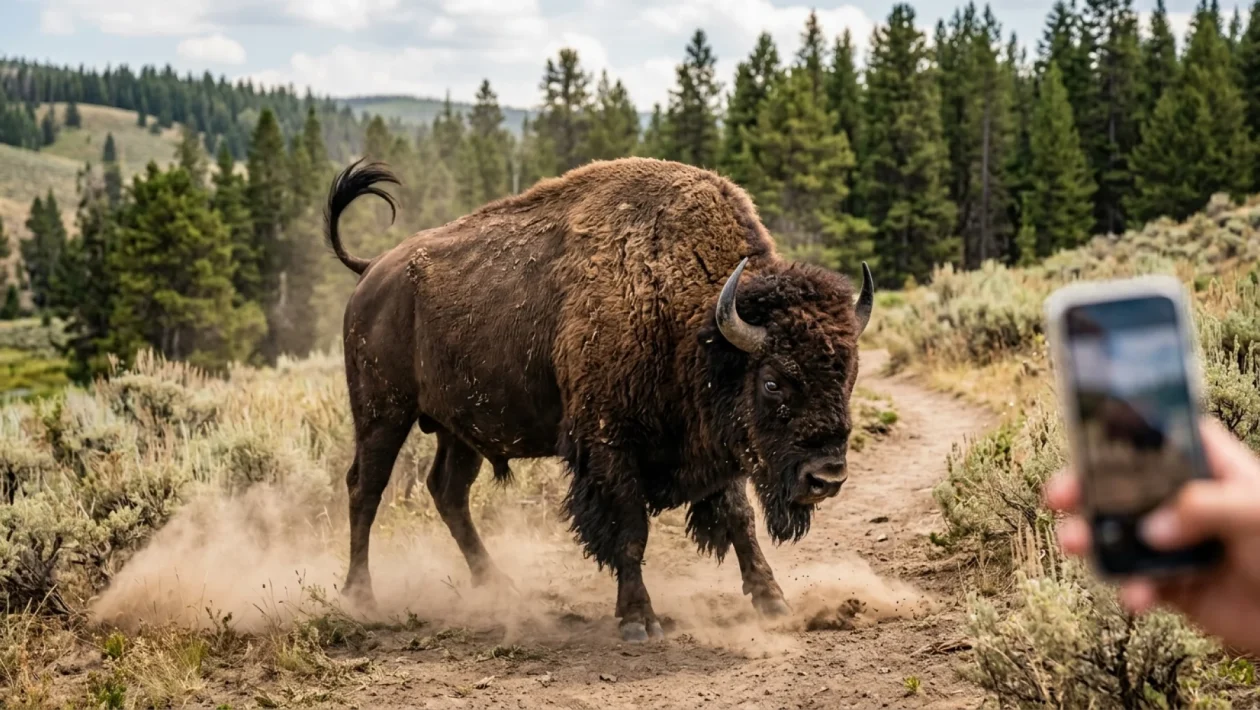
When a hormone-fueled bull gets stressed by a tourist shoving a smartphone in its face, it does not hesitate to eliminate the threat.
These animals are hot, they are agitated, and their tolerance for human foolishness is currently at absolute zero.
How To Survive Your Trip By Reading The Warning Signs
Surviving a wildlife encounter comes down to recognizing the danger before the situation goes south.
I always tell folks picking up camping gear at MEC to treat bison like unpredictable freight trains.
Before a bison decides to trample you, it will almost always give you a warning.
Memorize this quick cheat sheet before you hit the trails:
| Bison Behavior | What It Actually Means |
|---|---|
| Tail raised like a question mark | Highly agitated and preparing to charge. |
| Pawing the dirt or bluff charging | Final warning. You are way too close. |
| Head down, grazing calmly | Relaxed, but keep your mandatory distance. |
Field-Tested Tactics When A Bison Charges
Let’s say you take a blind corner on a hiking trail and suddenly find yourself face-to-face with an angry bull.
Dropping your trusty Yeti thermos and screaming is not the answer.
Here is exactly how you handle a close encounter:
- Read the room: Stop immediately. If the tail is up and the animal is staring you down, you are in the danger zone.
- Back away slowly: Do not turn your back. Walk backwards calmly without making sudden noises or erratic movements.
- Find hard cover: If the animal actually charges, put a massive object like a boulder, a large pine tree, or a parked vehicle between you and the horns.
- Deploy your deterrent: As a last resort, aim your bear spray slightly downward at the charging animal’s face to create a cloud of pepper spray.
“People forget these animals can sprint at 55 km/h (35 mph). By the time you realize a bison is angry, it is already too late to outrun it. Your best defense is distance,” says Dr. Sarah Jenkins, a leading Rocky Mountain wildlife biologist.
Frequently Asked Questions
What is the mandatory safe distance from bison?
Park regulations strictly require you to stay at least 25 yards (23 meters) away from all bison and elk.
If the animal moves toward you, it is your legal responsibility to back away and maintain that distance.
Can I outrun a charging bison?
Absolutely not. A full-grown bison is three times faster than an average human.
Never try to outrun them in an open field; always look for cover or elevation.
Does bear spray work on aggressive bison?
Yes. If a bison is actively charging and you cannot get behind cover, deploying a trusted canister of Frontiersman bear spray can successfully alter their charge.
Just remember, it is a last resort, not a substitute for keeping your distance.
Wrapping It Up
🤝 Good luck on your summer road trip, and remember that your safety always comes before the perfect vacation photo.
💡 Give these majestic animals the space they deserve, and you will come home with incredible memories instead of massive medical bills.
📱 If you found this survival guide helpful, share your thoughts with your travel buddies before you cross the park gates.
👇 Drop a comment below if you have ever had a close call with wildlife in the national parks!