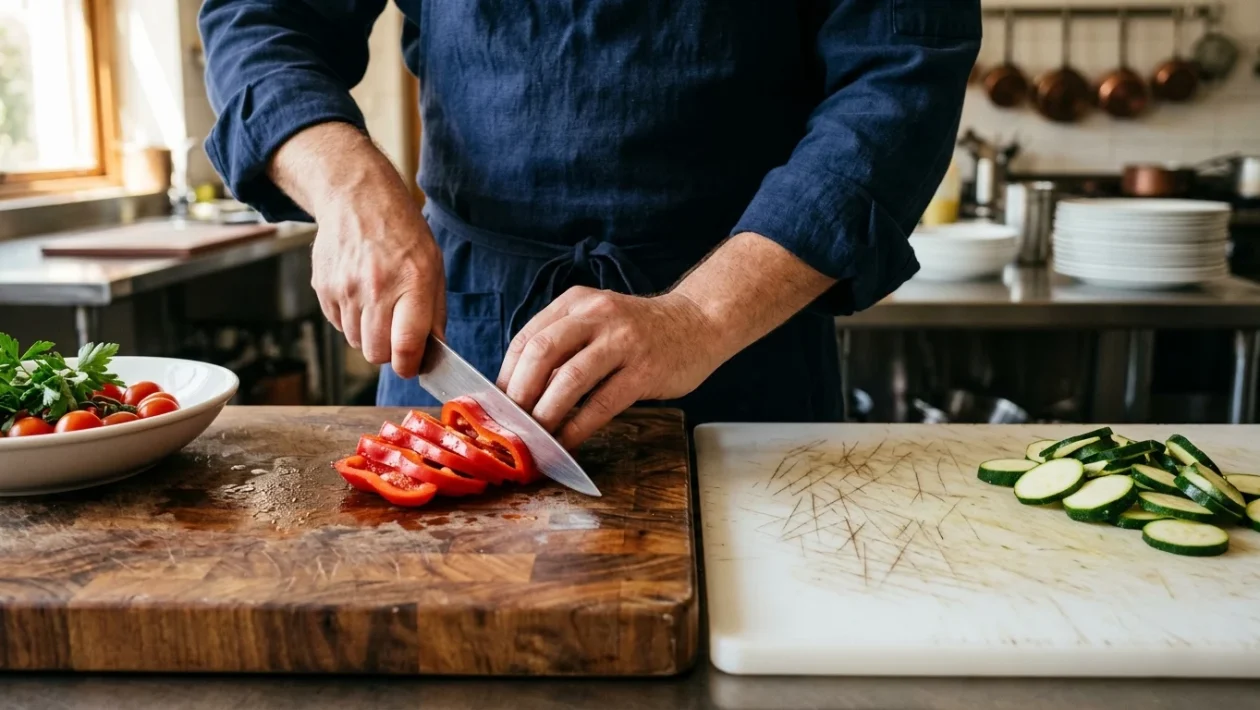
A close-up of a chef slicing fresh vegetables on a worn wooden cutting board next to a plastic one.
The cutting board is the foundation of almost every meal. It is also one of the most easily contaminated items in your kitchen.
Choosing the right material—and maintaining it properly—is critical to keeping toxins and foodborne illnesses off your plate. Both wood and plastic carry unique health risks when mishandled.
The Wooden Board Dilemma
Wooden cutting boards are a culinary staple. They are gentle on expensive knives, preventing blades from dulling quickly. Their aesthetic appeal also makes them popular as serving platters for cheese and charcuterie.
But wood comes with a major flaw: high porosity. The material acts like a sponge, rapidly absorbing liquids.
Every knife stroke creates deep grooves where bacteria can easily settle and multiply if left unchecked.
How to Maintain Wood Safely
To keep wooden boards sanitary, follow these strict maintenance rules:
- Stick to dry foods: Reserve wood primarily for bread, fruits, or vegetables.
- Wash immediately: Hand wash with hot water and dish detergent right after use.
- No soaking: Never leave a wooden board submerged in the sink.
- Dry thoroughly: Air dry the board completely before storing it away.
The Plastic Board Problem
Plastic boards are lightweight and budget-friendly. Manufactured from polyethylene or polypropylene, they are non-porous, making surface-level cleaning seemingly straightforward.
However, plastic is a soft material. Knives quickly carve deep, jagged gouges into the surface.
These cuts are notoriously difficult to clean, creating a perfect breeding ground for dangerous germs. Worse, heavy chopping slowly shreds the surface, releasing microplastics directly into your food.
How to Sanitize Plastic Safely
If you use plastic, aggressive cleaning is non-negotiable:
- Immediate sanitation: Scrub with scalding hot water and soap after every single use.
- Weekly disinfection: Soak the board in a solution of bleach, white vinegar, or baking soda.
- Dedicate a meat board: Always use a specific, separate plastic board exclusively for raw meat.
- Know when to toss it: Discard the board in the trash the moment it becomes heavily scored or worn.
The Final Verdict: Which Should You Buy?
Neither material is flawless. Both require rigorous hygiene to prevent kitchen cross-contamination.
For absolute safety when handling raw meat, some culinary experts suggest switching to metal cutting boards. Metal simply does not scratch, nor does it absorb dangerous liquids.
If you are sticking to traditional materials, adopt a dual-board strategy. Use a plastic board for raw meats so you can aggressively sanitize it. Reserve your durable wooden board strictly for slicing bread and vegetables.