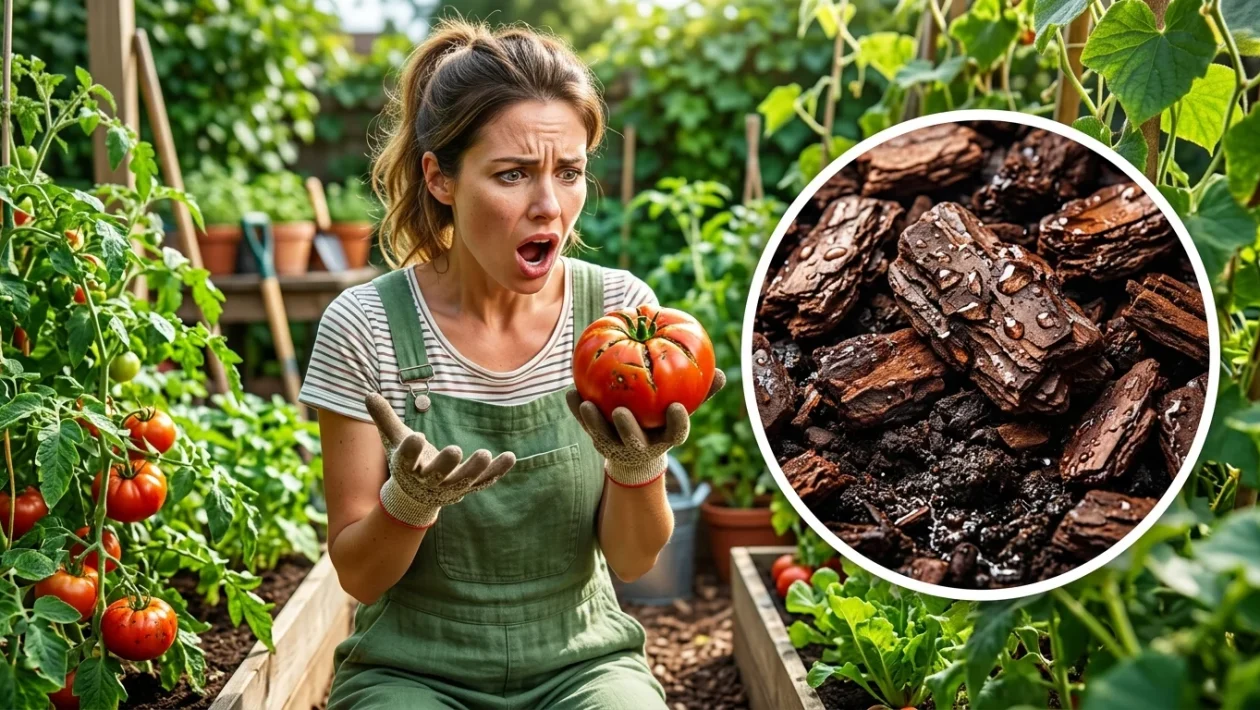
Biting into a homegrown tomato should be a juicy, rewarding experience. But sometimes, backyard harvests yield fruits with thick, leathery skins.
If your prize ‘Cherokee Purples’ pale in comparison to your neighbor’s crop, environmental stress or plant genetics might be to blame. The primary culprits behind a hardened tomato harvest come down to three specific factors.
The Plant Is Dehydrated
Tomatoes are heavy drinkers. When rainfall is scarce and irrigation falls short, the fruit slows its growth and thickens its outer layer to conserve water.
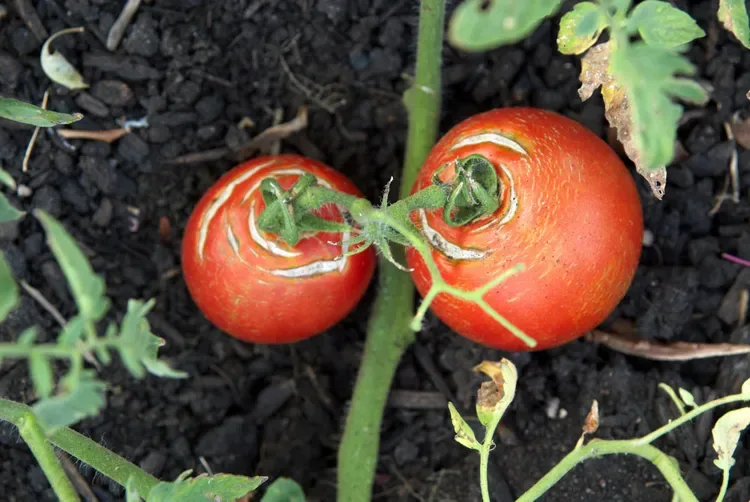
Red tomatoes splitting on the vine due to inconsistent watering and environmental stress.
Severe dehydration triggers blossom end rot and deep cracking along the skin. To prevent this, check the soil moisture about two inches below the surface. If it feels dry, it is time to water.
During peak summer heat, outdoor plants generally need watering two or three times a week, while container plants may demand daily soaking. Saturate the soil up to six inches deep and apply a thick layer of mulch around the base to lock in the moisture.
Avoid flooding the plants all at once. Overwatering can dilute the tomato’s flavor and cause the skin to split rapidly.
Sunscald and Heat Stress
Relentless sun and record-breaking heat waves directly damage developing fruit. A tomato baking in direct sunlight can develop sunscald, leaving yellow, leathery patches on the skin.
In extreme cases, these sunscald spots turn pale and papery. The easiest way to protect your crop is to leave the pruning shears alone.
A healthy canopy of green leaves provides vital shade for the growing tomatoes beneath. If the heat remains brutal, suspend a shade cloth over the garden bed to filter the intense sunlight.
Genetics and Varietal Traits
Not all tomatoes are meant for a classic summer sandwich. Some varieties are genetically engineered to grow thick skins.
Plum varieties, like the ‘Amish Paste’, are purposely bred with tough exteriors and meaty interiors to make them perfect for boiling down into canning sauces. Similarly, tomatoes marketed as crack-resistant naturally possess thicker walls to withstand environmental shifts.
Supermarket varieties are also bred for durability to survive cross-country transport without bruising. If you accidentally planted a thick-skinned paste variety, skip the slicing and simply peel the skin before eating or cook them down into a rich sauce.