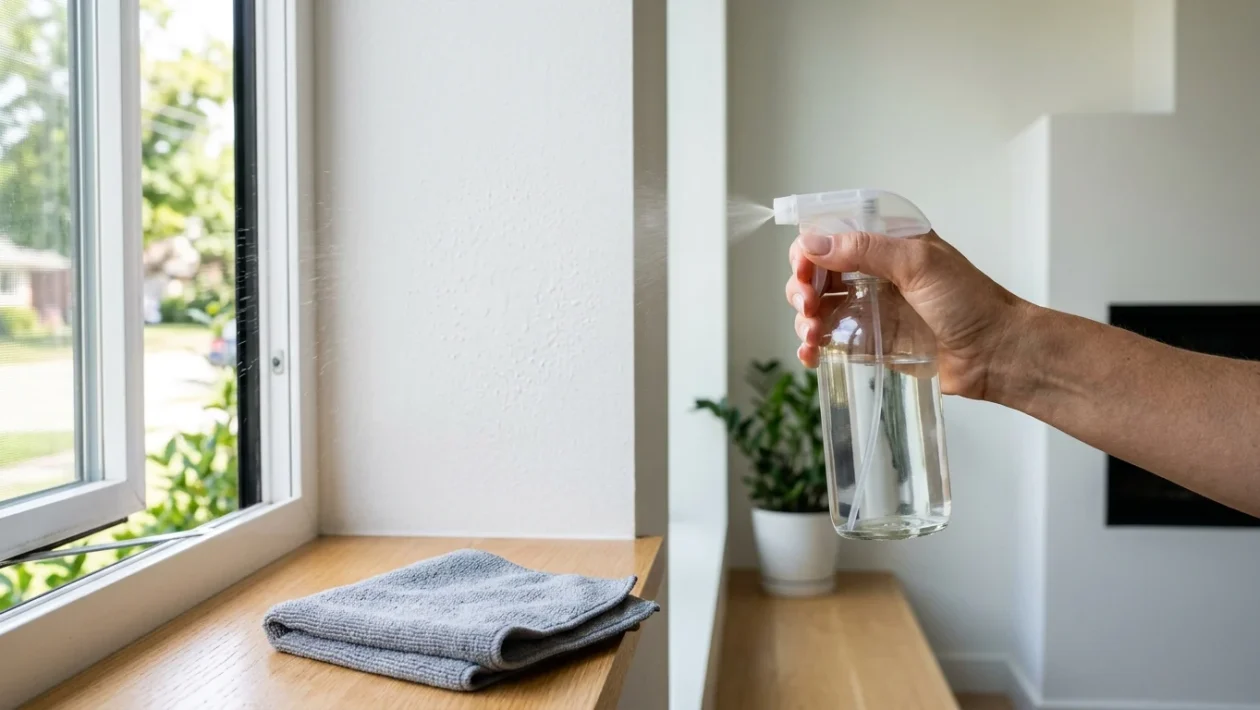
A spray bottle of white vinegar mixed with water used for cleaning domestic walls.
White vinegar has evolved from a common kitchen staple into a highly effective, chemical-free cleaning alternative for the home. When applied to walls, it is incredibly efficient at eliminating odors, reducing bacteria, and reversing surface moisture damage.
However, applying raw vinegar directly to your walls can backfire. If used improperly, the high acidity can strip certain interior paints and degrade fragile building materials.
Why Experts Recommend Vinegar for Walls
Spraying white vinegar combines deep cleaning and disinfection without the need for harsh industrial chemicals. Its natural antibacterial and acidic properties make it the perfect antidote to damp surfaces.
In practice, it effortlessly neutralizes stale odors trapped in poorly ventilated rooms. It also cuts through everyday grime, including light grease and smoke stains.
Most importantly, white vinegar combats superficial moisture and prevents mold growth. This makes it an essential tool during the autumn and winter months when cold walls tend to “sweat” from indoor condensation.
How to Apply It Safely
The application process is straightforward, but precision is necessary to avoid ruining your paint job. Experts recommend creating a balanced, diluted solution before you begin.
- Dilute the solution: Mix equal parts white vinegar and water in a clean spray bottle.
- Apply and wipe: Spray a light, even coat over washable walls. Immediately wipe the surface with a soft, clean cloth to lift away dirt and moisture.
- Air it out: Thoroughly ventilate the room by opening windows and doors. This ensures the wall dries quickly and allows the distinct vinegar smell to dissipate.