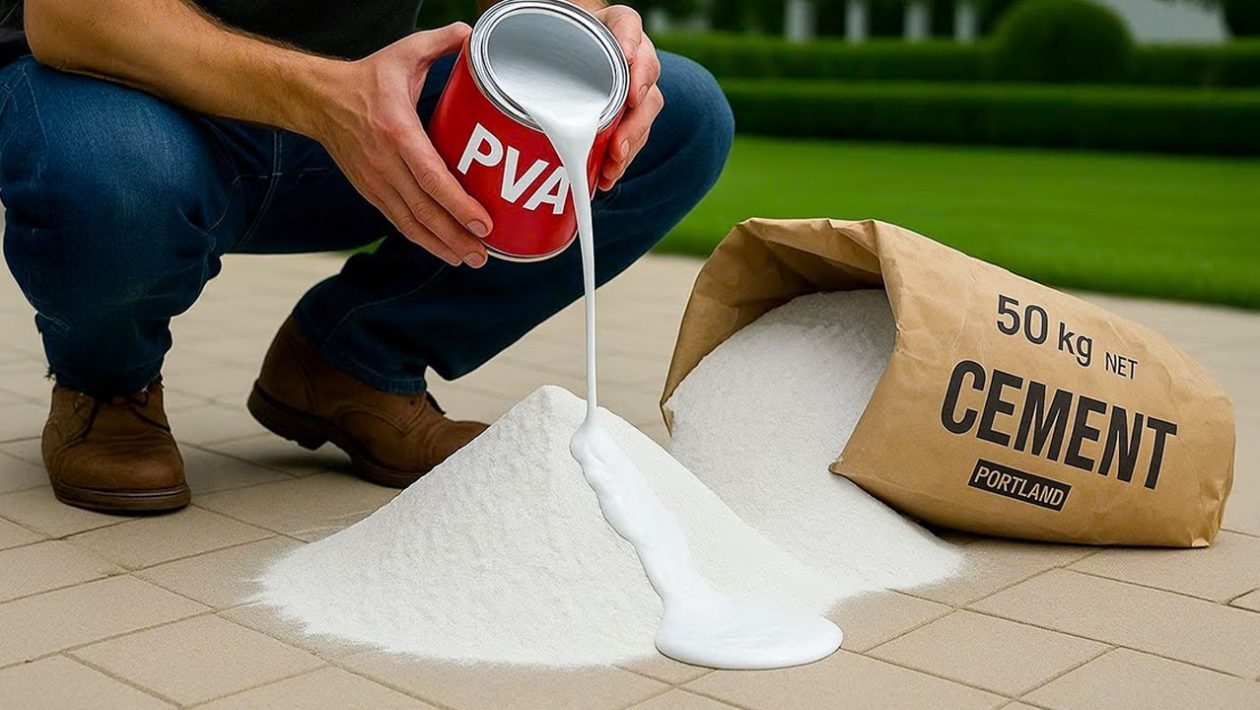
What Happens When You Combine PVA and Cement?
Contractors and seasoned DIYers often rely on expensive, specialized compounds for home repairs. Yet one of the most effective solutions sits right on the hardware store shelf for a fraction of the cost. Combining standard PVA glue with white cement creates a heavy-duty, highly versatile mixture.
White cement is prized for its aesthetic finish and structural strength. However, on its own, it can be brittle and prone to cracking under mechanical stress or temperature shifts. That is where PVA (polyvinyl acetate) glue comes into play.
When mixed into the wet cement, the polymers in the glue act as a flexible, synthetic binder. This transforms a rigid paste into a pliable, highly adhesive compound. The glue fundamentally alters the curing process, resulting in a surface that resists typical hairline fractures.
Why This Formula Beats Standard Spackle
The primary advantage of this hybrid mix is its superior adhesion. Traditional cement requires a rough, porous surface to grip properly. Adding liquid PVA allows the mixture to bond aggressively to almost any material, including old concrete, drywall, and even wood.
It also acts as an excellent moisture barrier. Once fully cured, the polymer-reinforced cement repels water far better than standard mixes. This makes it an ideal patching solution for damp areas like bathrooms, kitchens, and basements.
Finally, the finish is exceptionally smooth and bright. The white cement provides a clean, neutral base that easily takes paint, while the glue ensures the texture remains uniform as it dries.
Where to Use the PVA-Cement Compound
This DIY mixture is a practical problem-solver for a wide variety of household repairs and renovations.
- Fixing Loose Tiles: The enhanced grip makes it a perfect emergency mortar for resetting bathroom or kitchen tiles without buying a massive bag of thinset.
- Patching Drywall and Plaster: Its crack-resistant nature handles deep wall gouges that would cause standard spackle to shrink and crumble.
- Decorative Coatings: Crafters and renovators use it to create textured, waterproof finishes on planters, countertops, and accent walls.
Outdoor Repairs and Weatherproofing
While excellent indoors, this mixture also holds up to outdoor elements. It is highly effective for sealing gaps in exterior masonry or repairing chipped concrete steps. The polymer network formed by the glue prevents freezing water from penetrating and breaking the cement apart during winter months.
Preparing Your Surface for Application
Even the strongest adhesive compound requires proper surface preparation. Before applying the PVA and cement mixture, thoroughly clean the target area. Remove all dust, grease, loose debris, and flaking paint using a wire brush or coarse sandpaper.
If you are patching a highly porous surface like old brick or dry concrete, lightly mist it with water first. This prevents the dry wall from sucking the moisture out of your wet cement mix too quickly. A controlled drying process is critical to preventing shrinkage and ensuring a permanent bond.
How to Prepare the Mixture
Creating this compound requires no specialized tools. You simply need standard white Portland cement, PVA glue (like basic wood glue or heavy-duty craft glue), and clean water.
Start by mixing the dry white cement with water until it reaches the consistency of thick pancake batter. Once it is fully hydrated, stir in the PVA glue. A standard working ratio is roughly one part glue to four parts cement, though you can increase the glue slightly for added flexibility.
Mix thoroughly until the paste is completely smooth and free of lumps. Apply it immediately using a standard trowel or putty knife. The mixture sets quickly, so only prepare what you can actively use within 20 to 30 minutes.