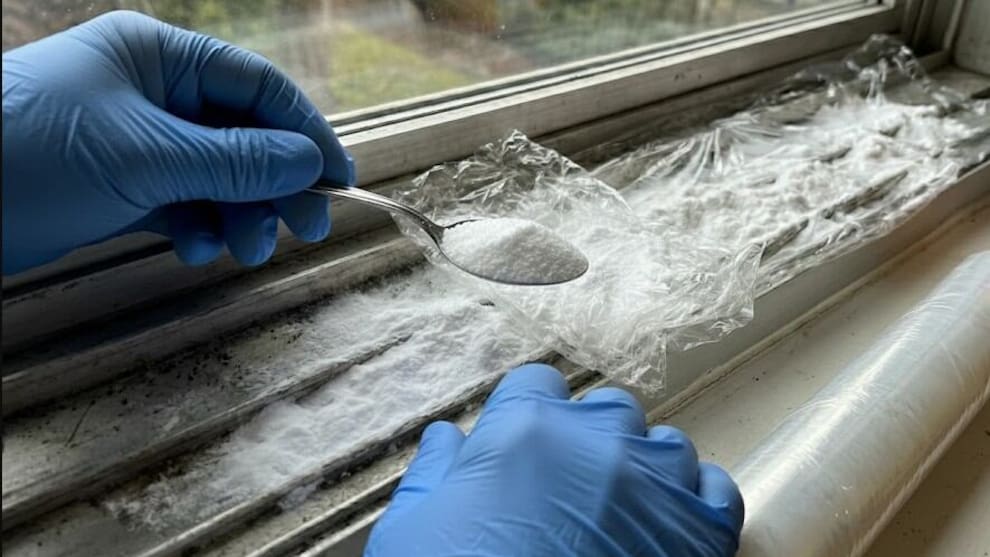
Close-up of a person applying baking soda and plastic wrap to a dirty window track for deep cleaning.
Cleaning window tracks is a notoriously frustrating household chore. These narrow spaces trap dust, dirt, and moisture, which jams the frames and often produces unpleasant smells.
While commercial disinfectants are widely available, natural homemade solutions are gaining traction. One highly effective method relies entirely on a combination of baking soda and plastic wrap.
This chemical-free mixture lifts stubborn dirt and neutralizes trapped odors. It also absorbs hidden moisture, preventing insects from nesting in tight corners.
The Science Behind the Strategy
The primary advantage of baking soda is its ability to absorb moisture and odors without scratching delicate materials.
It acts as a strong preventative measure against mold formation. This is especially crucial in damp environments or during rainy seasons when condensation heavily pools in window frames.
Cleaning this area drastically improves the sliding mechanism of the windows. By eliminating the gritty residue that causes friction, it reduces the physical strain on the sliding system and extends its lifespan.
How to Deep-Clean Tracks Effectively
Follow this exact sequence to ensure the mixture works properly:
- Vacuum all loose dust and debris from the track to prepare the surface.
- Sprinkle baking soda generously along the entire length of the rail.
- Cover the area completely with plastic wrap and let it sit for 30 minutes to two hours.
- Remove the plastic wrap and scrub the track with a small brush to dislodge the caked-on dirt.
- Spray a light layer of water or white vinegar to activate the remaining baking soda.
- Wipe the track completely dry with a clean cloth to prevent new moisture buildup.
Common Mistakes That Ruin the Results
Avoid these frequent errors when applying the treatment:
- Failing to dry: Residual moisture quickly attracts new dust and leaves dirty streaks as it evaporates.
- Cleaning hot glass: Always wait until the glass and metal reach room temperature before applying any solution.
- Using abrasive sponges: Steel wool or stiff scouring pads will permanently scratch the surfaces. Stick to microfiber, soft cotton, or newspaper.
- Working in direct sunlight: Heat evaporates the liquid too rapidly, leaving permanent white marks behind. Choose overcast days or clean during shaded hours.
- Overusing baking soda: More powder does not equal a cleaner surface. An even, moderate layer is the key to a smooth slide.
Versatility Beyond Windows
This exact compound works flawlessly across multiple household surfaces without the need for harsh detergents.
It easily cuts through hard water stains and soap scum on shower doors and bathroom mirrors. Homeowners also use it to polish glass coffee tables, display cabinets, and sliding balcony doors.
It even works on car windshields, provided you carefully keep the abrasive powder away from the rubber seals.
The Environmental and Health Edge
Choosing baking soda over bottled commercial cleaners provides several distinct advantages for modern households.
- Plastic reduction: You can indefinitely reuse the same spray bottle for water or vinegar.
- Chemical avoidance: The treatment is completely free of ammonia, chlorine, and synthetic fragrances.
- Household safety: It remains non-toxic to pets and children upon accidental contact.
- Eco-friendly: The runoff is entirely biodegradable and will not contaminate municipal water systems.