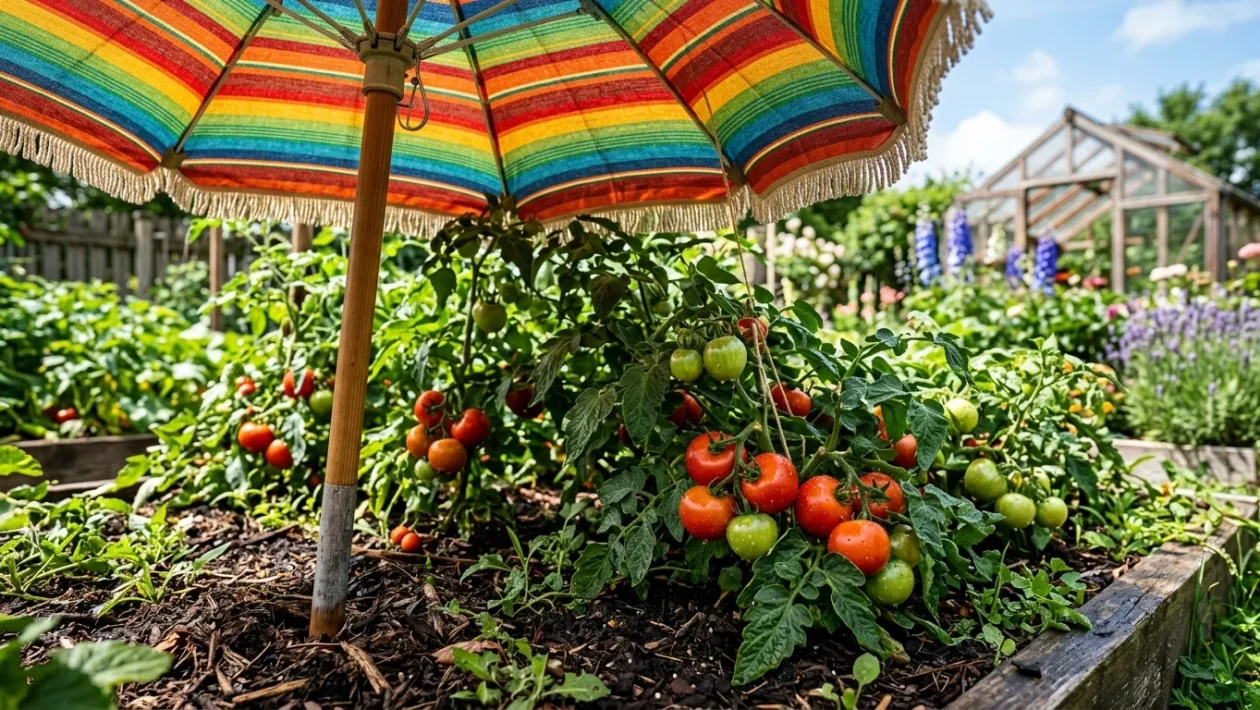
Summer heat waves are ruthless on backyard vegetable gardens. When temperatures sit above 90°F for days on end, tomato plants panic.
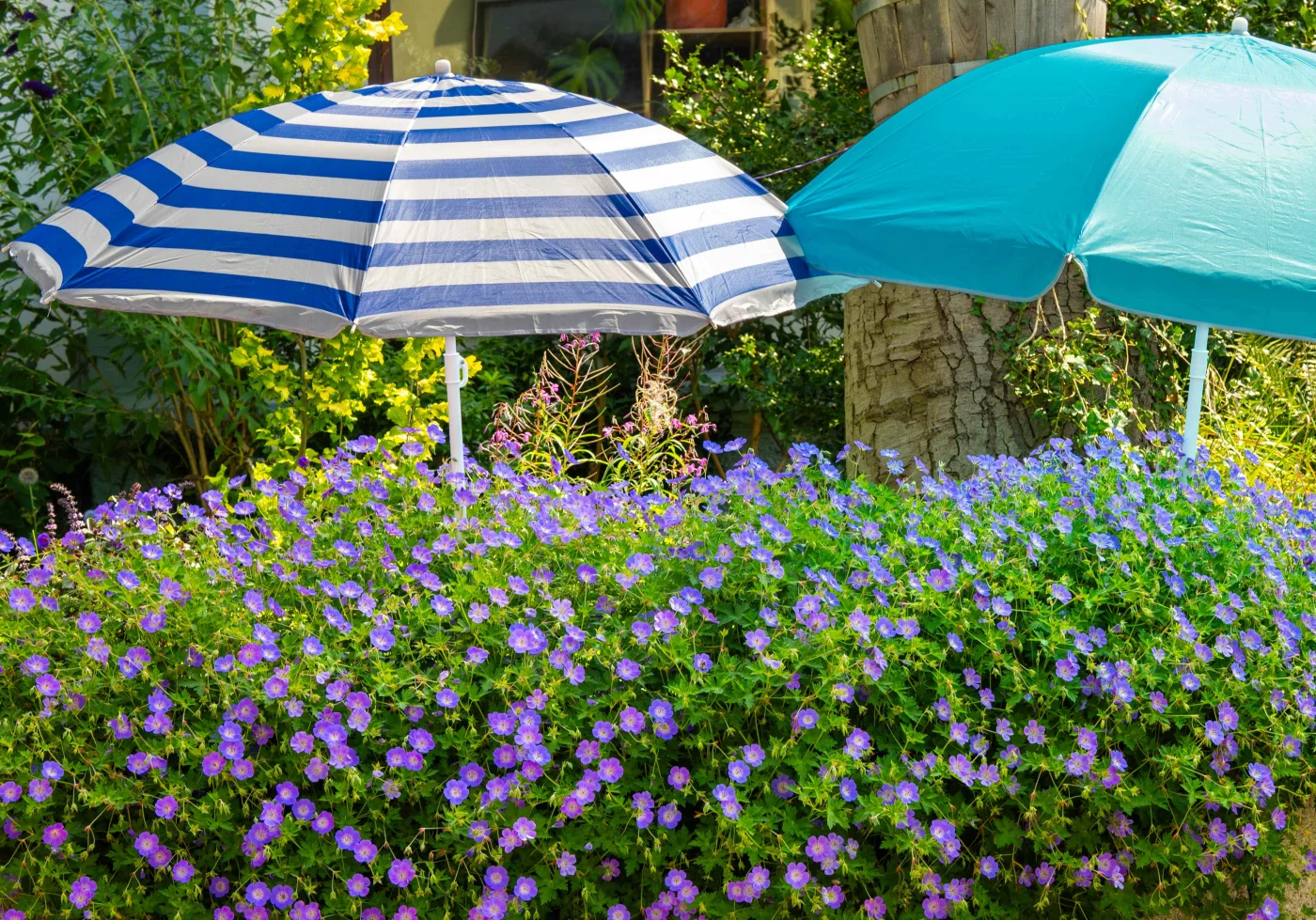
A bright beach umbrella placed directly in a garden bed to block harsh sunlight.
This extreme heat triggers a cascade of stress responses. Gardeners quickly spot curling leaves, severe sunscald, blossom drop, and a devastating halt in fruit production.
Close-up of a patio umbrella shielding summer garden crops from intense heat.
The traditional agricultural fix is shade cloth. However, stringing up specialized fabric is rarely practical for beginners with small yards or regions where 90°F days are rare.
Mike McGrath offers a dead-simple alternative: jam a beach or patio umbrella right into the dirt.
The Case for Garden Umbrellas
McGrath knows a thing or two about maximizing yields. He is the host of the radio show You Bet Your Garden, former editor-in-chief of Organic Gardening magazine, and author of the You Bet Your Garden Guide to Growing Great Tomatoes.
Lush green tomato plants thriving under the protective shadow of an outdoor umbrella.
“My tomatoes are spread out over several raised beds, and other than the bed frames themselves, there are no straight lines in my garden,” McGrath says. “So long ago in a garden far, far away, I got the bright idea of using old beach umbrellas to provide shade at a certain time on hot and sunny days.”
While McGrath had a personal stockpile of old umbrellas, he notes they are incredibly cheap to source. Thrift stores, garage sales, and Facebook Marketplace are flooded with discarded patio gear.
Imitating Professional Shade Cloths
In commercial farming, shade cloths are rated by opacity. For tomatoes, a 30% to 40% sunlight block is ideal. Surprisingly, modern beach umbrellas hit this metric perfectly.
“Some of the newer ones I see around these days are somewhat translucent and have SPF numbers on the label, so they’re doing a really good imitation of shade cloth,” McGrath notes.
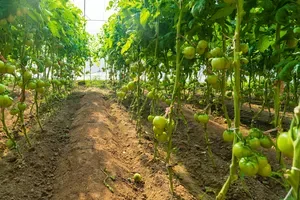
Healthy green tomatoes ripening on the vine shielded from midday UV rays.
Older, cheaper umbrellas lack specific opacity ratings, but they offer a distinct mechanical advantage. You can easily open and close them to dictate exactly when your plants take cover.
Mastering the Timing
Tomatoes still need sunlight to grow. McGrath advises giving your plants unfiltered morning sun and saving the umbrella deployment for the punishing afternoon heat.
“I generally choose 2 p.m., but people in high-temp areas of Zone 7 and above—I’m somewhere around 6 ¾—might want to start as early as noon,” he explains.

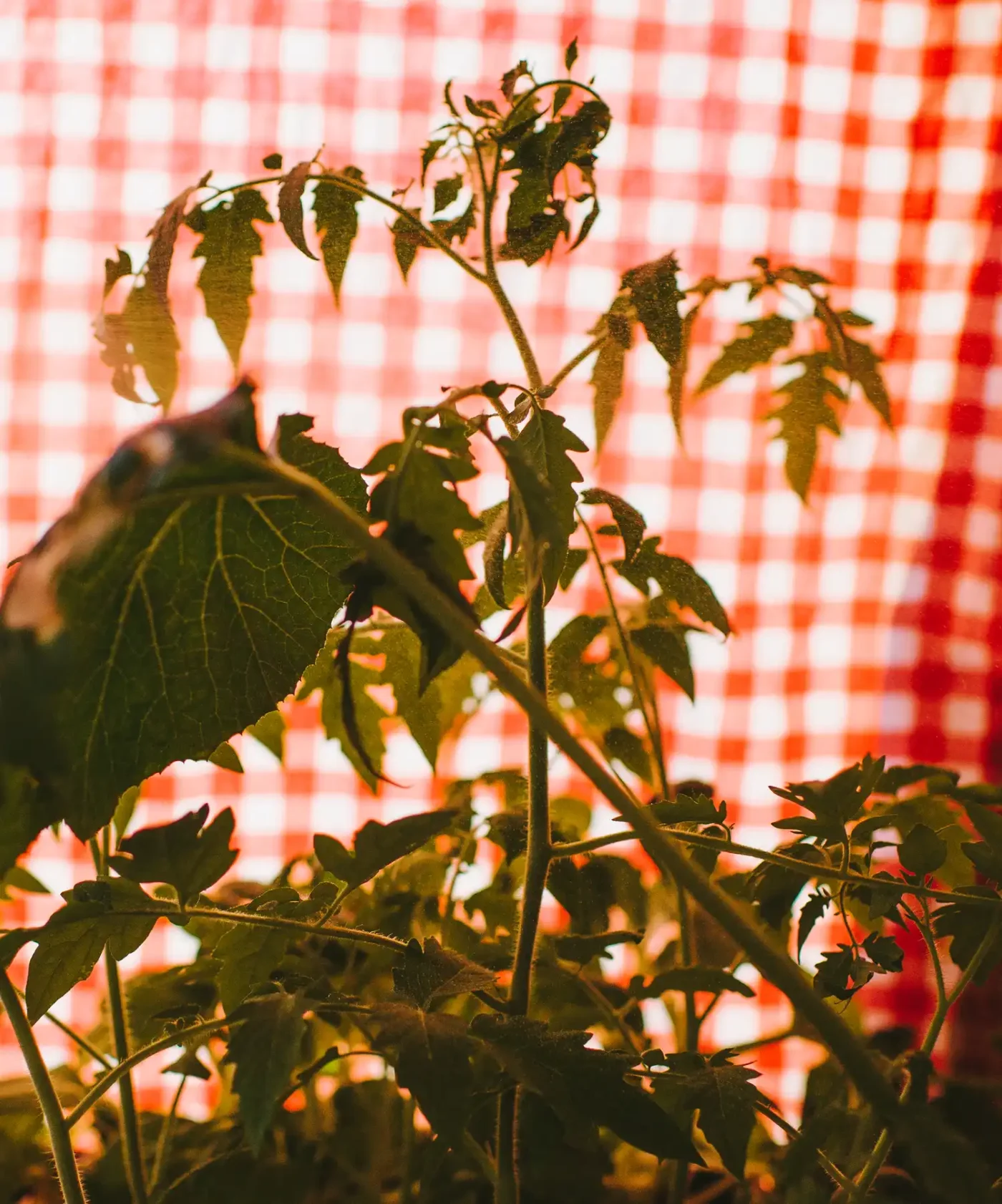
Sunlight filtering through the leaves of a backyard vegetable crop.
Deploying an umbrella is just one line of defense during a brutal heatwave. Proper soil mulching and deep, consistent watering regimens are also necessary to keep the root systems cool while the canopy hides in the shade.