
Cleaning the oven is a chore usually delayed until burnt cheese at the bottom of the appliance triggers a smoke alarm. However, routine maintenance is essential to stop grease and bacteria from accumulating where your food cooks.
Two cleaning experts shared their strategies for deep-cleaning an oven. Their first piece of advice? Stop using the appliance’s built-in cleaning features.
The Dangers of the Self-Cleaning Feature
Oven manufacturers include a self-cleaning button, but professionals warn against pressing it. Cleaning expert San Angelo says toxic chemical cleaners are unnecessary, and the self-cleaning mode poses active risks.
“Toxic oven cleaners are not needed to clean an oven effectively,” San Angelo explains. “And using the self-cleaning feature can be dangerous to yourself and your oven.”
The self-cleaning mode forces the oven’s temperature up to 800 or 1,000 degrees. This incinerates food particles, but it can also release harmful fumes into your kitchen.
The intense heat puts the physical appliance in jeopardy. “Raising the oven’s temperature that high can risk mechanical failure of many elements of your oven like wiring, the control panel, and your oven’s thermostat,” San Angelo says.
The Soap and Water Method for Light Cleans
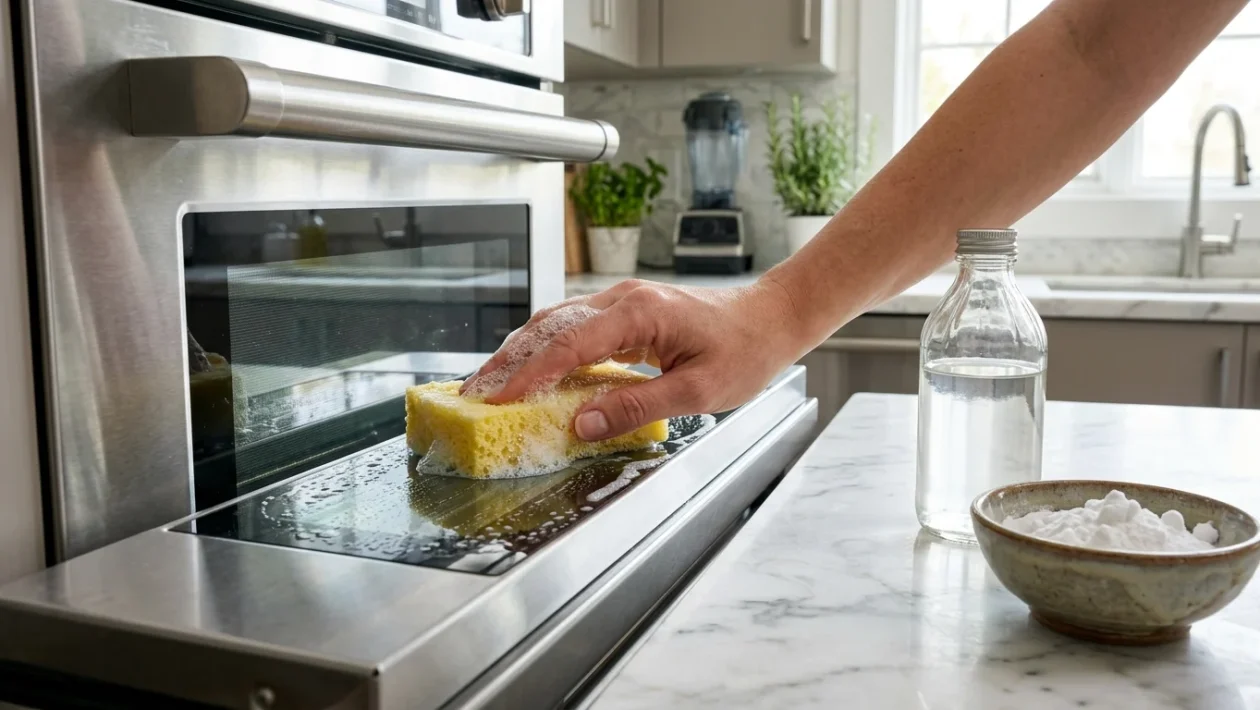
For routine maintenance, you only need dish soap, a sponge, and paper towels. Start by wiping loose crumbs out of the basin.
Wet a sponge and apply about five drops of dish soap, or a heavy spray of a product like Dawn, directly to the scrubber side. Scrub the walls and the bottom of the oven.
If baked-on particles resist the sponge, squeeze some soapy water over the spots and let them soak. Finish the job by wiping away all soap residue with a damp rag or paper towel.
Tackling Tough Stains with Natural Degreasers
Heavy grease requires a stronger, naturally abrasive approach. You will need baking soda, white vinegar, and a microfiber cloth.
Mix the baking soda and vinegar in a small bowl until it forms a paste. Wipe down the oven interior with a damp microfiber cloth, then apply the paste directly to stubborn, baked-on food.
The mixture acts as a gentle abrasive and degreaser. It lifts stuck spots and pulls loose food particles from the surface. Once the grease breaks down, wipe away the paste with a clean, damp microfiber cloth.
Detailing the Oven Knobs
Oven knobs harbor hidden grease and grime. If your knobs are removable, pull them off and drop them into a bowl of warm, soapy water for a few minutes to loosen the buildup.
For stubborn spots, apply a small amount of baking soda to a cloth and gently scrub. Always use a non-abrasive sponge or microfiber cloth to protect the hardware’s finish.
To clean the tight spaces on the back of the knobs, scrub the crevices with a spare toothbrush. Rinse the hardware thoroughly and let it dry completely before replacing them on the stove.
Routine Maintenance Rules
The timeline for cleaning depends entirely on your cooking habits. Cleaning expert Ruenz advises cleaning the oven immediately if you notice smoke or a smoke-like odor during use.
Prevention is the best time-saver. San Angelo recommends covering dishes while baking to stop splatters before they hit the heating elements.
Both experts agree that wiping up spills as soon as the oven cools down is crucial. “This will help maintain your hard work and will make it that much easier the next time you do an oven deep clean,” Ruenz says.




