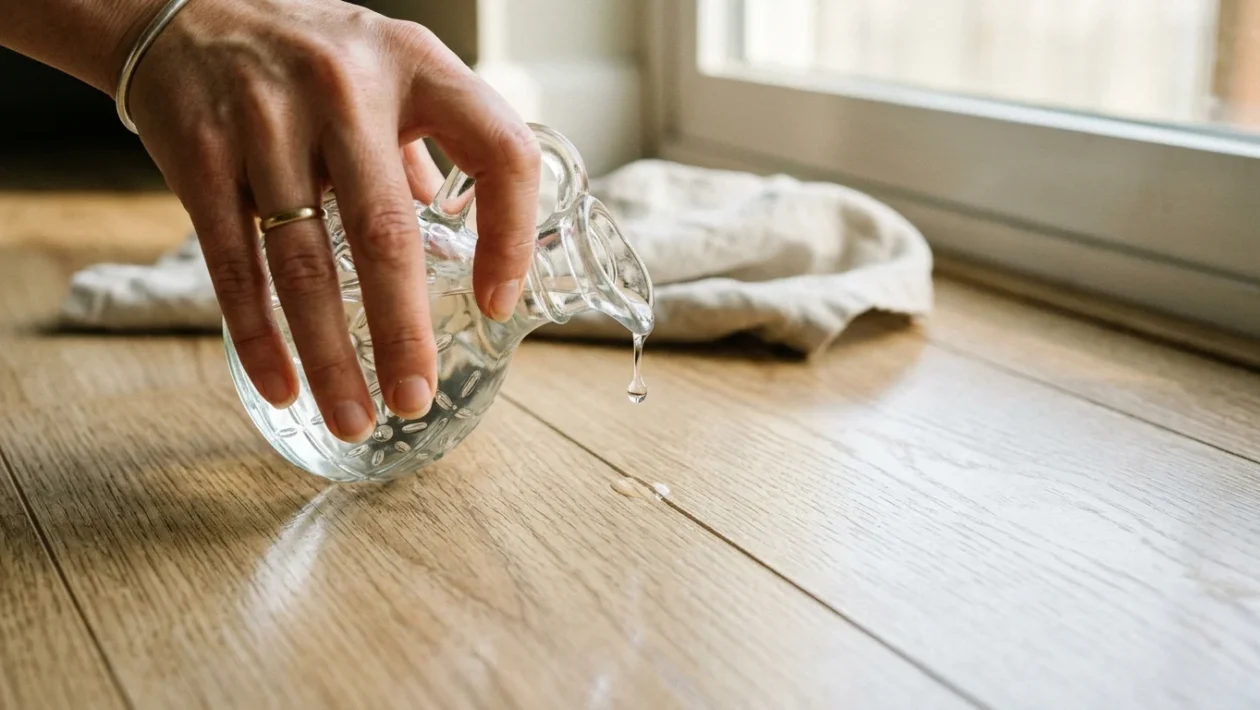
Vinegar is famous for cutting through grease and neutralizing odors. But using it on laminate floors is a fast track to permanent damage.
Laminate features a protective top layer that gives it a durable shine. Harsh acidic cleaners easily eat right through that barrier, leaving your floors dull and exposed.
Why Vinegar Ruins Laminate Flooring
Straight vinegar destroys the protective finish on laminate flooring. Once that layer degrades, the floor becomes highly vulnerable to scratches and water damage.
Stacey Gustafson, a cleaning and flooring expert for Bona, warns that DIY vinegar-and-water solutions carry heavy risks. “Using vinegar and water to clean laminate floors can also expose the floor to an excessive amount of moisture,” Gustafson says.
That liquid seeps into the floor’s seams over time. The result is staining, lifting, swelling, or warping that often requires full floor replacement.
The Only Safe Way to Use Vinegar
If you absolutely must use vinegar, dilution is mandatory. Becky Rapinchuk, founder of Clean Mama and author of Simply Clean, warns that frequent use of straight vinegar will ruin the finish over time.
Instead, Rapinchuk uses a custom spray bottle mix: equal parts water, white vinegar, and rubbing alcohol.
“Vinegar cuts through grease and grime naturally, rubbing alcohol evaporates quickly, and water dilutes the vinegar so it’s gentle on the laminate finish,” she says. The rapid evaporation of the rubbing alcohol is crucial because it prevents moisture from seeping into the floorboards.
Always spray this mixture directly onto a microfiber cloth—never directly onto the floor—to avoid oversaturation.
Better Alternatives for Laminate Care
Skipping the vinegar entirely is the smartest way to protect your flooring investment. Gustafson recommends dry mopping or sweeping daily with a microfiber dusting pad to remove abrasive dirt and debris before it can scratch the surface.
pH-Neutral Floor Cleaner
For a weekly deep clean, reach for a professionally developed spray mop system. Gustafson advises choosing a water-based, pH-neutral floor cleaner crafted specifically for hard surfaces.
Ensure the formula is free from ammonia, petroleum, phosphates, phthalates, and parabens. Ideally, look for products that meet the Environmental Protection Agency’s Safer Choice Standard.
Soap and Water
A basic soap and water mixture also works perfectly. Rapinchuk recommends mixing 1 to 2 teaspoons of all-natural dish soap or Castile soap into a gallon of warm water.
Dip a microfiber mop into the bucket and wring it out until it is barely damp. Mop with the grain in small, 3- to 6-foot sections, then immediately dry any lingering moisture with a clean microfiber cloth.
Common Laminate Cleaning Mistakes
Laminate is notoriously delicate. Flooring experts warn against these common maintenance errors to keep your surfaces pristine:
- Excess water: Using a wet mop is the fastest way to warp and buckle laminate. Clean spills immediately and only ever use a barely damp mop.
- Too much soap: Heavy soap concentrations leave a sticky residue that traps dirt and makes the floor look dingy.
- Beater bar vacuums: Traditional vacuum wheels and rotating beater bars will dent and scratch laminate. Stick to soft brooms and microfiber mops.
- Air drying: Letting your floors air dry leaves streaks, water spots, and dangerous standing moisture. Always buff the floor dry with a microfiber cloth after mopping.
- Harsh chemicals and scrubbers: Never use bleach, acetone, ammonia, scouring pads, or hard-bristle brushes. These materials will instantly strip the finish and discolor the flooring.