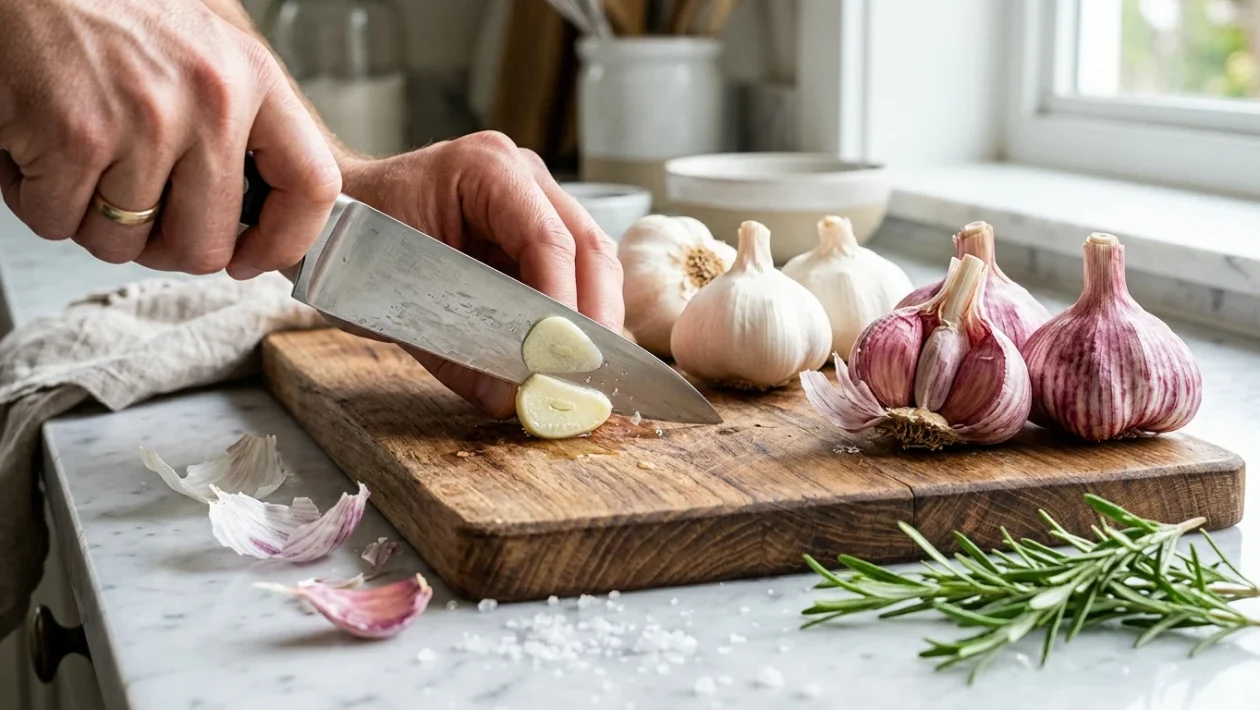
Close-up of fresh white and purple garlic bulbs resting on a wooden cutting board.
The Great Garlic Debate: White or Purple?
Garlic is a fundamental pillar in the kitchen, anchoring the flavors of traditional broths, roasted meats, rice dishes, and complex stews. It remains one of the most widely used ingredients in Colombian households.
Shoppers often pause at the produce aisle with a common question: should they buy white or purple garlic? While both belong to the same species, they behave entirely differently in the pan.
Beyond the color of their skin, each variety offers distinct characteristics that dictate flavor intensity, cooking applications, and pantry shelf life.
Core Differences in Flavor and Appearance
The most obvious difference lies in the exterior, but the real variations happen in their chemical composition and flavor profile.
White garlic features light, papery skin and generally larger cloves. It delivers a mild flavor, a less intense aroma and a texture that makes it easier to use in delicate recipes.
Purple garlic boasts a reddish-violet hue with slightly smaller cloves. It packs a heavy punch, offering a strong, sharp aroma that intensifies significantly when exposed to heat.
These distinct profiles mean each type shines in completely different culinary scenarios.
Choosing the Right Garlic for Your Recipe
There is no objectively superior garlic. Your choice depends entirely on the menu you are preparing.
For delicate dishes like light soups, subtle dressings, or quick sautéed vegetables, white garlic is the ideal candidate because it provides aroma without standing out too much.
If you are tackling heavy stews, hearty meats, marinades, or long-simmering robust sauces, purple garlic is unmatched. Its intense flavor profile easily survives extended cooking times without fading.
Professional chefs often stock both varieties to ensure they have the right tool for every dish.
Which Variety Lasts Longer?
Purple garlic consistently wins the longevity test. When kept in a dry, cool, and well-ventilated space, it maintains its quality far longer than its white counterpart.
White garlic still offers a respectable shelf life of several weeks. However, it degrades faster if pantry conditions are less than ideal.
To maximize the lifespan of either variety, keep them away from high humidity and never store them in sealed plastic bags.
Are the Nutritional Benefits the Same?
Yes. Both varieties are rich in allicin, the potent natural compound responsible for garlic’s signature scent and traditional medicinal properties.
Both deliver a solid dose of essential vitamins, minerals, and antioxidants. The nutritional gap between white and purple garlic is negligible.
How to Spot High-Quality Garlic
Regardless of color, freshness dictates the final flavor of your dish. Follow these rules at the market to select the best bulbs:
- Choose heads that feel completely firm and solid to the touch.
- Ensure the papery skin is entirely dry and clings tightly to the cloves.
- Reject any cloves displaying dark blemishes or soft, spongy spots.
- Opt for whole heads that feel heavy for their physical size.
- Skip any bulbs showing green sprouts if you plan to store them in your pantry for more than a few days.
The Final Verdict
For everyday cooking with a gentle flavor profile, white garlic is your most versatile option. If you demand bold aromas, heavy cooking resilience, and extended pantry life, purple garlic is the clear winner.
Both are abundantly available across local markets and neighborhood stores. The right choice ultimately comes down to the specific flavor profile you want on the plate.