Generations of prospectors have scoured the famous gold-bearing rivers of North America. Most people assume the easy gold was tapped out over a century ago. But modern prospectors are proving that supposedly barren waterways still hold serious treasure.
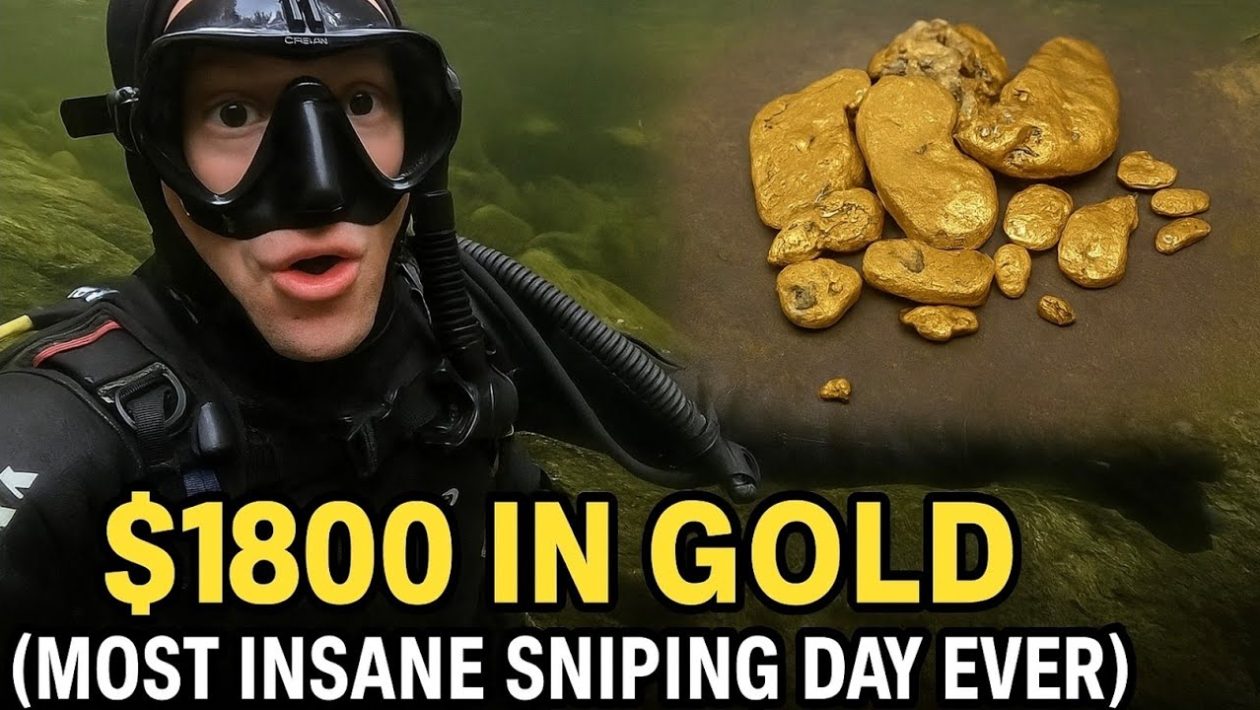
The secret lies beneath the surface, hidden inside solid rock. Recently, prospector PioneerPauly proved exactly how lucrative this can be, pulling over $1,800 worth of chunky gold nuggets from a single underwater crack in a heavily worked river. This massive haul wasn’t the result of heavy machinery. It came from a targeted technique known as gold sniping.
The Mechanics of Gold Sniping
Gold sniping involves physically getting into the water to extract gold directly from the riverbed. Instead of shoveling blindly from the bank into a sluice box, snipers use masks, snorkels, or full scuba gear to visually hunt for deposits.
They bypass the loose, shifting gravel that surface miners work. Instead, they head straight for the foundational bedrock at the bottom of the river.
Why Bedrock Crevices Hold the Best Gold
Gold is incredibly dense. It is roughly 19 times heavier than water and significantly heavier than standard river rock. When seasonal floods move material down a turbulent river, gold constantly sinks to the lowest possible point.
Once it hits bedrock, it stops sinking. However, the water current continues to push it along the smooth stone until it drops into a crack or crevasse.
Over decades, a single narrow fissure acts as a natural trap. It accumulates heavy nuggets while lighter rocks and sand simply wash away downstream.
Essential Gear for Underwater Extraction
Pulling gold from a tight bedrock crack requires specialized, minimalist gear. Heavy dredges and massive sluices are entirely unnecessary for this method.
- Crevice Tools: Long, specialized metal picks and scrapers are required to break apart packed clay and pry jammed rocks out of tight fissures.
- Snuffer Bottle: A hand-held suction bottle allows divers to instantly vacuum up small nuggets and gold flakes before the current washes them away.
- Dive Weights: Fast-moving rivers have immense power. Prospectors must wear heavy weight belts to stay securely anchored to the riverbed while working.
How to Read the Water
Finding gold underwater requires a solid understanding of river hydrology. Snipers look for the inside bends of rivers where fast water naturally slows down, forcing it to drop its heavy cargo.
The golden rule of sniping is simple: follow the cracks. Fissures running perpendicular to the water flow act exactly like the artificial riffles in a sluice box. They catch everything heavy that rolls over them.
A crack that looks empty on the surface may be plugged with hard-packed, century-old clay. This material acts as a vault for chunky nuggets trapped long ago.
Cracking open these stubborn clay plugs takes intense physical effort and patience. But breaking through that false bottom is often exactly what it takes to turn a picked-clean river into a highly profitable haul.