The Hidden Culprit Behind Sink Odors
A foul-smelling sink is one of the most common household nuisances. Over time, drains accumulate a dense sludge made of cooking grease, soap scum, hair, and decomposing food particles.
This buildup severely restricts water flow and creates a breeding ground for odor-causing bacteria. When left untreated, the sludge hardens, turning a slow drain into a complete blockage.
Many homeowners immediately reach for mechanical snakes or heavy-duty machines. While these tools can physically punch a hole through a clog, they often leave a coating of grease and bacteria behind, meaning the stench remains.
Why Chemical Cleaners Fall Short
Commercial liquid drain cleaners are another popular but flawed solution. These products rely on highly caustic chemicals like lye or sulfuric acid to dissolve blockages.
The chemical reaction generates intense heat inside the pipes. Frequent use of these commercial cleaners can soften PVC pipes, corrode older metal plumbing, and degrade pipe joint seals.
Furthermore, these chemicals are highly toxic. Splashes can cause severe skin burns, and the fumes are dangerous to inhale in poorly ventilated kitchens or bathrooms.
The Science of Baking Soda, Salt, and Vinegar
You can effectively strip pipes and neutralize odors using basic household pantry staples. A combination of baking soda, table salt, and white vinegar works through a rapid chemical reaction.
Baking soda serves as a natural deodorizer and a mild base. Salt acts as an abrasive agent, providing a scouring effect against sticky pipe walls.
When white vinegar—a mild acetic acid—is introduced, it reacts violently with the baking soda. This reaction releases rapidly expanding carbon dioxide gas. The foaming action agitates and lifts the grease, effectively scrubbing the inside of the pipe without mechanical equipment.
Step-by-Step: Clearing the Drain
To execute this method correctly, you need to rely on heat and trapped pressure. Start by bringing a large pot of water to a rolling boil.
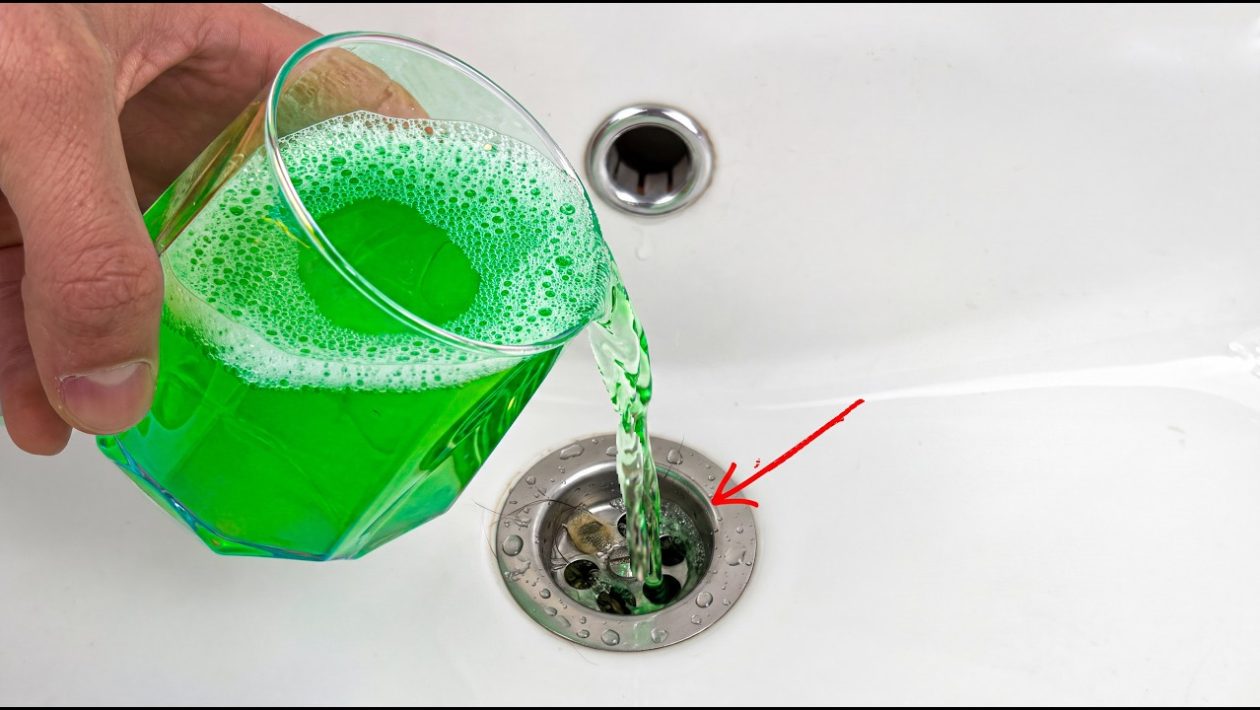
- Step 1: Carefully pour the boiling water directly down the drain. This initial flush melts the outer layers of congealed fats and grease.
- Step 2: Mix 1/2 cup of baking soda with 1/2 cup of coarse table salt. Pour this dry mixture directly into the drain opening.
- Step 3: Heat 1 cup of white vinegar in the microwave for about a minute. Pour the hot vinegar down the drain on top of the dry ingredients.
- Step 4: Immediately cover the drain with a rubber stopper or a thick, damp cloth. Trapping the reaction forces the expanding foam downward against the clog rather than letting it escape up into the sink.
- Step 5: Leave the mixture to work for 15 to 30 minutes. Do not run any water during this time.
- Step 6: Remove the stopper and flush the system with another full pot of boiling water. This washes away the dislodged debris and leaves the pipes entirely clear.
When to Call a Professional
This chemical reaction is highly effective for organic blockages in kitchen and bathroom sinks. It easily cuts through grease, soap, and typical household sludge.
However, it cannot dissolve solid obstructions. If a drain remains completely backed up after two attempts, the issue may be deeper in the plumbing system.
Tree roots intruding into the main sewer line or foreign plastic objects dropped down the drain will not respond to baking soda and vinegar. In those specific scenarios, professional snaking or camera inspection is required.
Maintaining Odor-Free Plumbing
Prevention is vastly easier than clearing a solid blockage. You can keep drains running smoothly by implementing a few strict kitchen habits.
Never pour cooking oils, bacon grease, or meat fats down the sink. Always wipe greasy pans with a paper towel before washing them.
To keep the plumbing permanently free of odors, perform a scaled-down maintenance flush once a month. Pour a few tablespoons of baking soda down the drain followed by hot tap water to neutralize any lingering bacteria before it multiplies.