
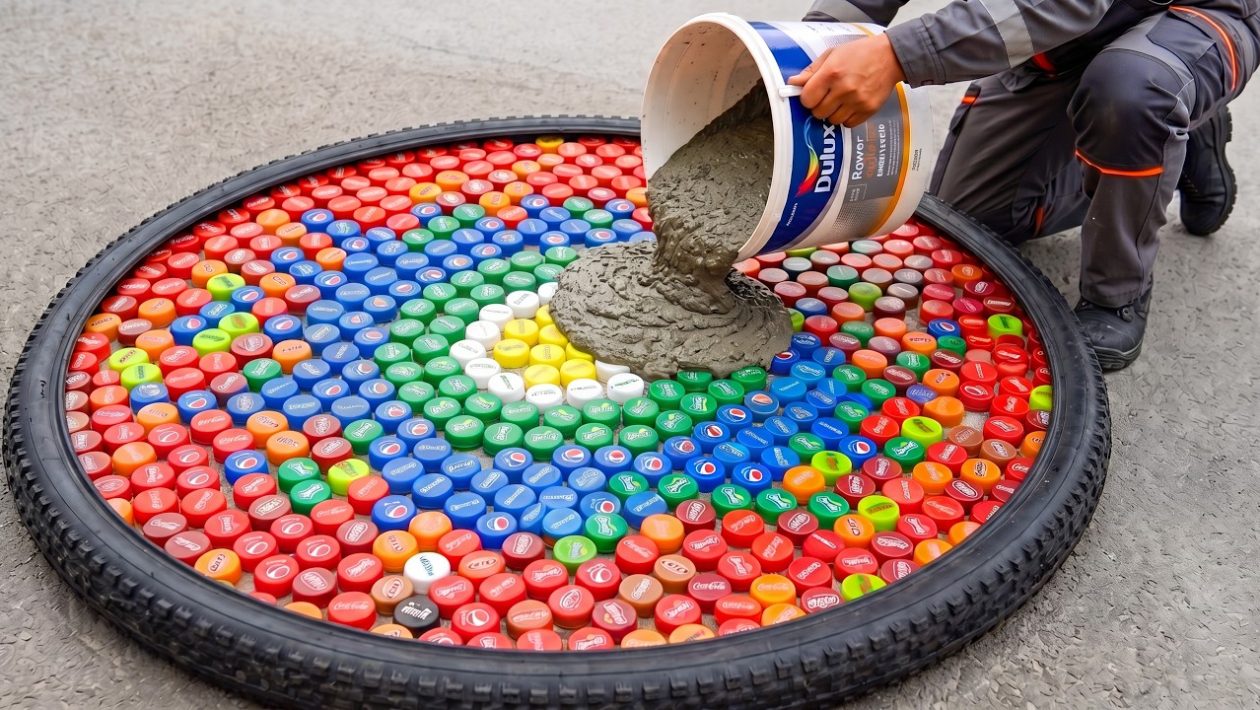
The Rise of Industrial Upcycling
Upcycling ordinary household waste into functional home decor is a rapidly growing trend in the design world. One of the most unexpected combinations gaining traction involves mixing standard plastic bottle caps with quick-setting cement.
The result is a textured, industrial-chic surface that looks surprisingly high-end. By utilizing everyday disposable materials, makers are crafting permanent, distinctive pieces with an unusual handmade character.
Plastic caps act as built-in texture molds or colorful inlays. When set into concrete, they create intricate negative space or a striking mosaic effect, elevating cheap materials into durable art.
Essential Safety Precautions
Working with dry cement requires strict adherence to safety protocols. Cement is highly caustic and produces fine, dangerous dust that can damage your lungs and skin.
Always wear heavy-duty work gloves and protective safety goggles before opening a bag of mix. A high-quality dust mask, such as an N95 or a dedicated respirator, is non-negotiable.
You must work outdoors or in a heavily ventilated area to avoid inhaling airborne particulates. Avoid prolonged skin contact with wet cement, which can cause severe chemical burns.
Materials Required for the Build
Executing a cement bottle cap craft requires only a few inexpensive supplies.
- Concrete or Cement Mix: A quick-setting concrete mix or fine mortar works best for capturing small details.
- Plastic Bottle Caps: Collect various sizes from water bottles, milk jugs, or soda bottles.
- A Mold: Flexible silicone molds, repurposed plastic food containers, or cardboard lined with packing tape all work perfectly.
- Release Agent: Cooking oil spray or a commercial mold release.
- Adhesive: Hot glue or double-sided tape.
The Step-by-Step Pouring Process
Preparation is the most critical phase of any concrete project. Once the cement is mixed, you only have a short window before it begins to cure.
Step 1: Prep and Anchor
Coat the inside of your chosen mold with a light layer of release spray so the cured concrete will pop out easily. Next, arrange the plastic bottle caps at the base of the mold.
Because plastic is buoyant, loose caps will float to the surface as soon as the liquid cement hits them. Secure each cap to the bottom of the mold using a small dab of hot glue or double-sided tape.
Step 2: Mix the Cement
Combine the dry cement and water in a disposable bucket according to the manufacturer’s exact ratios. Stir thoroughly until the mixture reaches the consistency of thick pancake batter, ensuring there are no dry lumps at the bottom.
Step 3: The Pour
Pour the cement mixture slowly over the anchored caps. Start from the center and let the concrete push outward to minimize air pockets.
Once the mold is filled, tap the outside of the container vigorously with a rubber mallet or your hands. This vibration forces trapped air bubbles to rise to the surface, preventing a pockmarked finish on your final piece.
Step 4: Cure and Demold
Set the mold on a level surface in a dry place. Let it cure undisturbed for at least 24 to 48 hours, depending on the humidity and the specific mix used.
Once fully hardened, gently flex the sides of the mold to release the block. If you placed the caps face down, you will reveal a smooth concrete surface inlaid with plastic circles. If you later remove the plastic caps, you are left with perfectly uniform, recessed circular impressions.
Practical Uses for Your Castings
This technique scales easily to accommodate various home and garden projects.
Using a shallow, round mold creates heavy-duty trivets or coasters. The embedded caps provide grip and heat displacement, perfect for protecting tables from hot pots.
For outdoor use, large plastic tub lids make excellent molds for garden stepping stones. Embedding varying sizes of heavy-duty plastic caps creates a highly slip-resistant texture for muddy garden paths.
The stark contrast between raw, brutalist concrete and the precise, geometric shapes of the bottle caps yields a striking aesthetic. It is a highly practical way to transform literal garbage into a permanent fixture.




