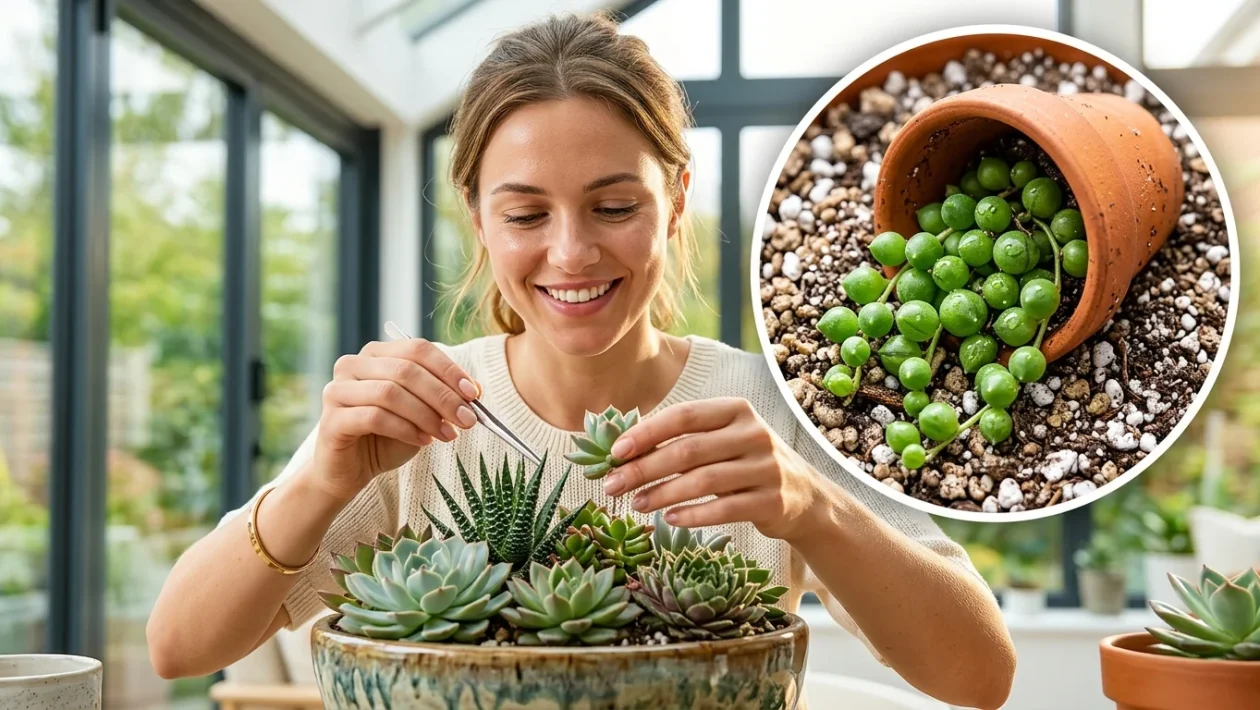
A simple planting technique is transforming standard succulent bowls into three-dimensional, multi-layered displays. Popularized by creators like @fancyplantsclub, the method involves nesting a sideways pot inside a larger container to build a miniature landscape.
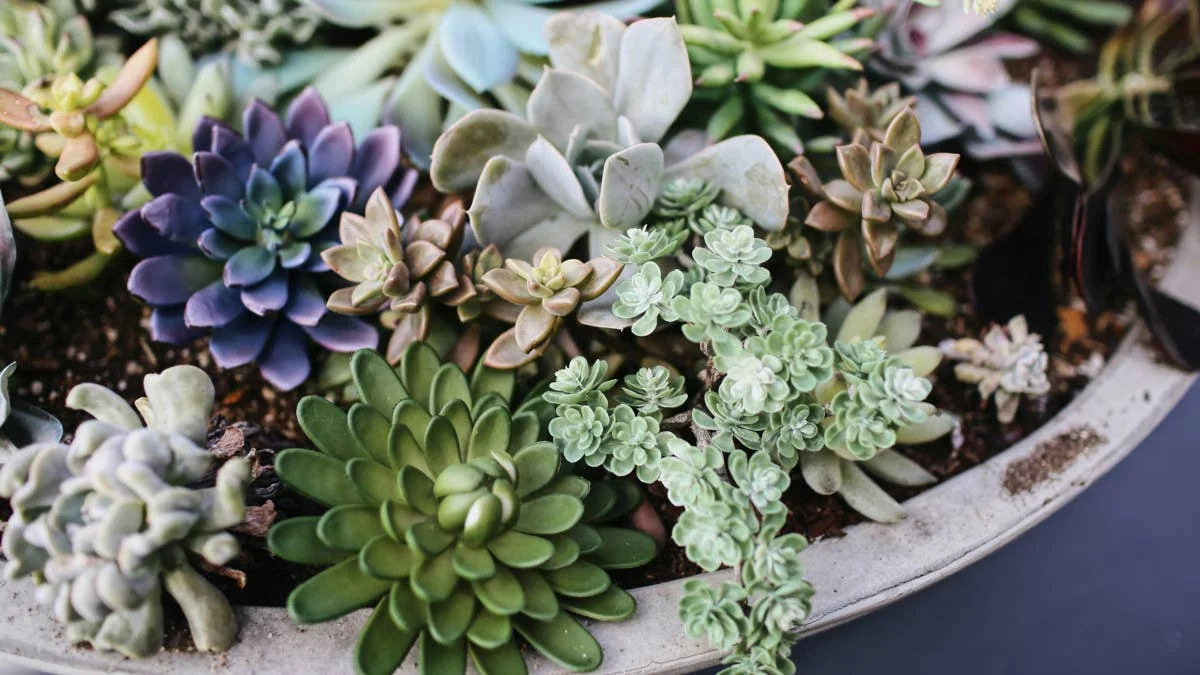
A diverse collection of thriving succulents arranged in a vibrant container garden.
Building the Nested Foundation
To create the layered look, start by filling a large base planter roughly 70 percent full with a well-draining, succulent-specific soil mix. Take a smaller, empty pot and turn it completely on its side.
Press the smaller pot firmly into the dirt until the bottom half is securely buried. For added visual depth, wedge small wood rounds or natural twigs beneath the nested pot so it appears to sit on a rustic shelf.
Staging the Plants
Once the base structure is stable, surround the nested pot with live plants. Place taller, sprawling succulent varieties near the center of the display to establish height.
Work outward toward the edges using smaller, ground-hugging plants. Line the rims of both the large and small pots with trailing varieties, such as string of pearls, to create an overgrown, cascading effect.
Finish the live arrangement by topping the exposed soil with decorative sand or small stones. This step locks the design in place and prevents soil shift during watering.
Zero-Maintenance Alternatives
The arrangement easily adapts for spaces that lack natural light. To build a zero-maintenance version, swap the live plants for artificial succulents.
Instead of potting soil, pack the base container with rigid floral foam to firmly anchor the faux stems. Hide the foam blocks entirely using preserved moss, gravel, or decorative sand.
Personalizing the Display
This structural trick provides a blank canvas for propagated cuttings. The project offers a practical way to give older, overgrown succulents a fresh aesthetic.
For one creator, a batch of resilient succulents left over from a 2018 soil campaign provided the perfect starting material. Accent pieces like crystals, varied stones, and miniature fairy lights can easily be woven between the original plants to customize the final scene.