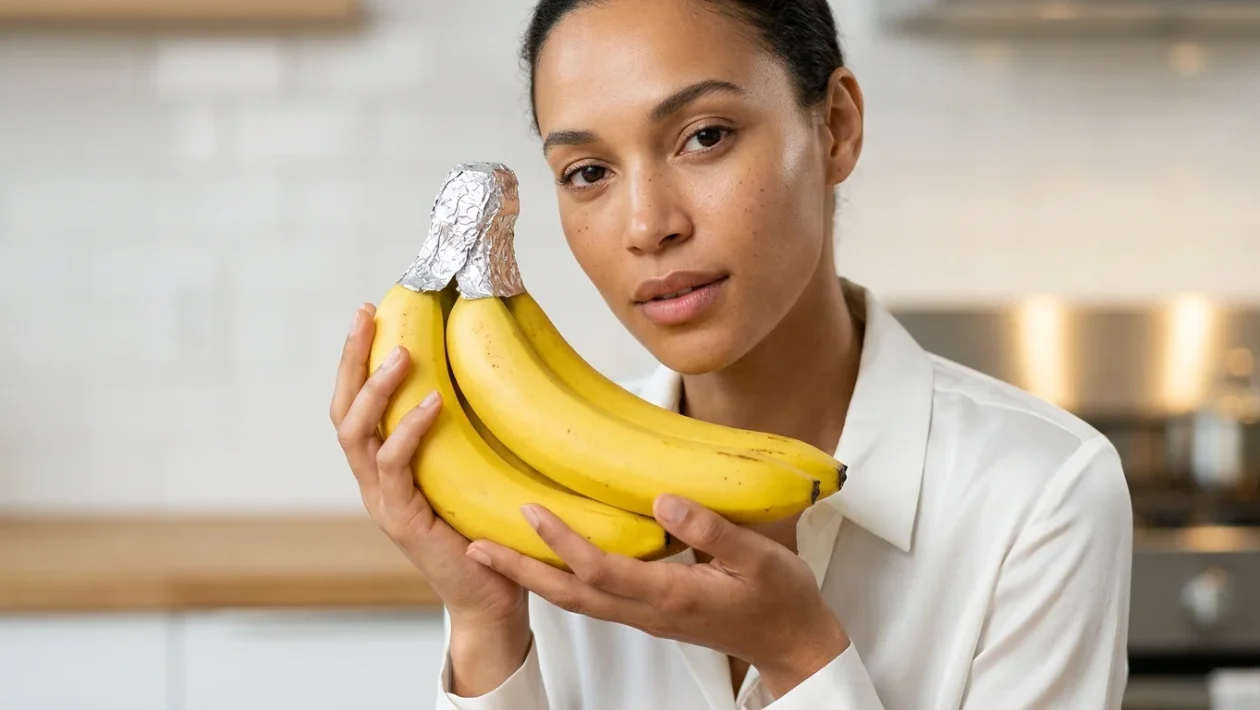
A bunch of yellow bananas with their stems wrapped tightly in silver aluminum foil.
Bananas are a global dietary staple, but they share a notorious flaw: they ripen incredibly fast. One day they are perfectly yellow, and the next, they are covered in brown spots.
To combat this rapid decay, a simple household hack has gained widespread popularity. Consumers are increasingly wrapping banana stems in aluminum foil to significantly extend their shelf life.
The Science Behind the Aluminum Foil Hack
While wrapping the stem cannot stop the ripening process entirely, it effectively slows it down. The secret lies in a naturally occurring chemical called ethylene.
Bananas release ethylene gas, which actively stimulates the ripening of the banana itself and any surrounding produce. The highest concentration of this gas escapes directly from the crown, or stem, of the bunch.
By tightly wrapping the stems with aluminum foil, you create a physical barrier. This traps the ethylene and reduces its release, buying the fruit a few extra days of peak freshness.
Optimal Storage Conditions
Foil alone is not a miracle cure. For the best results, bananas require specific environmental conditions. Always store them at room temperature.
Keep the fruit away from direct sunlight and household heat sources, which quickly accelerate decay. Isolation is also critical.
You must keep bananas far away from other heavy ethylene producers. Apples, pears, and avocados will cause bananas to overripen if stored in the same bowl.
Additional Tricks to Preserve Fruit
Beyond the foil method, a few simple adjustments can stretch the life of your fruit even further:
- Break the bunch: Separating bananas from one another as they start to ripen slows down the collective aging process.
- Use the refrigerator: Once bananas reach your preferred ripeness, move them to the fridge. The cold turns the peel dark, but the pulp inside remains perfectly intact.
- Isolate produce: Store different types of fruit separately whenever possible to limit cross-contamination of ripening gases.
- Purge damaged fruit: Immediately remove bruised or overly ripe fruit, as they rapidly accelerate the deterioration of everything nearby.
- Seek the cold: Always keep your fruit reserves in a consistently cool environment.