Moss gets blamed for ruining lawns, but the truth is entirely different. Moss is rarely the actual problem.
Instead of viewing it as an aggressive invader, treat it as a clear diagnostic report about your soil. The solution is almost always less dramatic than homeowners expect.
Everything growing in your yard is trying to tell you something about the ground beneath it.
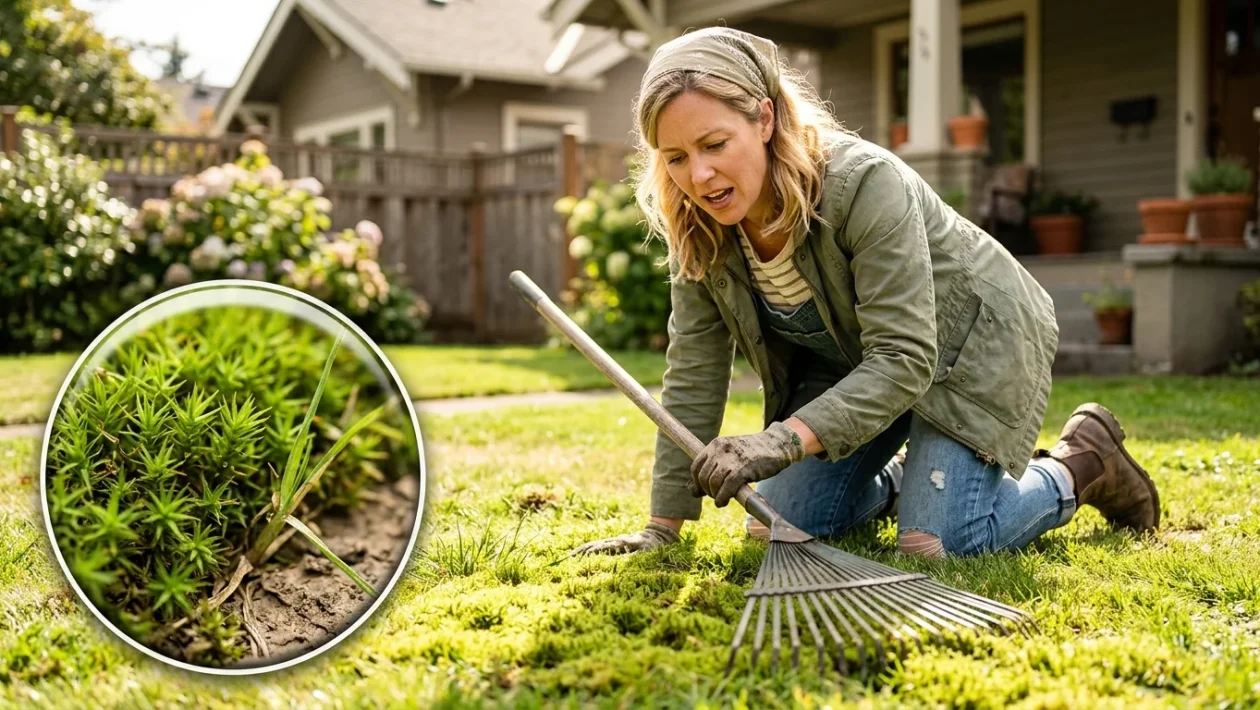
A close-up view of thick moss filling in the gaps of a struggling, patchy lawn.
What the Moss is Actually Saying
Moss thrives where grass is struggling. It doesn’t need deep roots, so it easily takes over when turf gets stressed.
Common culprits include heavy shade, compacted soil, low pH, poor drainage, or a lack of nutrients. Often, multiple factors overlap, and moss simply fills the void left by dying grass.
In shaded areas, grass leaves grow thin and vulnerable due to a lack of energy. In hard, heavily trafficked soil, roots suffocate from a lack of oxygen.
If water pools after a rainstorm, the constant moisture creates a perfect moss habitat. If the soil pH is too low, turf grass cannot effectively absorb nutrients, losing the battle to more adaptable species.
Mowing and Watering Mistakes
Many homeowners cut their grass far too short. Scalping the lawn actively helps moss spread.
Taller grass provides more leaf surface for photosynthesis, shades the soil surface, and develops stronger roots capable of surviving drought and wear. Aim for a mowing height of 2 to 3 inches during the growing season.
Frequent, shallow watering is another major mistake. It trains grass roots to stay near the surface, resulting in weak plants.
Instead, water deeply and infrequently. Soak the soil and let it dry out between sessions. This forces roots to drive deeper into the earth, creating a robust turf that easily outcompetes moss.
The Problem with Quick Fixes
Chemical treatments like iron sulfate will quickly scorch moss, turning it black. However, this does not fix the underlying soil imbalance.
Once the moss dies, you are left with bare dirt that new moss will quickly reclaim. Raking it out is an exhausting marathon that leaves the soil just as compacted and nutrient-poor as when you started.
Use these aggressive tactics only as part of a broader strategy. If you don’t fix the light, soil, and maintenance routines simultaneously, treating moss is like painting over water damage on a wall.
Choosing the Right Seed
Many lawns are seeded with sports mixes designed for full sun, even in north-facing, shaded yards.
Switch to shade-tolerant species like creeping red fescue or sheep fescue. They have finer blades but handle low light and regular mowing far better than sun-loving varieties.
Aerate the soil and apply a light topdressing. Oversow the lawn in early spring or early fall.
Keep the ground consistently moist until the new seedlings are established, and apply small amounts of fertilizer to encourage steady growth.
Embrace the Shade
Some areas of your yard will always be dark, cool, and damp. Trying to force a golf-course lawn in these spots is a losing battle.
You can carefully thin tree branches to let in more light, but sometimes it is better to pivot. Let moss, shade-tolerant perennials, or robust groundcovers take over the space.
Install stone pavers where foot traffic is heaviest. Use bark or gravel in corners that never fully dry out.
A diverse, adaptable yard handles weather and wear much better than a monoculture.
Test, Adjust, and Maintain
Never apply lime blindly. A simple soil test will reveal your exact pH and nutrient levels, preventing you from making the imbalance worse.
Focus on adding organic matter. Topdressing with compost improves soil structure, moisture retention, and microbial life.
Establish a seasonal rhythm: aerate and overseed in the spring or fall, mow at the right height, fertilize lightly in rounds, and water smart.
After a few weeks of proper maintenance, the grass will begin to fill in the gaps. The moss will quietly retreat on its own.