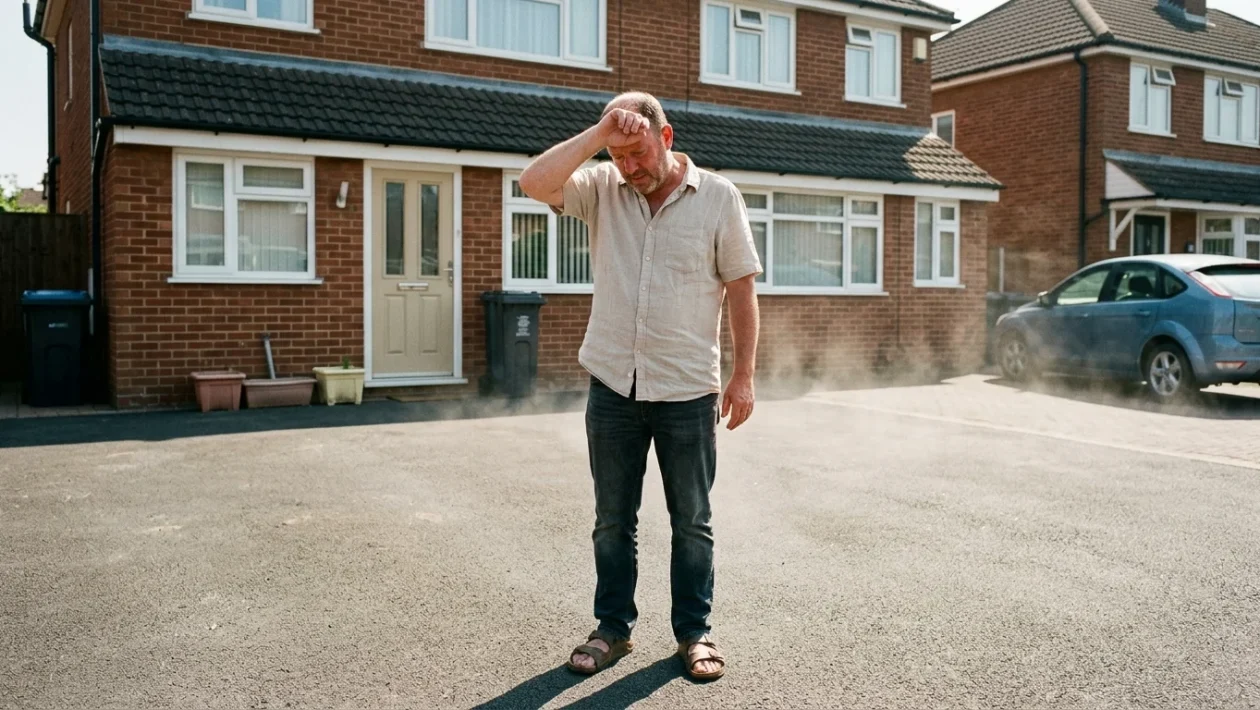
Paved driveways replacing green front gardens in a UK residential neighborhood
Warm, suffocating nights are becoming the new normal across the UK.
While climate change takes the blame for generally rising temperatures, a quieter, hyper-local culprit is making things significantly worse. Over the past decade, countless suburban streets have traded their green front gardens for stark, tarmacked driveways.
A residential street where natural front gardens have been replaced entirely by paved hardstanding for parked cars.
This widespread obsession with off-street parking might seem small on an individual basis. However, as entire neighborhoods pave over their lawns, the abundance of hard surfaces radically changes how streets heat up during the day and fail to cool down at night.
The numbers are staggering. A 2025 report from the Royal Horticultural Society (RHS) revealed that 42% of domestic garden space is now buried under paving. The impact is even more severe out front, where 55% of front garden space has been completely sealed over.
This represents a rapid acceleration. Back in 2005, only 8% of UK front gardens were fully paved. By 2015, that number had tripled to 24%, driven partially by government grants incentivizing home-charging points for electric vehicles.
Turning Streets into Ovens
Paving over greenery does more than just destroy wildlife habitats and increase flooding risks. Hard, impervious surfaces like asphalt absorb massive amounts of heat, artificially inflating both ground and air temperatures.
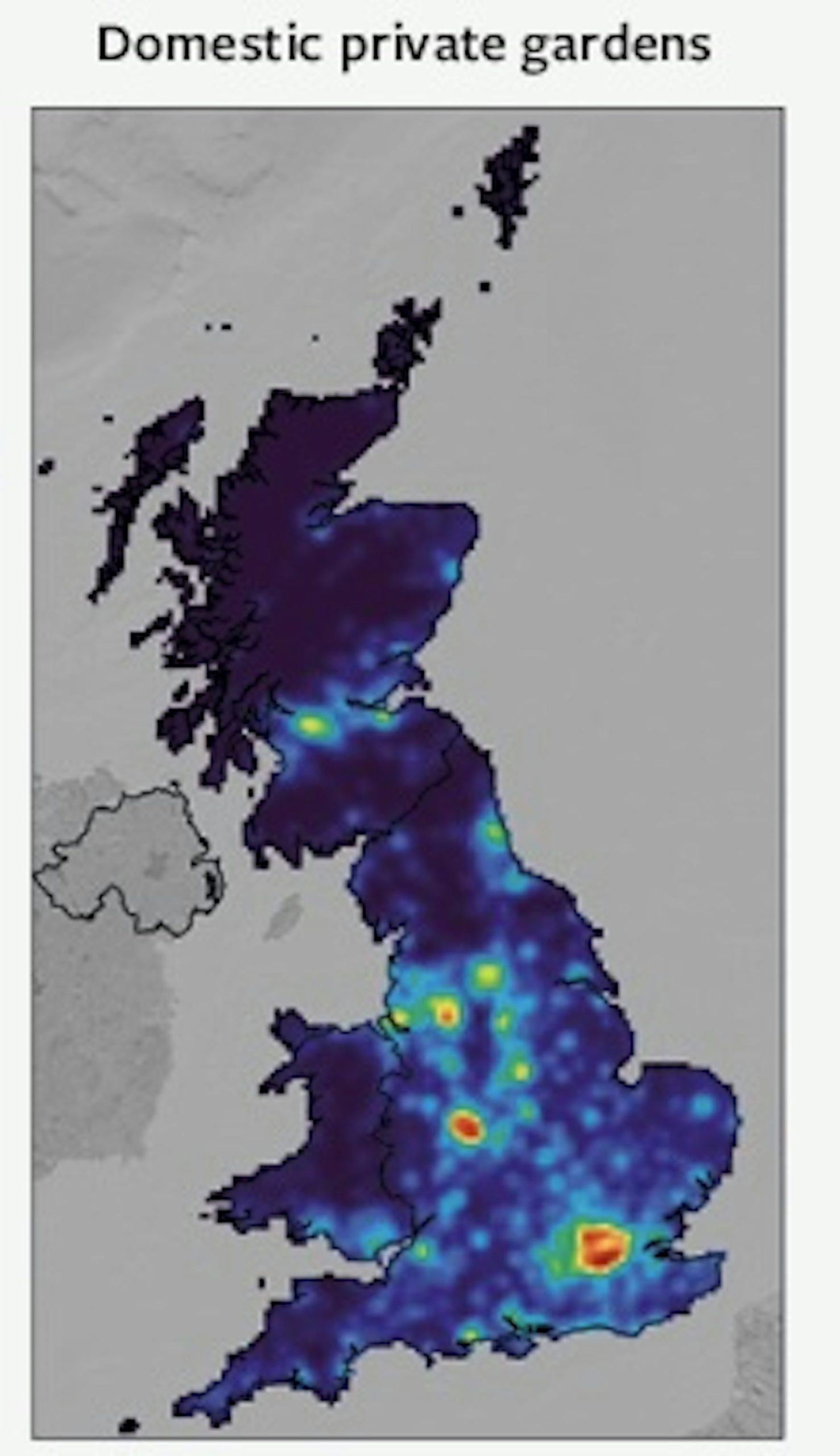
A geographic heat map plotting domestic gardens across Great Britain, highlighting peak high-temperature zones in deep red.
During peak summer, these dark driveways absorb up to 95% of incoming solar radiation. They can reach blistering surface temperatures of 50-55°C. In stark contrast, grass or tree-covered areas rarely exceed 27-32°C.
When the sun sets, the concrete and asphalt act like giant thermal batteries, slowly releasing stored heat into the night air. This fuels the urban heat island effect, guaranteeing warmer night-time temperatures.
It is precisely why city streets feel deeply suffocating on summer nights, raising localized temperatures by 1-3°C compared to surrounding rural areas.
Unlike a living lawn, a slab of tarmac has little capacity to cool itself. Plants actively chill surrounding environments through evapotranspiration, lowering air temperatures by releasing water vapor. Remove the plants, and you entirely dismantle nature’s built-in air conditioning system.
The Lethal Cost of Concrete
This heat island effect is not just uncomfortable; it is incredibly dangerous. Prolonged exposure to high heat at night prevents the human body from recovering from daytime exhaustion.
During the intense 2018 summer heatwave, an estimated 399 out of 785 heat-related deaths in Greater London were directly attributed to this night-time effect.
To combat this, experts urge a swift return to green infrastructure. RHS estimates show the UK houses 20.6 million domestic gardens covering over 500,000 hectares. That is an area three times larger than all of the nation’s nature reserves combined, giving private property enormous power to shift the climate.
Read more: Heatwaves: how to close the UK’s cooling divide
Reversing the Damage
Reverting a hard driveway back to grass immediately cuts daytime surface temperatures by 1.5-2.0°C and shaves up to 0.5°C off the night air. Planting trees doubles that cooling effect.
Simply increasing a city’s tree cover by 10% can drop average air temperatures by a vital half-degree.
Local governments are finally taking notice. London’s De-pave Your Garden campaign teaches homeowners how to swap solid concrete for permeable paving and planting strips. Boroughs like Lambeth and Ealing are championing the approach, while Leeds City Council actively urges residents to keep at least 30% of their front plots entirely green.
Real change, however, requires stronger financial backing. Experts argue that council tax rebates, grants for rain gardens, and updated planning rules could rapidly alter urban landscapes. In fact, the United Nations has heavily stressed that urban greenery is a non-negotiable tool for survival in a warming world.
These cooling strategies do not stop at the ground floor. Green roofs and balcony gardens have proven highly effective at lowering indoor temperatures by up to 11°C.
Replacing concrete with living plants improves mental wellbeing, filters air pollutants, and massively reduces flood risks. Restoring greenery in just one million front gardens would save millions of liters of toxic stormwater run-off from overwhelming the drains.
With climate models guaranteeing longer and hotter summers, domestic gardens are our frontline defense against lethal heatwaves. Choosing plants over paving is no longer just a landscaping preference; it is a vital step toward keeping British streets habitable.