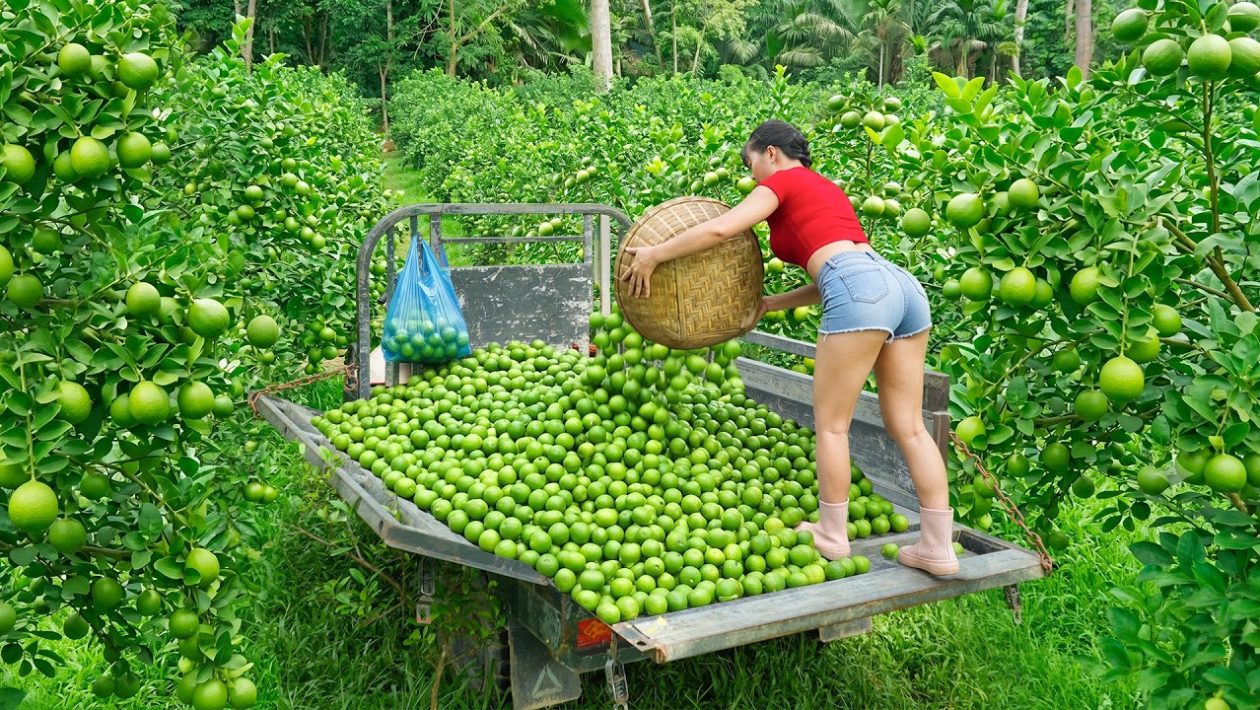
The Precision of a Citrus Harvest
Commercial lemon harvesting operates as a continuous, year-round cycle in warm climates. Harvesters rely on specialized curved clippers rather than pulling the fruit by hand. Pulling forces the stem out, which can tear the peel and leave the fruit vulnerable to rapid decay.
Workers often use sizing rings to determine exactly which lemons are ready for the market. If a lemon easily passes through the ring, it requires more time on the branch to grow. If it catches on the ring’s edges, it is clipped and carefully placed into a canvas picking bag.
Sorting and Field Processing
A full picking bag strapped to a worker can weigh up to 50 pounds. Harvesters must gently release the bottom of these bags into large, heavy-duty field bins. Dropping the fruit too hard causes deep bruising and internal damage that ruins the crop.
Color is rarely the primary indicator of ripeness in commercial operations. Lemons are frequently picked while still entirely green as long as they meet the strict size requirements. The fruit naturally cures and develops its signature bright yellow color during storage and transit.
Loading the Transport Trucks
Moving a massive harvest out of the orchard requires coordinated heavy machinery. The large field bins, each holding roughly 900 pounds of raw citrus, are staged systematically at the edge of the grove.
Tractors equipped with heavy-duty forklifts lift these wooden or plastic bins onto waiting flatbed trucks. A standard commercial truck hauls dozens of these bins in a single load. Drivers must ensure precise load distribution so the heavy bins do not shift or topple while navigating uneven dirt farm roads.
The Journey to the Market
The drive from the farm to the packing house or wholesale market is an immediate race against time. While lemons possess a thick, leathery rind, they remain a highly perishable cargo that requires steady airflow during transport.
Trucks deliver the raw citrus to specialized facilities where the fruit is washed, coated with a protective natural wax, and optically graded. Once boxed, the lemons are dispatched to grocery chains, restaurants, and direct buyers. The logistics network operates tightly, ensuring thousands of pounds of fresh fruit transition from branch to buyer with zero wasted yield.