The traditional backpack is facing a serious upgrade. A new trend originating in Europe is swapping standard canvas for smart backpacks equipped with full-color LED screens.
Driven by the rise of smart devices and hyper-personalization, these high-tech bags blend functionality with digital aesthetics. They have quickly evolved from simple utility items into dynamic fashion statements.
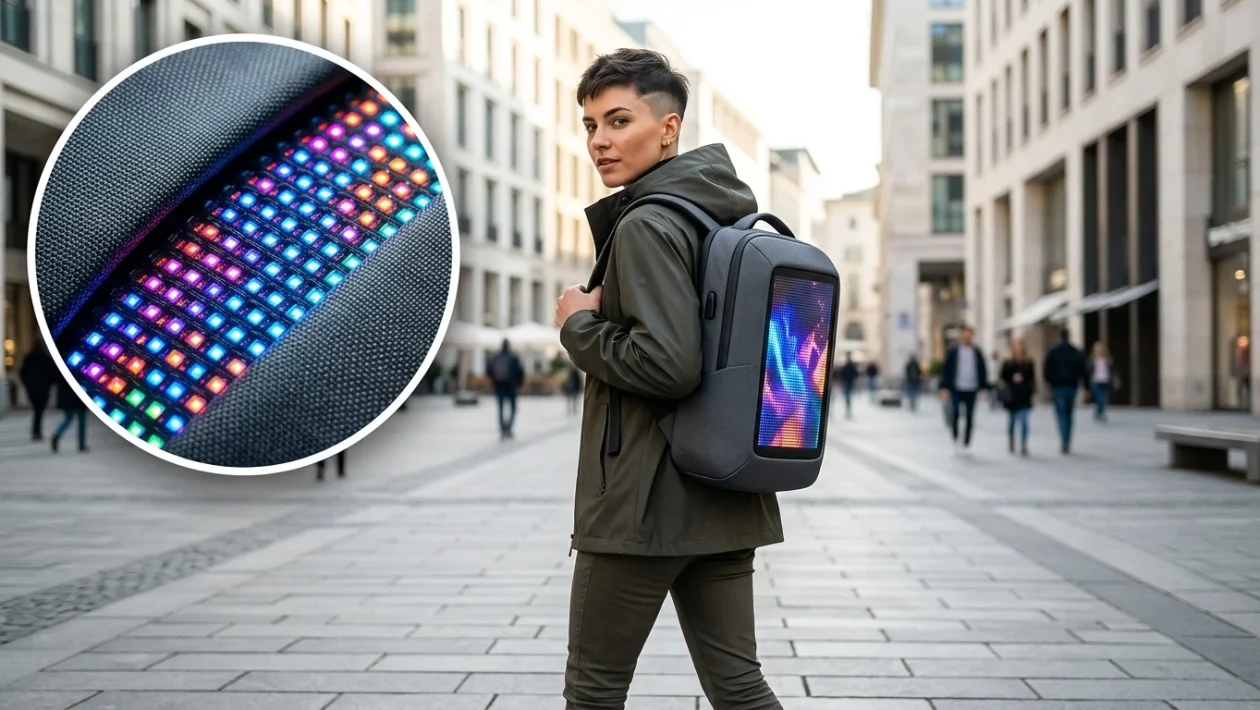
A high-tech smart backpack displaying digital graphics on its integrated screen.
What Makes Smart Backpacks Different?
The standout feature of these modern bags is the front-facing LED panel. It is designed to display images, custom text, emojis, and dynamic animations.
Users control the digital display entirely through a dedicated app compatible with iOS and Android. This allows for real-time design changes to match an outfit, a specific mood, or a live event.
The striking visual element has made these bags highly popular among college students, content creators, urban cyclists, and concert-goers who want to stand out in a crowd.
A close-up view of the durable, weather-resistant materials used in modern smart backpacks.
Built for the Urban Commute
Technology aside, these smart bags prioritize durability and daily comfort. They feature adjustable padded straps and a breathable mesh back panel to reduce heat retention on the move.
The exterior is constructed from waterproof fabric and sealed with water-resistant zippers. This ensures the embedded electronics and interior contents stay dry during heavy rain and intensive city use.
Storage and Technical Specs
Despite the embedded tech, the bag remains a practical carry-all with a 21-liter capacity.
Internal compartments are specifically tailored for modern gear, holding laptops up to 16 inches. Additional pockets are strategically placed to keep books, chargers, tablets, and other electronics organized.
The Premium Price Tag
This technological leap comes at a premium cost. In markets like Argentina, where the trend is rapidly expanding, the backpack retails for $336,591 pesos.
The high price point reflects the bag’s innovative design, weatherproofing, and electronic integration. It targets a demographic that views their backpack as a piece of wearable technology rather than just a storage vessel.
By 2026, industry watchers expect this fusion of digital connectivity and urban fashion to become the new standard for smart accessories.