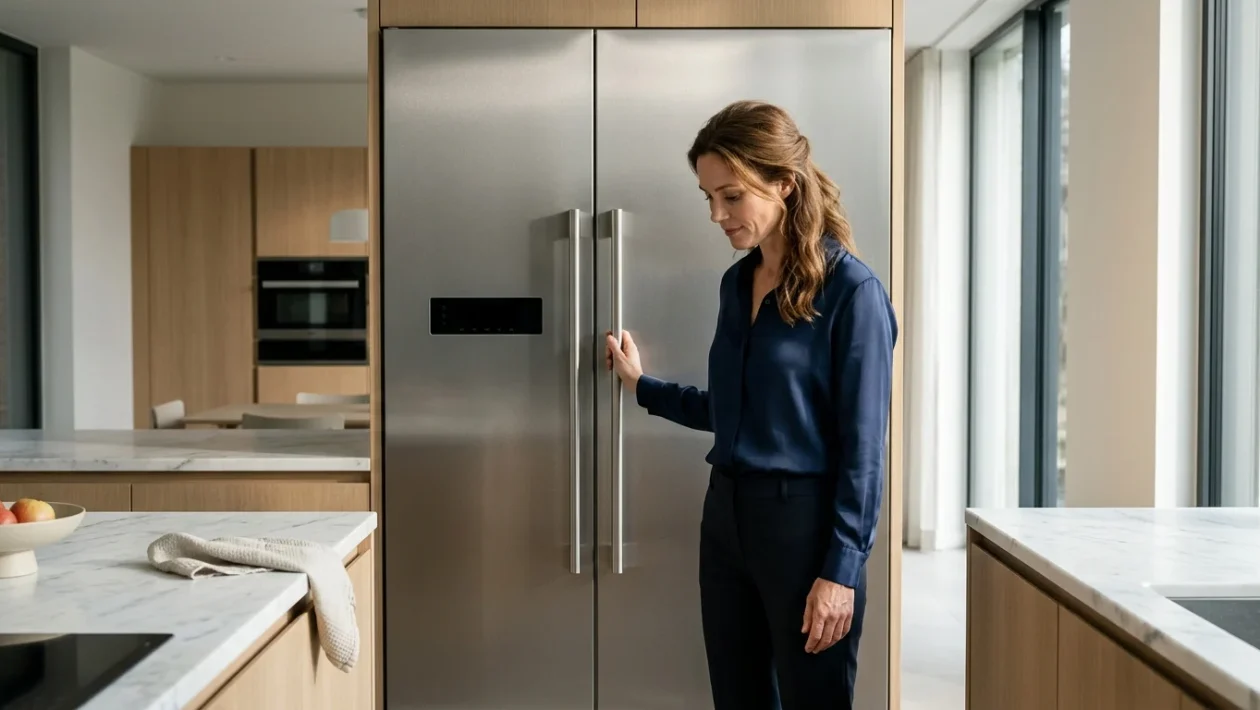
A modern stainless steel refrigerator with digital displays in a brightly lit kitchen.
The Mystery of the Sabbath Setting
Modern refrigerators are essentially high-tech computers. They monitor temperatures, track food expiration, and send maintenance alerts directly to your phone.
Yet amid these advanced features, one setting routinely puzzles appliance owners: Sabbath Mode.
The function might seem mysterious at first glance, but the explanation lies in religious traditions that date back thousands of years.
What is Sabbath Mode?
Sabbath Mode is a specialized setting designed for observant Jews who follow the rules of Shabbat and specific religious holidays.
Traditional Jewish law restricts actions that directly activate electrical systems during these periods. This includes flipping light switches or causing electronic devices to immediately respond to human interaction.
While a refrigerator seems passive, simply opening its door triggers a cascade of electrical functions. The interior light flickers on, sensors register the movement, and the compressor often kicks in to adjust the temperature.
For individuals observing Shabbat, these immediate electrical reactions present a strict religious conflict. Appliance manufacturers introduced Sabbath Mode to solve this exact problem.
How the Setting Changes Refrigerator Operations
The most immediate and noticeable change happens with the appliance’s lighting.
Depending on the specific brand and model, the interior lights will either remain completely disabled or stay permanently locked at a dim setting. This ensures that opening the door does not trigger a new electrical current.
The internal engineering goes much deeper than the lightbulbs. Many refrigerators program their electronic systems to ignore instant user actions.
Cooling adjustments are intentionally delayed. When a user opens the door, the compressor will not immediately start working to compensate for the lost cold air.
Defrost cycles are also modified. Instead of responding to temperature fluctuations or door sensors, the appliance shifts to a rigid, pre-programmed timing system.
Functions Disabled by Sabbath Mode
Activating Sabbath Mode temporarily strips a smart refrigerator of its interactive capabilities. The appliance continues preserving food at safe temperatures, but it shuts down functions that require direct user input.
Commonly disabled features include:
- Digital displays and touchscreen controls
- Warning alarms and open-door notifications
- Status indicator lights
- Water and ice dispensers
- Immediate temperature adjustment controls
In practice, this creates a “religious safe mode.” The appliance operates completely in the background without creating electrical responses to human behavior.
Beyond the Refrigerator
Refrigerators are not the only appliances equipped with this specialized setting. As smart home technology advances, manufacturers are building Sabbath Mode into a wider array of household devices.
Modern ovens are the most common example. When switched into this mode, ovens can bypass standard safety features like the 12-hour automatic shutoff, allowing them to safely maintain heat for extended periods.
Other kitchen appliances that frequently include the setting are:
- Microwaves
- Dishwashers
- Electric and gas stoves
- Wine refrigerators
While the mechanical execution varies by device, the fundamental purpose is identical. It allows observant households to utilize essential modern appliances without violating ancient religious traditions.