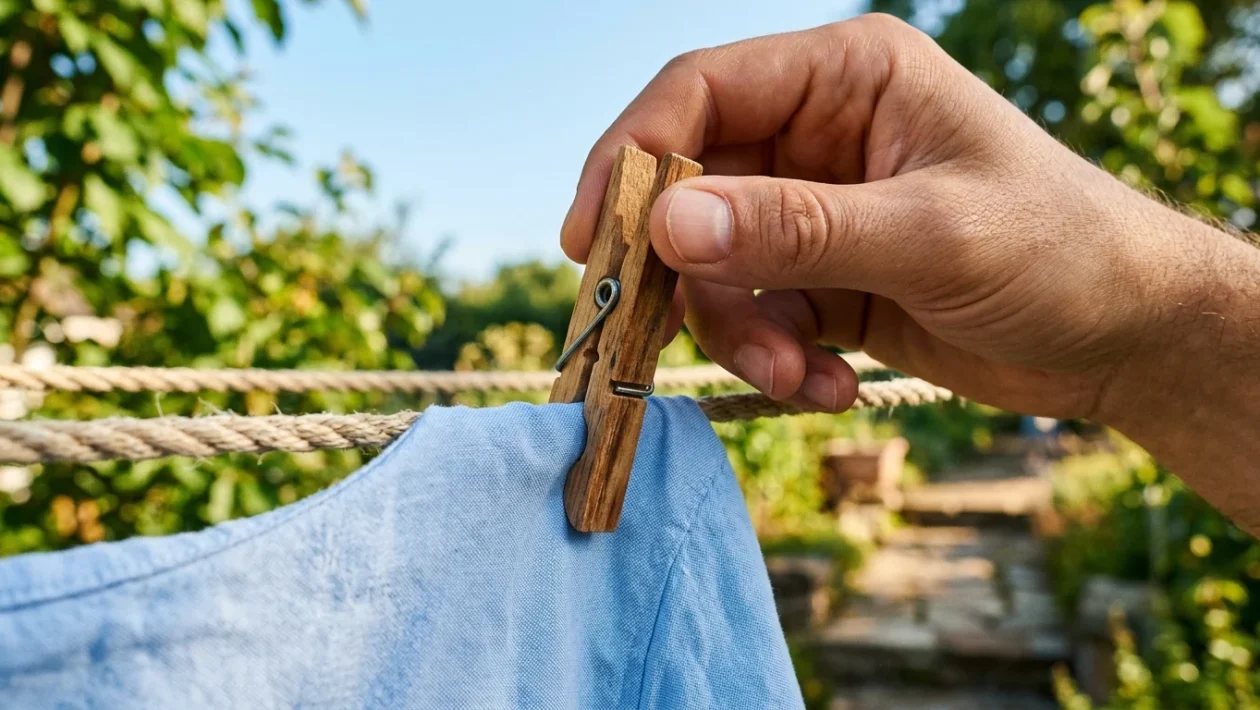
A wooden clothespin securing a piece of fabric on a laundry line
When tackling household chores, hanging laundry correctly is crucial for protecting fabrics and cutting down ironing time. Yet, a massive number of people misunderstand the true function of clothes pegs. You have likely been making a basic error for years.
Those small wooden or plastic clips feature a very specific design. They contain two differently sized holes with exact purposes. Most people have no idea what the dual slots on clothespins are actually for.
The True Purpose of the Two Holes
The common habit is to fold a garment over the clothesline and clamp the pin directly on top. This creates deep wrinkles and annoying double crease marks. The dual-slot design was engineered specifically to prevent this.
- The small hole: Designed to grip the clothesline wire or rope, locking the pin firmly in place.
- The large hole: Engineered to hold the fabric underneath the line, allowing the garment to hang straight down.
Separating these functions improves airflow between the garments. It also prevents unnecessary friction and wear on your clothing.
How to Use Them Correctly
To apply this method and better protect your wardrobe, you only need to adjust your hanging technique.
- Snap the clothespin onto the line using the smaller hole first.
- Slide the edge of your clothing into the larger hole, letting the fabric drop freely below the wire.
Hanging clothes vertically without folding them over the line stops collars, sleeves, and hems from warping out of shape. You will notice a drastic reduction in your ironing time.
Hanging Strategies by Garment Type
Mastering the clothespin is only half the battle. Knowing exactly where to clip each piece of clothing prevents stretching and structural damage.
- T-shirts and tops: Always clip them by the bottom hem. Any faint pin marks will be hidden near the waist, leaving the shoulders perfectly intact.
- Button-down shirts: The best method is to hang them on plastic hangers, then clip the hanger to the line. If space is tight, clip them upside down by the bottom seam.
- Pants and jeans: Turn them inside out. Fasten them by the waistband or the ankle hems. The large hole easily holds the heavy, wet denim without crushing the seams.
- Dresses and skirts: Secure them by the waistband or the upper side seams. These areas are reinforced and resist stretching under the weight of wet fabric.
- Underwear and socks: Because these items are lightweight, use the small or medium grip to secure the elastic bands quickly without snapping them out of shape.